Briard vs Bouvier des Flandres: a practical comparison
Compare Briard vs Bouvier des Flandres size, coat workload, activity and home routines to understand which demands fit your everyday life.
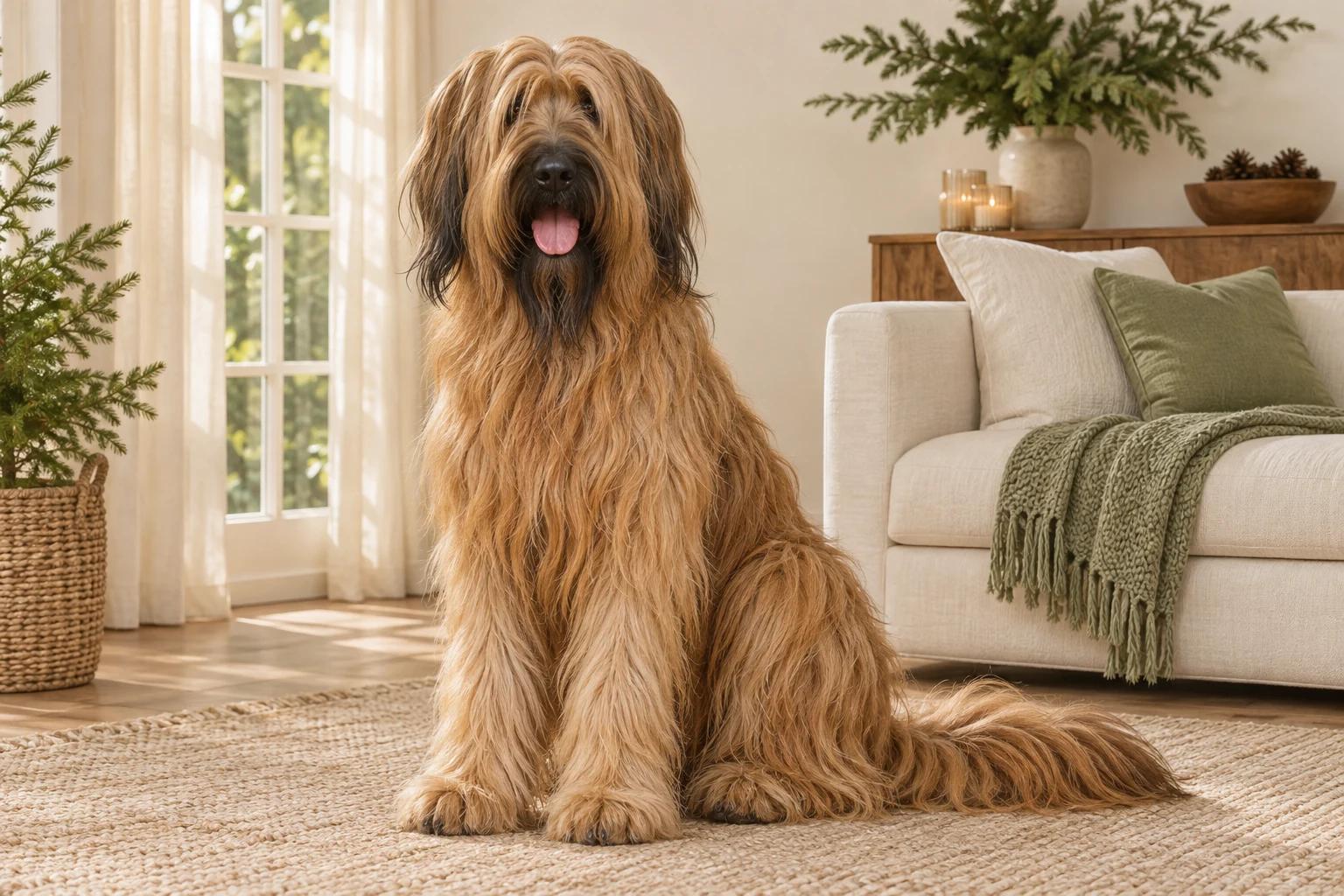
Briard vs Bouvier des Flandres can look like a choice between two shaggy outlines. In everyday life, the useful comparison is more detailed: how much dog you are handling, how the coat is maintained and how activity fits around the rest of your week. Neither belongs on a shortlist merely because its hairstyle appeals to you.
Use the Briard profile and Bouvier des Flandres profile together. Both describe substantial herding dogs with meaningful care commitments. The following comparisons turn those descriptions into decisions you can actually make before bringing a dog home.
Briard vs Bouvier des Flandres: what stands out
The Briard has French herding roots, a long wavy double coat and adult weight references of 60–100 pounds for males and 50–80 pounds for females on My Breed Atlas. The Bouvier's profile lists a medium-length rough double coat and 77–88 pounds for males and 60–77 pounds for females. Their height ranges overlap, so the difference is not simply tall versus short.
The UKC Bouvier standard describes a powerful, compact dog developed around cattle work in Flanders. Its rugged outline includes a conspicuous beard and mustache. The Briard Club of America's flier highlights a long coat that requires regular brushing. Both appearances involve work behind the scenes.
In the My Breed Atlas references, the Bouvier has a higher shedding tendency than the Briard. Both have frequent grooming needs. Those coat-care references help you plan, but activity and noise questions deserve a conversation about the individual dog.
Put the handling question ahead of the photograph
A difference between Briard and Bouvier des Flandres ownership becomes clearer when you picture a wet dog at the entrance, a car journey or a narrow hallway. Both breeds require planning if lifting, vehicle access or physical handling is already a concern. Their weight ranges overlap, and the Briard’s male upper endpoint is higher; neither breed label settles the size of two individual adults.
Measure your vehicle's usable space before choosing equipment. Think about where an appropriate crate or restraint would go and how you would load the dog. If you expect to rely on another person for transport or care, include them in the planning rather than assuming they can manage whichever dog you choose.
At home, check the routes people use most often. A dog resting across a narrow passage can obstruct movement regardless of its manners. Plan places where it can be near the household without occupying the doorway or the space behind a moving chair.
Long coat versus rough coat is not easy versus hard
The Briard's coat length makes the grooming commitment visible. The Bouvier's more rugged, shorter outline can make it easier to underestimate the work. Both profiles place grooming high enough that you should have a maintenance plan, not just a salon phone number.
Speak to a groomer experienced with each breed. Ask what you would do at home, which tools they would teach you to use and how professional appointments fit around that work. Also ask what changes when a puppy develops its adult coat. A demonstration is worth more than a vague assurance that the coat is manageable.
For a useful comparison, write down the routine rather than its price alone. Who checks the coat after an outing? Where does the dog stand or lie for care? Can you reach the required areas comfortably? Will the plan still work when your regular helper is away? Those answers may favor one breed in your particular household.
Activity differences matter most on ordinary days
For either breed, ask whether your current routine has enough flexibility for the individual dog and its changing needs. Request an account of its current outings and activities rather than trying to calculate an exercise schedule from its size or shaggy appearance.
If you are weighing Briard or Bouvier des Flandres, make a weekday timetable that includes outings, play or learning, coat care and rest. Include the busiest day, not only the day when everyone is home. The work needs to fit alongside employment, travel and other responsibilities.
For example, a long coat-care session and an ambitious outing may compete for the same evening. Decide how those jobs will actually be shared or spread through the week. A plan that depends on doing every dog-related task after an exhausting day is worth revising before you commit.
Quietness should not be your only housing criterion
If you live close to neighbors, ask about noise directly rather than treating either breed as an automatically quiet choice. What happens when activity passes the window, a delivery arrives or the dog spends time apart from its caregiver? Request examples from settings similar to your own.
Think about the building as well as the dog. Shared corridors, lifts, door buzzers and frequent deliveries create different demands from a detached house with a quiet entrance. Ask a caregiver how the candidate dog handles similar situations, and which routines help.
For either breed, a resting place away from the busiest view can be useful household planning. So can a clear arrival routine and suitable barriers when doors are opened. These choices give you something practical to do rather than treating noise tolerance as a breed label you purchase.
Compare the teaching and care you enjoy doing
Bouvier des Flandres vs Briard comparisons sometimes focus on which is more obedient. The profiles suggest different training-response tendencies, but neither dog arrives understanding your home. You still need to teach walking manners, handling and the behavior you want around everyday activity.
Try describing your preferred way of spending time with a dog. Do you enjoy careful grooming, short teaching sessions, outdoor exploration or practicing a skill toward a sport? Which tasks would you willingly do after the novelty has passed? Be honest about the work you dislike too.
Meet adults when possible and talk with the people who care for them. Ask to hear about a normal week and a difficult week. Concrete descriptions of time, equipment and support are more useful than choosing the breed with the most flattering adjectives.
The breed match quiz can help structure your priorities. If you want more Briard background, read the existing article on its historical grazing work. Keep that history separate from the practical decision: the right match is the dog whose needs you can reliably meet.
FAQ
Is a Bouvier des Flandres bigger than a Briard?
My Breed Atlas lists Briards at 60–100 pounds for males and 50–80 pounds for females, versus 77–88 and 60–77 pounds for Bouviers. The ranges overlap and the Briard has the higher male upper endpoint. Compare actual adults rather than assuming either breed is always larger.
Which breed has less grooming work?
Neither Briards nor Bouviers should be chosen as a low-grooming breed. Their coats differ in length and texture, but both need frequent care. Ask an experienced groomer to demonstrate the home routine for each before deciding which you can maintain.
What should I ask about noise?
For either a Briard or Bouvier, ask how the individual dog responds to visitors, deliveries, sounds outside and time apart. Describe your home's noise exposure and ask which routines currently help the dog settle.
Sources behind this article
- Briard Club of America: breed information flier ↗
- UKC: Bouvier des Flandres standard ↗
- Hill’s Australia adult reference — adult-weight reference ↗
- Embark adult reference — adult-weight reference ↗
Article source checked: November 14, 2026. Source checked 2026-11-14Article source checked: November 18, 2026. Source checked 2026-11-18
Keep reading

Affenpinscher vs Brussels Griffon: Everyday Differences
Read article →