Briard grooming: make the long coat manageable
Plan Briard grooming with a practical home routine, professional support and careful coat checks. Learn why low shedding still means regular care.
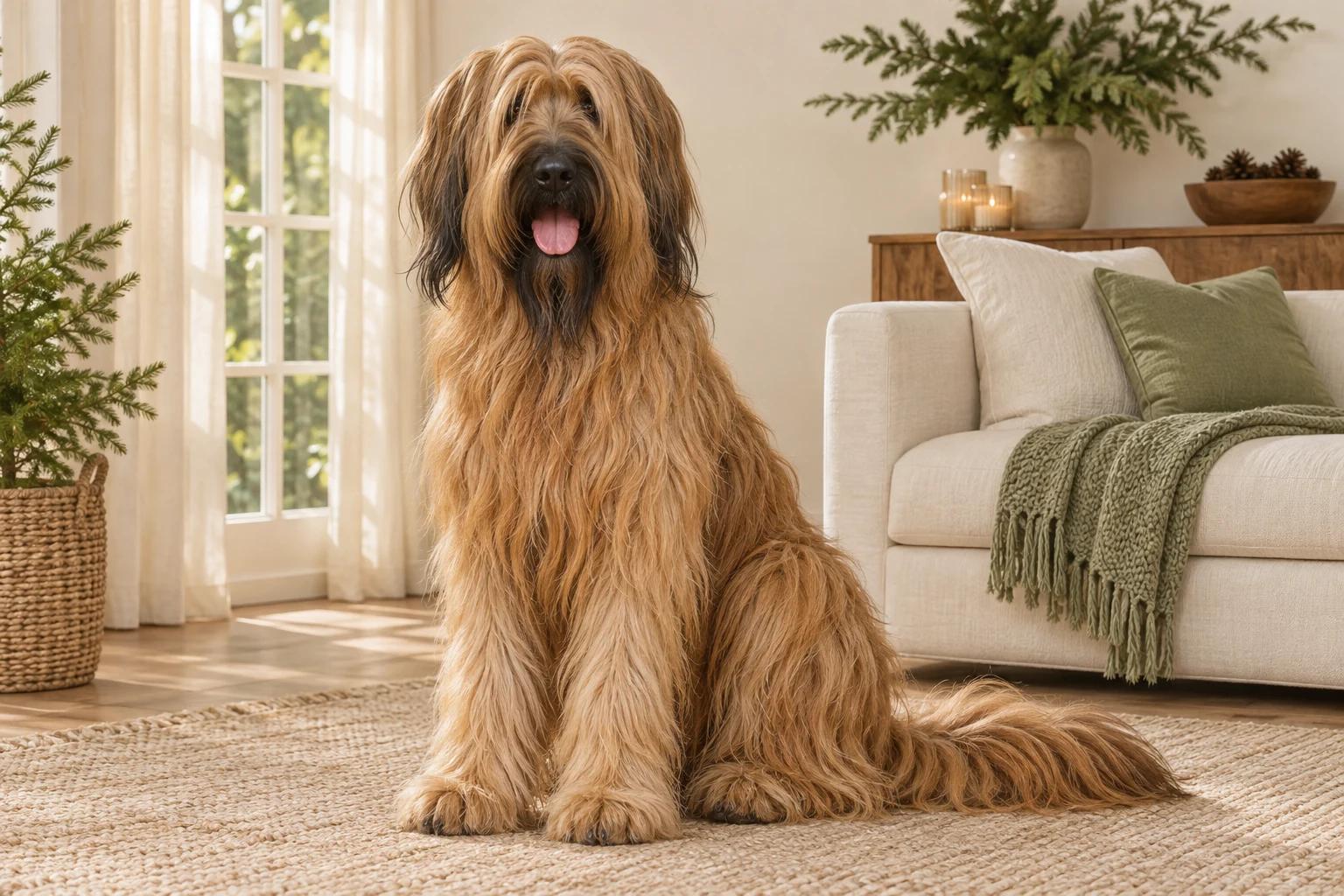
Briard grooming is part of the weekly routine, not an occasional project saved for when the dog looks untidy. The long, wavy double coat is one of the breed's most recognizable features, but its appearance can hide how much attention it needs. A tidy surface does not tell you everything about the coat underneath.
The Briard profile pairs a low shedding tendency with frequent grooming needs. Those two things are compatible. If you are considering this breed, plan for hands-on coat care before buying the brush, rather than assuming a quiet vacuum cleaner means an easy grooming schedule.
Briard grooming starts with learning the coat
The Briard Club of America's information flier describes a coarse adult outer coat and softer puppy coat, and emphasizes regular brushing to prevent tangles and mats. This is a coat you need to understand at different stages, not simply a hairstyle to copy from a photograph.
Arrange a demonstration with an experienced Briard groomer or breeder. Ask them to show you how they separate the coat, where the brush should reach and how they check the result. Watching someone work on a real dog is more useful than collecting a long list of tools without knowing how to use them.
Bring your own equipment to that session if possible. A professional can tell you whether it suits your dog's coat and your technique. Write down the tool names and the jobs they are intended to do. That avoids guessing later when several similar brushes appear in an online shop.
Divide the work into an achievable routine
VCA's Briard guide recommends brushing on most days to manage tangles. Use that as a reason to build frequent checks into your calendar rather than waiting for a single marathon session. The amount of work will depend on the coat, recent activities and how consistently it has been maintained.
Make a simple coat map with your groomer. List the sections they want you to cover and how to know each is finished. A written sequence helps prevent repeatedly brushing the obvious areas while overlooking places you find awkward to reach.
For example, you might record which sections were completed during a short evening session and which need attention next. This is an organizational aid, not a rule that every dog should tolerate the same amount of handling. If you repeatedly cannot complete the necessary care, arrange professional help and review the routine rather than letting the unfinished work accumulate.
Make the grooming place comfortable to use
Choose an area with good light, a stable non-slip surface and enough room for both of you. Keep tools within reach before you begin. Having to leave halfway through because the comb is in another room makes an already detailed job harder.
The human side matters too. If you cannot comfortably reach the dog's body, you may rush or repeatedly skip the same area. Ask a groomer to help you choose a workable setup for your home and physical needs. Do not improvise an elevated platform or restraint you have not learned to use.
Keep the space predictable. A busy kitchen during meal preparation is not the easiest place to learn how to groom a Briard. A quieter period allows you to pay attention to the coat and the dog's responses instead of trying to brush while stepping around other people.
Teach cooperation separately from completing the job
A young or inexperienced dog may need practice with the grooming routine itself. Introduce the place, tools and brief handling in manageable pieces. Reward participation, and stop before a simple introduction becomes a struggle to finish the entire coat.
For instance, one early practice might involve standing on the chosen surface while a brush is nearby. Another might include a brief touch on an easy area. These are examples of breaking the task down; ask your trainer or groomer to adapt them to the dog you have.
Make a distinction between teaching and urgent maintenance. If the coat already needs professional attention, slowly introducing the brush does not solve the immediate problem. Tell the groomer what the dog currently accepts and where it becomes uncomfortable so they can plan appropriately.
Check after outings without turning every walk into a bath
Long hair makes it worth pausing after a muddy or grassy outing to see what came home with the dog. Look over the coat in good light and deal with ordinary debris using the technique your groomer has shown you. Avoid pulling hard at anything caught close to the skin.
Briard coat care also needs a realistic bathing plan. Ask which products and drying methods suit your dog's coat, and how to prepare it before a bath. Follow those instructions rather than treating a bath as a substitute for dealing with neglected tangles.
If you find tight mats, an area the dog resists having touched or a change in the skin, stop and seek the appropriate help. A groomer can advise on coat work; a veterinarian should assess pain, irritation or other health concerns. Do not try to cut blindly through a mat close to the skin.
Low shedding is not a maintenance shortcut
Briard shedding may be less obvious around the home than with some other breeds, but that does not remove the brushing commitment. Budget for both your own time and the professional help you intend to use. A salon appointment does not automatically replace care between appointments.
Before committing to the breed, have an honest conversation with whoever will share the work. “We will all help” is less useful than knowing who checks the coat, who handles appointments and what happens when that person travels. The plan should remain workable during a busy week.
The breed match quiz can help you weigh grooming alongside other ownership demands. For background on a completely different aspect of the breed, read how Briards worked alongside grazing flocks. Enjoying the breed's history and appearance is a starting point; keeping its coat manageable is an ongoing practical commitment.
FAQ
How often does a Briard need grooming?
A Briard needs frequent coat attention, with brushing on most days recommended in VCA's breed guide. Ask an experienced groomer to tailor the routine to the dog's coat and show you how to check that each section is properly cared for.
Does low Briard shedding mean little brushing?
No. Low visible shedding does not remove the need to maintain a Briard's long double coat. Regular brushing and checks for tangles remain part of ownership, even when there is little hair on the furniture.
Should I remove a tight mat myself?
Do not pull hard or cut blindly near a Briard's skin. Ask an experienced groomer to assess tight matting, and consult a veterinarian if the dog appears painful or the skin looks irritated.
Sources behind this article
Article source checked: November 14, 2026. Source checked 2026-11-14
Keep reading

Affenpinscher Grooming: A Practical Coat-Care Routine
Read article →