Brazilian Terrier size: height, weight and home planning
Understand Brazilian Terrier size with adult height and weight references, measuring tips and practical guidance for equipment and household space.
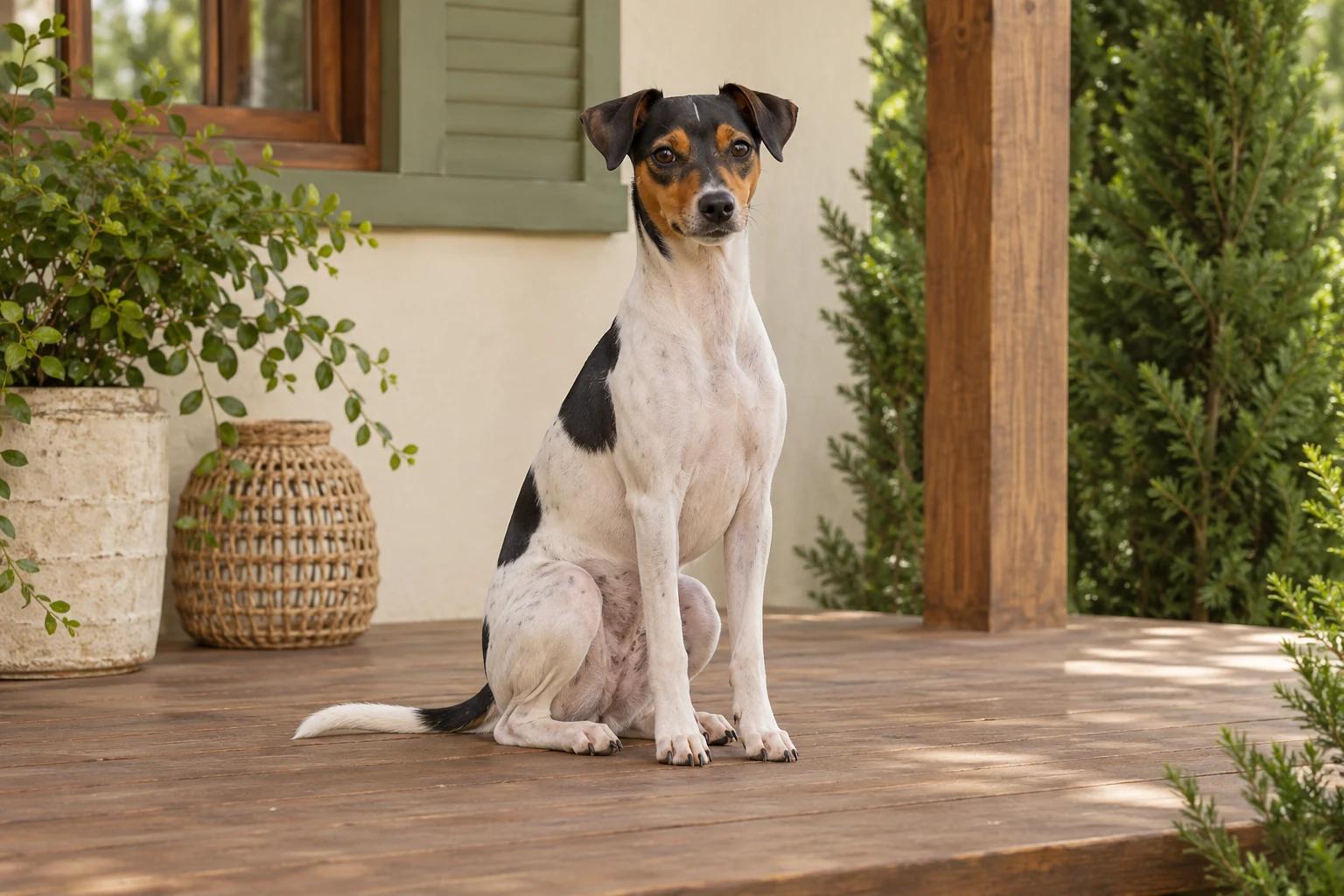
Brazilian Terrier size is compact enough to look convenient on paper, but a useful size guide should do more than provide a number. You need to know what is being measured, how the adult reference relates to a puppy and which purchases should wait until you have the actual dog in front of you.
The Brazilian Terrier profile lists adult males at 13.7–15.7 inches and females at 12.9–14.9 inches, with a reference weight range of 14–20 pounds. Treat those figures as breed context, not a promise that every puppy will finish at a particular measurement.
Brazilian Terrier size at a glance
Brazilian Terrier height is measured at the withers, the top of the shoulders, rather than the ears or the top of the head. This distinction helps explain why a dog can seem taller in a photograph than its listed height suggests.
The FCI breed standard gives male heights of 35–40 centimeters, female heights of 33–38 centimeters and describes their adult proportions. It describes roughly square body proportions. The result is a relatively compact outline, not a long, low body.
Brazilian Terrier weight is best understood using the site’s 14–20-pound range alongside height and build. That range should not become a feeding target or a reason to alter a dog's diet without veterinary guidance. A breed description is not a body-condition assessment.
If you are asking “how big do Brazilian Terriers get,” start with those adult ranges, then ask about the parents and adult relatives of the dog you are considering. Their measurements add context, although they cannot provide an exact forecast for a growing puppy.
Small and medium are shopping labels, not measurements
One shop's small harness may be another shop's medium. A bed described as suitable for terriers may fit a curled-up dog but not allow much room to stretch. Neither label tells you whether the product suits your particular Brazilian Terrier.
Make a short measurement sheet before shopping. Record the measurements the manufacturer requests, the date and the product's fitting instructions. Use the same units throughout. If the chart asks for chest circumference, do not substitute weight simply because weight is easier to find.
This is especially useful when buying online. Save the size chart that applies to the exact product, not a general chart from a different range. Check adjustment limits and the return arrangement before choosing. For a puppy, expect to revisit fit rather than buying one item and assuming its widest adjustment will remain appropriate.
Measure calmly and keep the purpose clear
For a rough home height measurement, choose a level, non-slip surface and let the dog stand naturally. Identify the shoulder point rather than lifting the head to make the dog look taller. If the dog will not stand comfortably, stop and try another time; a forced measurement is not worth the struggle.
Ask the breeder or veterinary team to demonstrate if you are unsure what you are measuring. A casual estimate is enough for some household planning, but it should not be presented as an official measurement or used to judge a dog's eligibility for an event.
Keep height, body length and chest circumference separate in your notes. They answer different questions. A travel crate may require more than one of them, while a harness usually relies heavily on measurements around the body. Follow the specific product guidance rather than trying to convert every purchase from the breed's shoulder height.
Plan the space around the dog, not just its bed
A compact sleeping place does not represent the whole space a dog uses. Picture your entrance with a lead attached, a person removing shoes and someone else trying to pass. Decide where the dog can wait without blocking the doorway or being crowded.
In a narrow kitchen, place the resting area away from the route between the cooker and sink. In a home office, check whether a bed fits where your chair will not roll into it. These are small layout decisions, but they matter more to daily comfort than whether a breed is called small or medium.
Outdoor space needs the same practical attention. Inspect gaps and gates rather than assuming a fence is suitable because it contained a previous, larger dog. Secure storage for tools and garden supplies belongs in the plan too. The aim is to create usable areas, not merely enough floor space to fit a dog-shaped outline.
Travel is a separate sizing question
Before buying a carrier or booking travel, check the provider's current rules and the actual dog's measurements. Weight alone cannot establish whether a dog can stand, turn and rest appropriately in a particular carrier, or whether that carrier meets a transport provider's requirements.
For car travel, consider where an appropriate restraint or secured crate will go and whether it fits your vehicle. Measure the available area before ordering. Leave time to introduce the equipment at home rather than making its first use part of a rushed journey.
If you anticipate lifting or carrying the dog, think through the real situation rather than the easiest version. Carrying equipment as well as a dog, negotiating stairs or opening doors may require another person. Ask your veterinarian for handling guidance if the dog has a condition that affects movement or lifting.
Do not confuse a compact body with a light schedule
The FCI nomenclature entry places the Brazilian Terrier in the terrier group and identifies Brazil as its origin. Its physical scale is only one part of deciding whether it belongs in your home.
The breed profile's strong activity and mental-engagement tendencies deserve as much attention as dimensions. A smaller bed does not mean fewer opportunities to explore and learn. If you are comparing dogs because your home is limited in size, compare the daily routine as carefully as the available floor area.
The breed match quiz can help organize that broader decision. Keep records review separate from size shopping: the existing Brazilian Terrier testing guide addresses a different question. Neither a good fit in a carrier nor a typical adult weight substitutes for understanding the individual dog's background.
FAQ
How tall is an adult Brazilian Terrier?
The My Breed Atlas profile lists adult male Brazilian Terriers at 13.7–15.7 inches and females at 12.9–14.9 inches at the shoulders. Those are reference ranges, not precise predictions for individual puppies.
Is the adult weight range a target for every Brazilian Terrier?
No. The breed profile lists 14–20 pounds as an adult reference, not an instruction to make every Brazilian Terrier reach a particular weight. Ask a veterinarian to assess the individual dog's condition and growth.
Can I buy a harness from the breed's weight alone?
Weight alone is not enough to choose a Brazilian Terrier harness. Measure the areas requested by the manufacturer, follow its fit guidance and recheck the fit as a puppy grows or the dog's body changes.
Sources behind this article
Article source checked: November 14, 2026. Source checked 2026-11-14
Keep reading
Brazilian Terrier temperament: alert, busy and involved
Read article →