Braque Saint Germain pointer: understanding its working role
Explore the Braque Saint Germain pointer as a working partner, with practical questions about field experience, learning and suitable outlets.
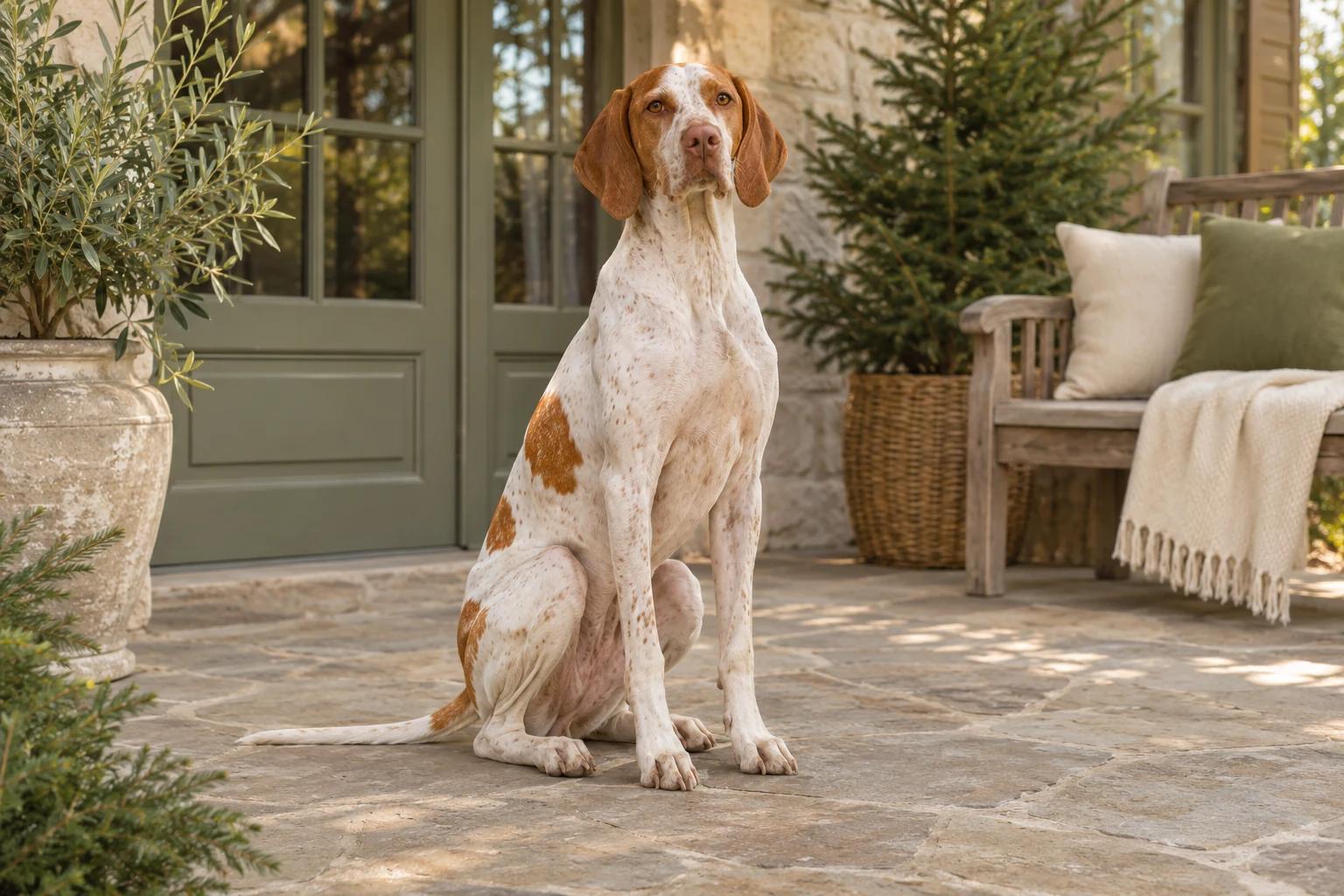
The Braque Saint Germain pointer is more than a dog with a recognizable outline. Its name places it in a working tradition, but that tradition does not deliver a finished partner without teaching and experience. Understanding the role helps prospective owners ask better questions, whether they are interested in field activities or simply want a suitable companion.
The Braque Saint-Germain profile covers basic care and household tendencies. Here, the focus is on interpreting working descriptions and deciding how to give them a sensible place in the dog's life.
Braque Saint Germain pointer: what the label tells you
The FCI nomenclature places the breed among continental pointing dogs and records a working-trial designation. This identifies a breed category and its formal working context. It does not establish the training, experience or abilities of every individual dog carrying the name.
The UKC standard describes hunting ability, a gentle hold when carrying game and ground-covering movement. These are descriptions of intended working qualities, not a demonstration of what a particular young dog already knows.
When you hear someone describe a Braque Saint Germain pointing dog as “natural,” ask what they have actually observed. Which behaviors appeared without prompting, which were taught and in what conditions were they seen? That distinction makes the conversation more informative without dismissing inherited tendencies.
Separate aptitude, experience and reliable performance
Aptitude is a starting point. Experience is what the dog has encountered and practiced. Reliable performance means the dog can use learned skills under the conditions in which they are needed. Treating those as the same thing creates unrealistic expectations.
A youngster may show interest in searching but have little experience staying connected with a handler. An adult may have extensive work with one person but need time to understand another person's cues. Neither situation is well described by a simple label such as “trained” without further detail.
Ask for an account of the dog's progression. What was introduced first? What has it practiced recently? Where does it still need support? If you are new to pointing dogs, ask an experienced, welfare-minded instructor to help you interpret the answers rather than trying to judge everything from a short video.
Watch the human side of the partnership
When observing Braque Saint Germain field work, pay attention to the handler as well as the dog. Notice when the person gives information, changes direction, waits or simplifies a task. The quiet parts of handling can be easy to miss if you focus only on dramatic moments.
Ask which cues are being used and whether they are familiar to the dog. A different word, gesture or whistle may not mean anything to a dog until it has been taught. Buying an experienced dog does not automatically transfer the relationship that helped it perform.
Request an ordinary demonstration
A useful demonstration does not need to be spectacular. Watching the dog respond to a familiar recall, move calmly to a starting area or pause while its handler prepares can reveal practical habits. Ask permission before giving cues yourself and follow the caregiver's guidance.
Do not arrange uncontrolled exposure to wildlife to test a claim. A demonstration should have a suitable location, proper permission and someone competent responsible for it. The purpose is to learn, not to provoke behavior or take unnecessary risks.
Build foundations that remain useful away from the field
A Braque Saint Germain hunting dog also lives between outings. Returning attention to a handler, walking on a lead and settling when nothing is happening remain valuable regardless of a dog's specific activity. They make the relationship easier to manage in ordinary places.
Pick foundations with everyday usefulness rather than rushing to reproduce advanced work. An instructor can help identify a sensible sequence for the particular dog's age and experience. Ask how sessions are adapted when the dog is confused or tired and what signs tell the instructor to stop.
For health, fitness and exercise questions, involve your veterinarian. A breed's working identity is not permission to give every dog the same workload. Avoid adopting a fixed distance or duration simply because it appears in another owner's routine.
Non-hunting homes should plan purposeful participation
You do not need to invent a job title for every moment of a companion dog's day. You do need to think about how the dog will use its attention and enjoy shared activity. Discuss suitable options with people who know the breed and the individual.
For example, a supervised search for a familiar toy in an uncluttered room can become a small shared game. Keep the task easy enough for the dog to understand and remove objects it could swallow or damage. This is an enrichment idea, not a substitute for field instruction or a claim that every Saint-Germain prefers the same game.
The important planning question is whether you enjoy participating. If an activity sounds appealing only because it might keep the dog occupied while you do something else, consider whether another routine would suit you both better.
Choose instruction before collecting specialist equipment
It is tempting to buy equipment when researching a working breed. First find out what instruction is available and what the dog actually needs. Ask prospective instructors about experience with continental pointers, group size and how they handle dogs at different stages.
Explain your goals plainly. Companion foundations, introductory activities and advanced field work are not interchangeable requests. A clear goal helps an instructor recommend a suitable starting point and prevents you from paying for a program that assumes experience you do not have.
Keep the breed's appearance in a separate conversation. Our article about the Saint-Germain's pink nose explains its description, but color does not demonstrate working skill. Use the breed quiz to consider the wider ownership fit before allowing a specialist interest to decide everything.
FAQ
Does every Saint-Germain arrive knowing field work?
No. Breed descriptions concern intended tendencies and roles. Individual dogs differ in experience and training, and an established dog may still need help adjusting to a new handler. Ask for specific examples rather than relying on a broad claim.
What does the working-trial designation mean for a pet owner?
It identifies a formal part of the breed's classification, not an obligation that every companion dog must enter a trial. It is a useful reminder to take the working background seriously when discussing activities and expectations with knowledgeable people.
Can household games replace specialist training?
Household games can provide shared activity, but they are not equivalent to specialist field instruction. Match the activity to your goals and the individual dog. If you want field participation, seek an experienced instructor and an appropriate, permitted setting.
Sources behind this article
Article source checked: November 14, 2026. Source checked 2026-11-14
Keep reading

Afghan Hound Exercise Needs: Build a Workable Active Day
Read article →