Bracco Italiano temperament: what to notice at home
Explore Bracco Italiano temperament through real household situations, introductions, activity and questions to ask before choosing a dog.
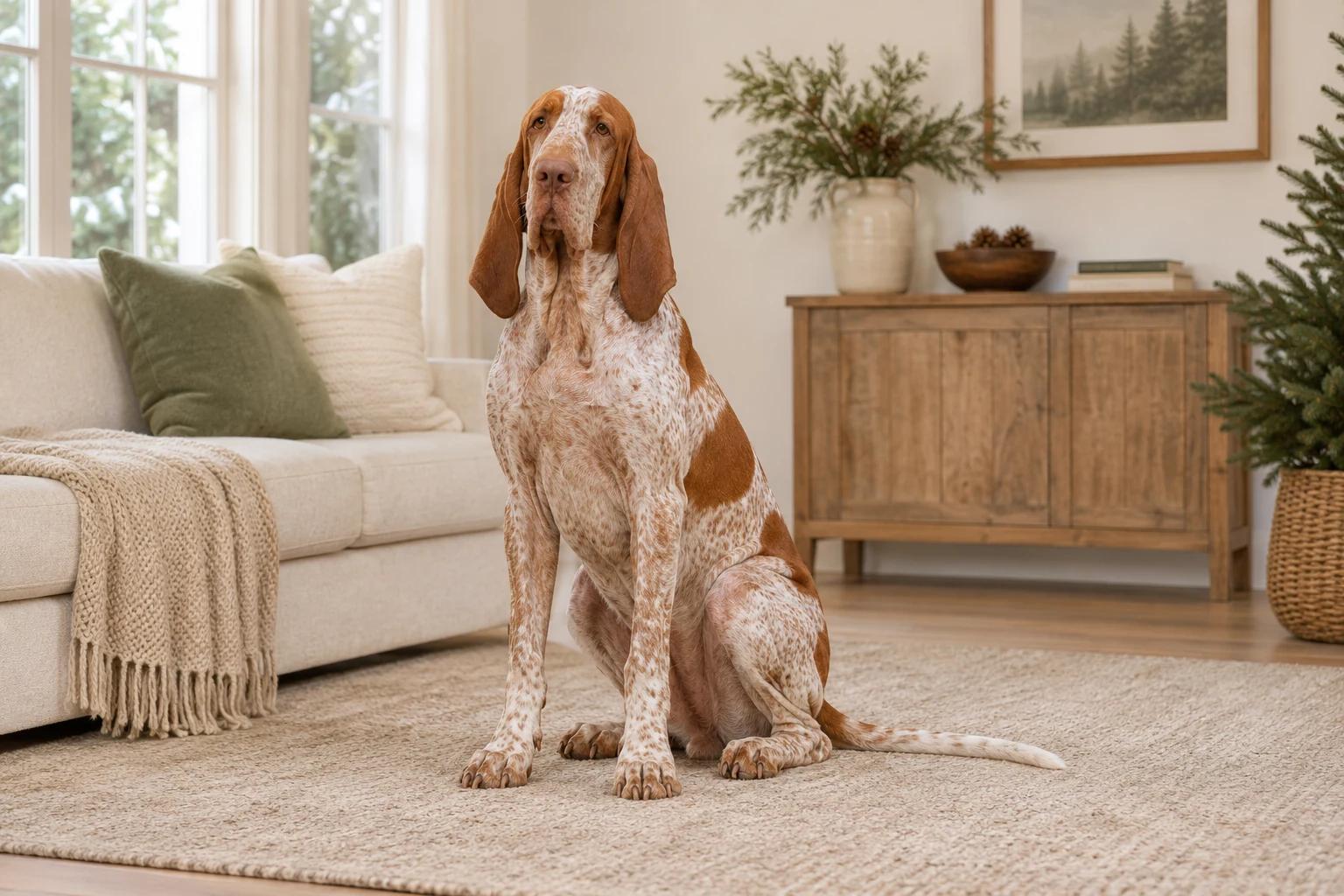
Bracco Italiano temperament is best understood by looking at both sides of daily life: shared time at home and the demands of an active pointing dog. An appealing expression does not tell you how a particular dog handles visitors, frustration or a workday without its people. Those are things to investigate through observation, questions and a realistic household plan.
Start with the Bracco Italiano breed profile, then think about the individual dog you might bring home. The useful question is not whether the breed sounds lovely. It is whether your routines and this dog's needs can work together.
Bracco Italiano temperament beyond the description
The AKC's breed introduction pairs a gentle home manner with an enduring working heritage. The official standard sets out intelligence and friendliness as temperament ideals. These are reference descriptions, not guarantees of a particular response to a child, another dog or a stranger.
To understand Bracco Italiano personality, ask for examples rather than adjectives. “Affectionate” might mean a dog often chooses to lie near people; it does not explain how the dog behaves when those people leave. “Confident” might describe comfortable exploration in one familiar place, not every setting.
A useful conversation with an owner might cover an ordinary morning, an unexpected delivery and an evening when the planned outing is delayed. Ask what they do to make each situation manageable. Answers that include effort and limitations are more helpful than a flawless portrait.
Company and quiet time are separate skills
It is easy to imagine companionship as constant physical closeness. In practice, a comfortable household also needs room for the dog to sleep undisturbed, choose distance and occupy a safe resting area. Decide where that space will be before the dog arrives.
For example, a bed beside the busiest doorway may look convenient but require the dog to move every time someone passes. A quieter location lets rest happen without repeated interruption. Tell visitors where the dog's space is, and do not use it as the place children gather to play.
Ask about experience with time alone rather than assuming a sociable dog can tolerate your working hours. For an adult placement, request specific information about the current routine and any difficulties. For a puppy, arrange care that does not depend on immediate independence. If separation causes distress, discuss it with your veterinarian rather than treating the problem as disobedience.
Activity changes the ownership picture
Bracco Italiano characteristics include the practical demands of a substantial sporting dog. The live profile lists activity needs toward the higher end of its scale. A calm moment on a sofa does not establish that a short trip around the block will meet that dog's daily needs.
Sketch your real weekday, including travel to a suitable walking area, cleaning up afterwards and opportunities for learning. Ask who takes responsibility when work runs late. This exercise is more revealing than promising yourself longer weekend adventures.
The breed's heritage is explored in our article on the Bracco Italiano's working search. Understanding that background can inform your expectations, but a pet home still needs its own workable activities. A rewarding day need not copy a field demonstration, and excitement outdoors does not excuse unsafe handling.
Notice the transition back indoors
When meeting an adult dog, ask to observe an ordinary change of activity. What happens after the lead comes off? Where does the dog settle? Does the owner need to put away toys or separate household pets? These details show the routines behind a peaceful scene.
Do not turn the visit into a deliberate stress test. You are gathering information, not trying to provoke a reaction. A brief meeting also cannot reveal everything; ask what the dog is like across different days and situations.
Guests, children and other animals
Bracco Italiano behavior around visitors deserves a practical plan even when a dog is friendly. A large dog approaching enthusiastically may be difficult for someone carrying bags or using a mobility aid. Arrange space at the entrance and agree on how greetings will happen.
Children need adult supervision with any dog. Set rules about leaving food, sleeping areas and possessions alone. Give the dog an accessible retreat, and make sure a responsible adult can end an interaction early. Do not interpret a breed description as permission for unsupervised contact.
For other pets, ask about this dog's actual history with that type of animal. Comfortable interaction with one familiar dog does not establish compatibility with every dog, cat or small pet. Plan introductions with appropriate professional support when needed, and consider whether your home can maintain separation while you assess the match.
Make your questions specific before a visit
Write down the situations that matter to your household. If you live in a flat, ask about lifts, corridors and passing neighbors. If you travel regularly, ask about car journeys and care by another person. If you enjoy entertaining, find out how the dog experiences a busy house, not just a single polite guest.
Then ask what support is available if the match becomes difficult. Discuss the placement agreement, return arrangements and access to knowledgeable help. These conversations are part of choosing responsibly, not signs that you expect a problem.
Use the breed quiz to organize your priorities, but bring the results back to a real conversation about a real dog. Your schedule, physical handling needs and willingness to teach daily routines matter more than matching yourself to a few flattering personality words.
FAQ
Is a Bracco Italiano a calm dog?
A Bracco Italiano may be settled in a familiar home while still needing an active daily routine. Ask about the individual dog's behavior before and after outings, during quiet periods and when plans change. One relaxed visit does not describe the entire week.
Is a Bracco Italiano suitable for a family with children?
Suitability depends on the dog, the children and the adults' ability to supervise and manage interactions. Breed temperament descriptions do not establish child safety. Plan separate resting space, clear household rules and adult responsibility for handling.
Does a Bracco Italiano need constant attention?
A Bracco Italiano needs planned companionship and care, but individual preferences and comfort with separation differ. Ask about the dog's existing routine and build a realistic care plan. Seek veterinary guidance when time apart brings distress rather than assuming the dog will simply adapt.
Sources behind this article
Article source checked: November 14, 2026. Source checked 2026-11-14
Keep reading

Airedale Terrier Temperament: What Everyday Life Can Feel Like
Read article →