Bouvier des Flandres vs Rottweiler: Compare Daily Care
Compare Bouvier des Flandres and Rottweiler ownership through coat work, adult handling, training, activity, and realistic household plans.
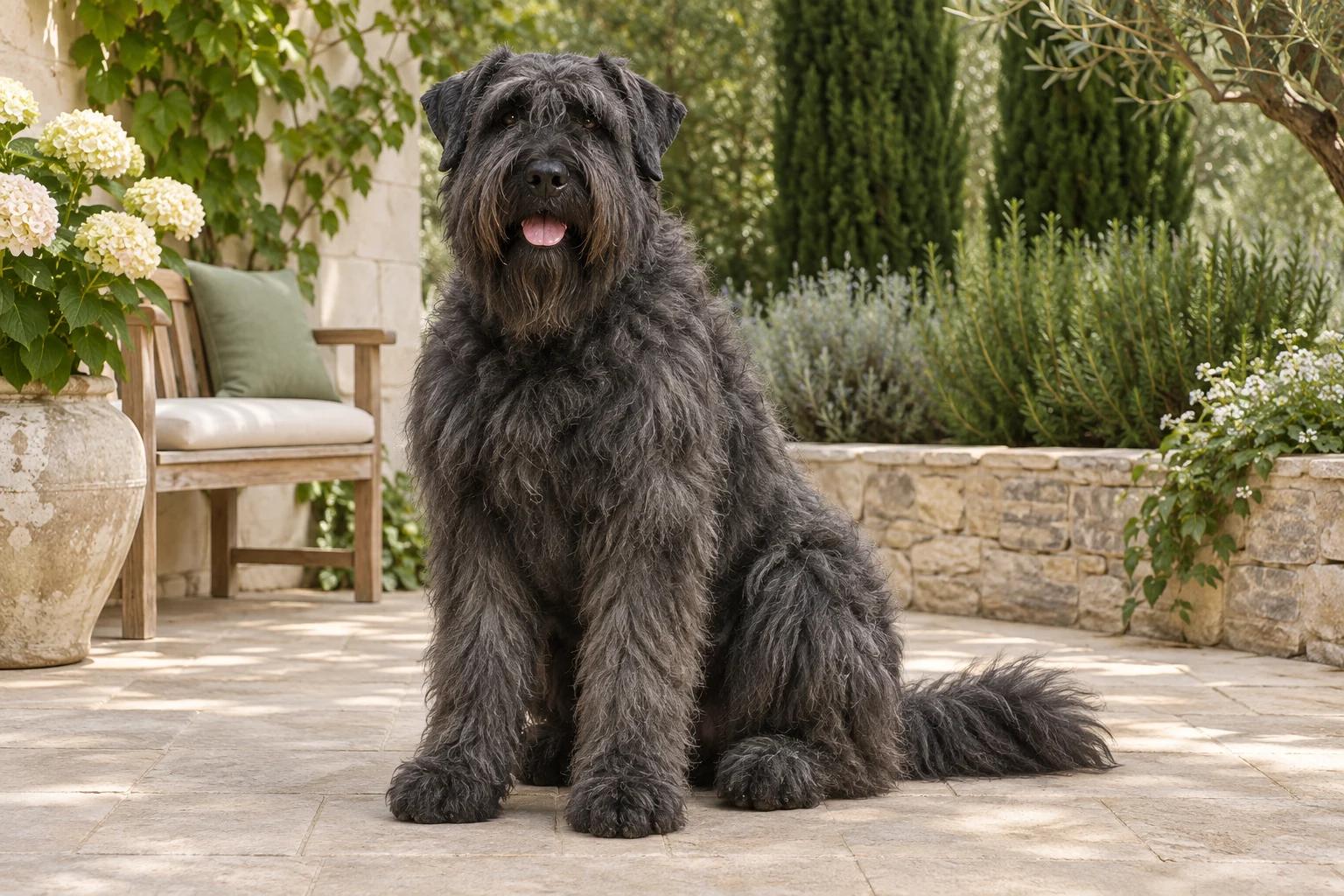
Bouvier des Flandres vs Rottweiler is a comparison that should begin with responsibilities, not impressions of strength. Both are substantial dogs whose daily care involves more than providing space and expecting good manners. The clearest differences often appear in the grooming routine and the practical details of living with the adult.
Read the Bouvier des Flandres profile beside the Rottweiler profile. Then test your assumptions against actual dogs, their documented histories, and the work your household is prepared to do.
Bouvier des Flandres vs Rottweiler: start with coat work
The Bouvier profile describes a medium-length rough double coat; the Rottweiler profile describes a short smooth coat. Those contrasting surfaces call for different conversations with a groomer, even though both need routine attention.
Compare the grooming methods appropriate to the two coats and ask what each individual dog needs between appointments. Do not interpret the shorter coat as permission to ignore maintenance. Instead, compare the methods, time, and tools recommended for the individual dogs.
For the Bouvier, ask how you will check beneath the outer coat and what professional appointments involve. For the Rottweiler, ask how routine brushing fits with loose-hair management and the dog's activities. A demonstration is more useful than guessing from photographs.
Decide who will do the work
Identify the person responsible for coat care and the backup when that person is unavailable. Include space, confidence, and physical comfort in the decision. A routine that looks manageable on paper may be awkward in a cramped bathroom or narrow hallway.
Keep other care tasks in view too. Nails, ears, teeth, and veterinary questions do not disappear because the coat is shorter. Ask for appropriate instruction rather than treating either breed as maintenance-free.
Difference between Bouvier des Flandres and Rottweiler size
The difference between Bouvier des Flandres and Rottweiler size is best expressed with ranges, not a universal ranking. The site lists the Bouvier at 60–88 pounds. Rottweiler references are 95–135 pounds for males and 80–100 pounds for females.
The overall reference ranges overlap at 80–88 pounds, although the male Rottweiler range is above the Bouvier range. Compare the actual dogs rather than assuming one will always be heavier. A photograph can make bulk, coat, and camera angle difficult to separate. Measurements and handling experience provide a clearer picture.
The AKC Bouvier overview emphasizes a substantial working build, while the AKC Rottweiler overview also identifies a strong working dog. For ownership, translate that common ground into transport and cooperation plans.
Check the vehicle entrance, restraint arrangement, and room for passengers. Think about how you would obtain help if the dog could not move as usual. A plan based entirely on being able to lift the dog may not remain practical.
Training is a daily arrangement, not a strength contest
For either breed, useful training starts with actions you want to see. Waiting at a doorway, walking with you, and moving to a resting area are clearer goals than “respect the owner.”
Work with reward-based instruction and make practice manageable. If a behavior is difficult in a busy place, simplify the environment instead of increasing pressure. Strong dogs need clear communication, not confrontational demonstrations.
Agree on the household routine before problems arise. Who handles arrivals? Where does the dog wait while a visitor enters? How do helpers prepare for outings? A shared plan reduces the need for last-minute physical management.
Consider your interest in continuing practice after puppyhood. Adult dogs still encounter unfamiliar situations and changes in routine. If you want training to be a short course that permanently removes the need for attention, reconsider that expectation.
Rottweiler vs Bouvier des Flandres companionship
A Rottweiler vs Bouvier des Flandres comparison should include the kind of company you enjoy. The site's Bouvier notes describe sharing the room without constant contact, while the Rottweiler notes describe staying close. These are tendencies to explore, not fixed personality assignments.
Ask caregivers what the individual dog does while people work, eat, and relax. How does it seek attention? What happens when the usual person leaves? Which activities does it enjoy with a different handler?
Meet adults without expecting them to perform an immediate greeting. A reserved first response does not tell the entire story, and an affectionate meeting does not establish compatibility with every member of your household.
Children and other animals need individual assessment and supervision with either breed. Plan separate resting places and clear adult responsibilities. Do not let a breed's family reputation replace careful management.
Activity, housing, and boundaries
Both profiles include physical activity and mental engagement as part of ownership. Rather than forcing a direct energy ranking, describe your available routine to the caregiver and veterinarian and ask whether it fits the individual dog.
Include workdays, poor weather, and periods when your usual helper is away. A garden may make outings more convenient, but it does not replace learning, company, or a deliberate schedule.
Review boundaries and arrivals. Do not choose either breed because you expect automatic protection, and do not encourage suspicious behavior as a household job. If reactions to visitors or other dogs concern you, seek a qualified professional's help.
Check applicable housing conditions directly before committing. Do not assume that a landlord, insurer, or travel provider treats every large dog the same. Obtain the relevant terms for your circumstances rather than relying on another owner's experience.
Bouvier des Flandres or Rottweiler: compare evidence
When deciding between Bouvier des Flandres or Rottweiler, ask for specific care and screening records. Discuss them with your veterinarian rather than treating one certificate as a complete prediction of future health.
The existing Bouvier eye-certification article explains one focused paperwork issue. It is separate from this everyday comparison and should not be used to declare one breed healthier overall.
Use the breed quiz to organize your priorities, then return to the practical questions: can you manage the adult, maintain the coat, provide company, and enjoy continued training? The better fit is the individual dog whose needs you can meet, not the breed that wins an abstract contest.
FAQ
Which breed is larger?
The site's Rottweiler male range is above the Bouvier reference range; the overall ranges overlap through the female Rottweiler figures, and individual dogs can vary. Compare actual measurements and practical handling needs rather than assuming every Rottweiler is larger.
Does the Rottweiler need no grooming?
No. Its coat is shorter, but routine care still matters. Ask a groomer to demonstrate a suitable routine for the individual dog.
Which breed is easier to train?
There is no reliable winner from the breed names alone. Both need clear teaching, appropriate motivation, and consistent household arrangements. Meet individual dogs and ask how they have learned everyday skills.
Should I choose either breed for automatic protection?
No. Breed descriptions do not guarantee protective behavior or appropriate decisions around visitors. Choose for a realistic companionship and care match, and manage boundaries and introductions responsibly.
Sources behind this article
Article source checked: November 14, 2026. Source checked 2026-11-14
Keep reading

Affenpinscher vs Brussels Griffon: Everyday Differences
Read article →