Borzoi vs Irish Wolfhound: Comparing Life at Home
Compare Borzoi and Irish Wolfhound ownership through space, coat care, handling, company, and the practical questions that matter at home.
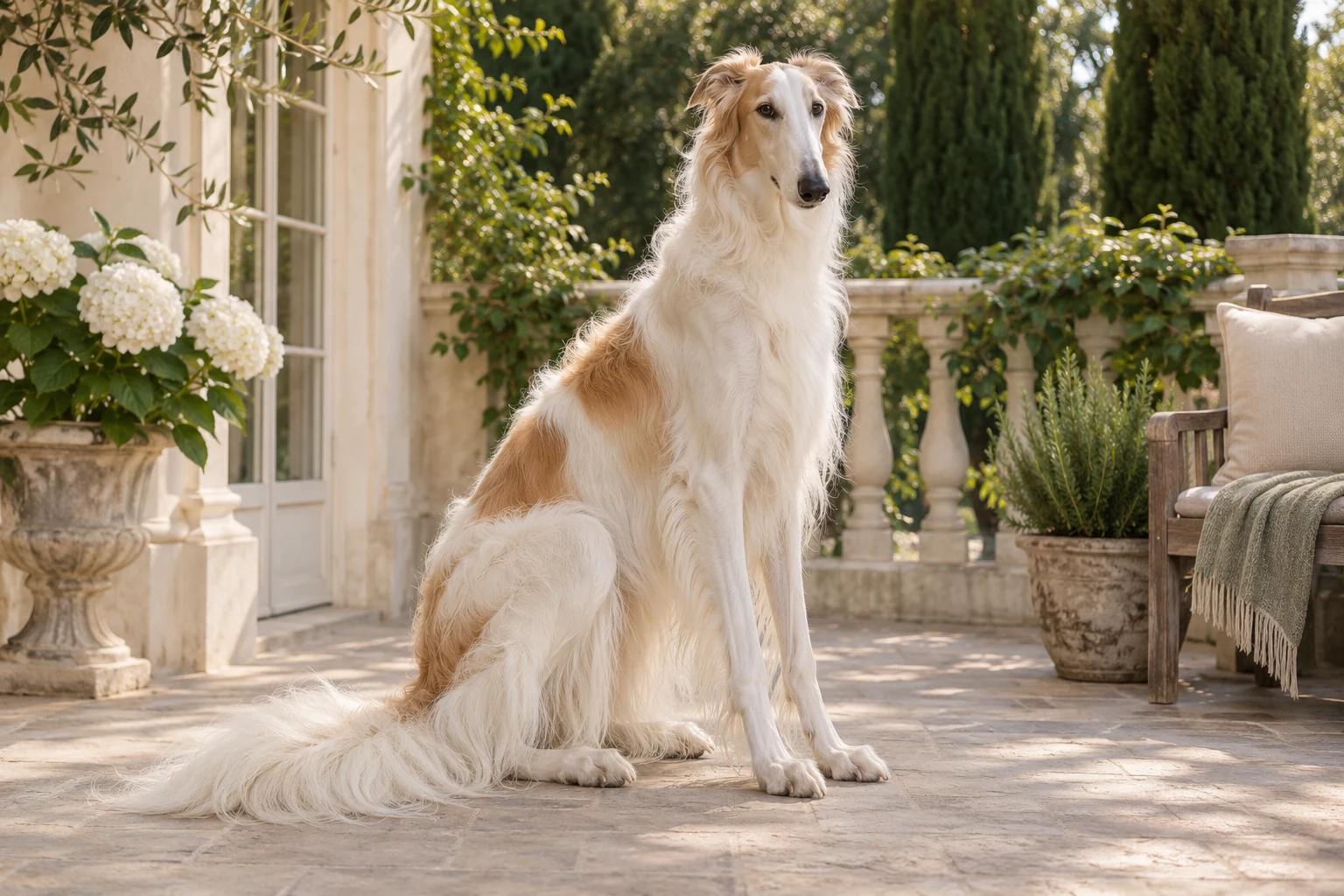
Borzoi vs Irish Wolfhound is a comparison between two striking hounds, but the decision becomes clearer when you stop looking at portraits and start looking at your hallway, vehicle, and ordinary week. Both call for thoughtful handling and room to live comfortably. Neither should be chosen simply because a photograph makes a large dog look serene.
Read the Borzoi profile alongside the Irish Wolfhound profile before meeting individual dogs. The aim is not to name a winner, but to identify which practical demands your household can reliably meet.
Borzoi vs Irish Wolfhound: start with the footprint
The AKC Irish Wolfhound overview identifies the Wolfhound as the tallest AKC breed. The site's reference likewise places it above the Borzoi in typical adult height. That difference deserves a real-world check rather than a casual assumption that both are simply “large.”
Measure the spaces you actually use. Include the opening into your vehicle, the resting area beside your desk, and the turning room at the bottom of a staircase. A dog needs to move through a home, not merely fit inside a floor plan.
The Borzoi is also a substantial adult dog. Its more flowing outline does not mean that narrow corridors, crowded seating, or unsuitable transport become irrelevant. Think about where each dog would stand while you put on a coat or open the front door.
Make a transport plan before choosing
Ask how the adult dog travels now and what restraint arrangement is used. Check equipment dimensions and vehicle compatibility instead of buying from a breed label alone. A puppy's first journey does not establish the answer for adulthood.
Also consider unexpected journeys. Who could help if the dog could not enter the vehicle as usual? Discuss realistic assistance and veterinary access without assuming you could simply carry either breed whenever necessary.
Difference between Borzoi and Irish Wolfhound coats
A visible difference between Borzoi and Irish Wolfhound coats is texture: the site describes the Borzoi as silky and the Wolfhound as wiry. Both profiles call for regular brushing, so the comparison is not “grooming versus no grooming.”
Ask to see an ordinary maintenance session for each. Watch how the caregiver positions the dog, checks the coat, and handles the places that require more attention. You may find that the method and physical setup matter more to you than the appearance of the finished coat.
Budget for equipment, professional assistance where needed, and household cleanup. Do not assume that a rough-looking coat can be ignored, or that a flowing coat necessarily means a complicated decorative haircut.
If one person will do most of the grooming, include that person in the decision. The dog should not arrive with a care routine everyone admires but nobody has time or confidence to carry out.
Company without expecting identical personalities
The AKC Borzoi overview describes a generally calm temperament. Calmness also appears in the Wolfhound's breed description. Those broad similarities are a starting point, not proof that two individual dogs will greet, play, or settle in the same way.
Spend time asking about ordinary companionship. Does the dog prefer to rest near people or seek repeated interaction? What happens when a familiar person leaves the room? How does it behave when a visitor arrives and then sits down?
Avoid treating a quieter greeting as a flaw or an enthusiastic greeting as a guarantee of easier living. Think about what each response means in your own house. If several people come and go throughout the day, the arrival routine deserves particular attention.
Children and other animals require individual consideration with either breed. Size alone can make shared spaces awkward, even without any intention to cause harm. Provide supervision, separate resting areas, and guidance suited to the actual animals involved.
Irish Wolfhound vs Borzoi training expectations
An Irish Wolfhound vs Borzoi training comparison should focus on the skills you need rather than a contest over intelligence. The site's Borzoi reference notes a more independent learning tendency. For either dog, clear expectations and consistent practice are more useful than assuming size or dignity will produce manners automatically.
List the everyday tasks that matter: moving through a doorway, walking with you, settling while visitors sit down, and accepting routine care. Start teaching those habits while the dog is learning your home, not after its physical size makes a difficulty inconvenient.
Ask a trainer how to set up practice for your space and experience. A crowded group class may not be the only option, and a private lesson need not mean that something has gone wrong. Choose instruction that helps you communicate clearly without intimidation.
Keep household cues consistent. If one person rewards waiting at a doorway and another encourages rushing through, the dog's task is unnecessarily confusing. Agree on a few useful routines rather than producing an elaborate rulebook nobody follows.
Build an activity week, not a breed stereotype
Neither comparison label tells you exactly how many minutes a particular dog should exercise. Discuss the dog's age, condition, and current routine with its caregiver and veterinarian. Separate physical activity from opportunities to explore, learn, and spend time with you.
Write down what happens on a normal workday and a rainy weekend. Include who handles outings, where they happen, and what you will do when the usual plan is unavailable. A garden is a location, not a complete schedule.
The Borzoi's existing first lure-coursing visit article addresses one optional activity. It should not become the reason to choose the breed if you have not first worked out the rest of daily life.
Borzoi or Irish Wolfhound: questions that help you decide
When choosing Borzoi or Irish Wolfhound, bring the same practical questions to both conversations. Ask about adult dogs' routines, care costs, transport arrangements, social experiences, and the support available after placement.
Request relevant screening records and discuss their meaning with your veterinarian. Do not turn one test, a breed average, or a seller's reassurance into a promise about future health. Keep the comparison grounded in evidence about the actual dog and family history.
The breed quiz can help organize your priorities. Use its result to prepare better questions, then choose only when your household can support the adult dog, not just the appealing first impression.
FAQ
Is an Irish Wolfhound bigger than a Borzoi?
The site's adult reference places the Irish Wolfhound above the Borzoi in typical height and weight. Measure the individual dog and relevant equipment rather than treating either breed's reference figures as exact dimensions.
Which breed needs less grooming?
Both profiles call for regular brushing. Their coat textures differ, so compare the actual maintenance method and your ability to perform it instead of assuming that one appearance means no work.
Which is better for a small home?
Neither breed can be assessed by floor area alone. Consider clear walking routes, resting space, outdoor access, transport, and building rules, then discuss the particular dog's needs with its caregiver.
Are Borzoi and Irish Wolfhounds equally easy to train?
Individual motivation and experience matter. The site's Borzoi profile notes more independence, but both need clear, consistent teaching of everyday skills. Meet adults and ask how their caregivers approached learning.
Sources behind this article
Article source checked: November 14, 2026. Source checked 2026-11-14
Keep reading

Affenpinscher vs Brussels Griffon: Everyday Differences
Read article →