Borzoi Temperament: Quiet Company, Independent Choices
Explore Borzoi temperament through everyday choices, introductions, training expectations, and the questions to ask before sharing your home.
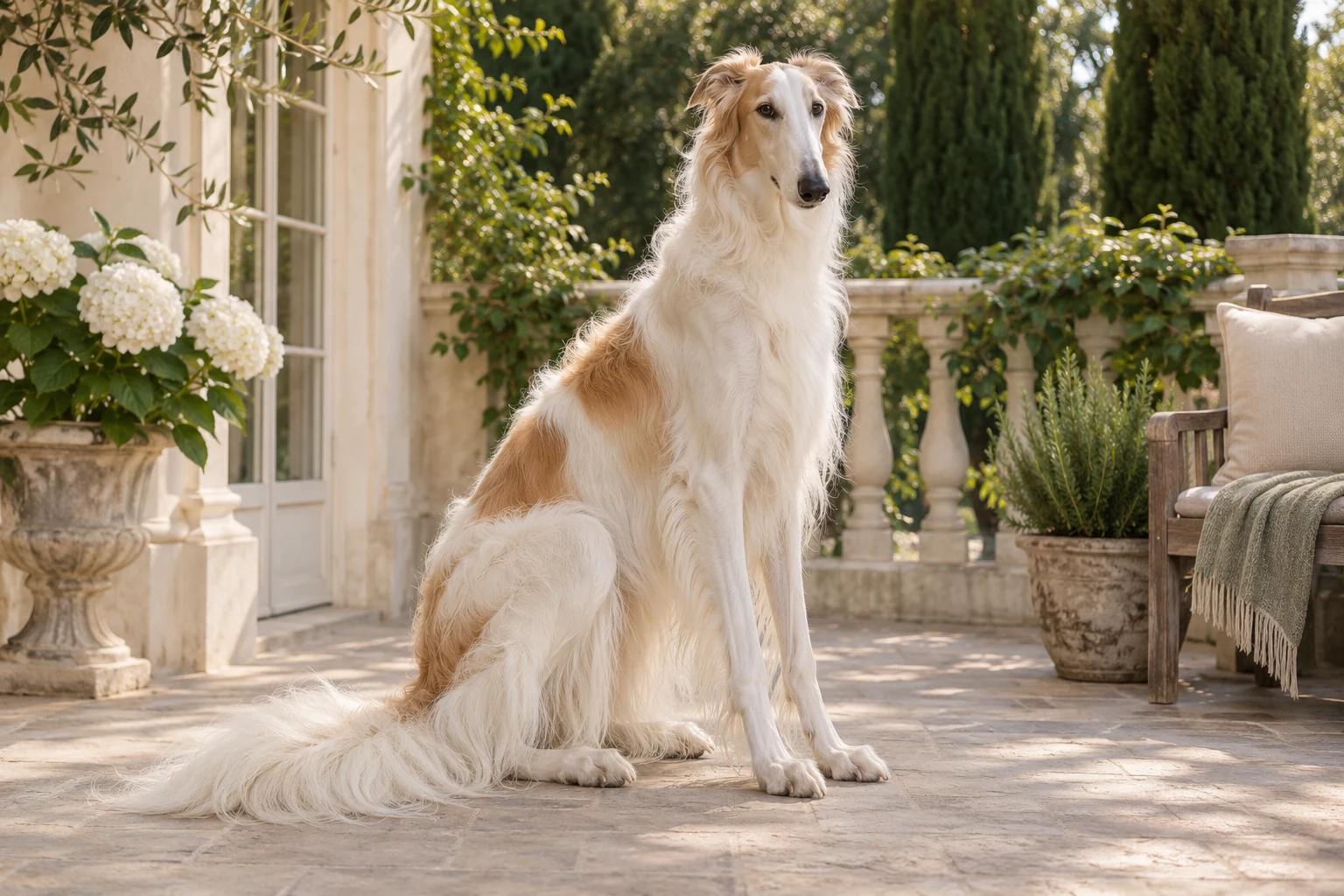
Borzoi temperament can be appealing if you enjoy companionship that does not need to be busy or demonstrative every minute. It can also be misunderstood when a quiet-looking dog is expected to make the same choices as an eager training partner in every situation.
The useful question is not whether Borzoi are “good dogs.” It is whether the particular dog's way of interacting fits the home you can provide. Begin with the Borzoi profile, then ask for real examples of daily life rather than relying on a handful of flattering adjectives.
Borzoi temperament: calm is not the whole story
The AKC Borzoi overview emphasizes a generally calm disposition. The UKC standard also describes a quiet companion while identifying the breed's sight-led hunting background. These ideas can coexist; a settled dog indoors is not automatically indifferent to everything outside.
Use that distinction when you picture your day. A dog resting beside your desk tells you something about that moment, but not everything about handling a busy crossing, meeting a visitor, or noticing movement beyond a boundary.
Ask the current caregiver to describe several settings. What happens when the door opens? How does the dog respond to a familiar person arriving? What changes on a walk? Specific answers are more informative than a statement that the dog is always relaxed.
Look for context, not a personality verdict
Write down what happened before and after a behavior. “Stayed behind the chair while three visitors entered” is a clearer observation than “aloof.” It leaves room to adjust the introduction and see whether the dog becomes more comfortable.
Likewise, choosing to lie across the room does not necessarily mean a lack of attachment. Notice whether the dog seeks company in quieter ways and which forms of interaction it actually enjoys.
Borzoi personality and your expectations of affection
Borzoi personality is often discussed through words such as dignified or independent. At home, translate those words into questions about access, attention, and personal space. Do you want constant physical contact, or would sharing a room satisfy your idea of companionship?
Meet adults when possible, without asking them to perform friendliness. Let the caregiver explain their usual behavior and watch at a comfortable distance. A single visit cannot predict your relationship with a future dog, but it can reveal whether your expectations need adjusting.
Consider everyone in the household. Someone may imagine a dog that welcomes every hug, while someone else wants a quiet walking companion. Agree that the dog's preferences matter and that interaction should not be forced to match a picture of the breed.
Provide a resting place where people will not repeatedly step over the dog. With a tall, long-bodied companion, a crowded room can turn an otherwise peaceful evening into a series of interruptions. Furniture placement is part of the social plan.
Borzoi behavior during learning
The site's reference points toward an independent approach to training. Plan for clear, short lessons and rewards that matter to your dog rather than judging enthusiasm against another breed's performance.
Choose a practical first goal: coming toward you in a quiet room, waiting while you prepare equipment, or moving to a resting area. Define the behavior in observable terms. “Be obedient” is too broad to teach or measure.
Practice where the dog can succeed, then change one aspect of the situation at a time. If a skill works in the living room but not near the front door, the next lesson can happen farther from the doorway rather than in the busiest possible version of the problem.
Keep notes about what helped. Perhaps a different reward or a shorter session made the task clearer. Those details are more useful than deciding the dog is stubborn after one difficult attempt. Get help from a reward-based trainer when you need a plan suited to your circumstances.
Avoid making every interaction a test
Some moments should simply be companionship. If the dog approaches while you are reading, you do not need to turn the visit into a chain of commands. Notice and enjoy the interaction on its own terms.
Training should make shared life easier, not become a daily examination of whether the dog lives up to a label. Small, reliable habits can matter more than a long list of demonstrations.
Introductions, visitors, and other animals
Borzoi characteristics do not settle compatibility with a particular child, dog, cat, or other animal. Ask about the individual dog's actual experience and be candid about your home. A vague statement that the dog has “seen cats” is not the same as a detailed history of living with them.
Plan introductions with the caregiver or a qualified professional. Use appropriate separation and supervision rather than allowing an uncontrolled meeting to answer the question. Do not promise that affection toward people will translate into compatibility across species.
For visitors, make the first moments predictable. Explain where the dog can rest and ask guests not to crowd it. A person who is comfortable letting a dog approach in its own time can make a better first impression than someone determined to win an immediate greeting.
Children need active adult supervision and clear boundaries around resting and eating. No breed description replaces that responsibility. If an interaction concerns you, change the setup and seek help instead of waiting for the dog to become accustomed to pressure.
Plan beyond the quiet living-room picture
The site's Borzoi activity reference is toward the higher end, so do not mistake indoor composure for a complete exercise plan. Discuss suitable activities and physical limits with your veterinarian, and build an ordinary week that includes outings and mental engagement.
Containment and handling deserve deliberate planning. Review doors, gates, equipment, and who takes responsibility during arrivals. For the separate subject of organized sport, see the first lure-coursing visit guide; this temperament article is not an event-entry guide.
Before deciding, compare your expectations with the breed quiz. Then return to the individual dog: what has its caregiver observed, what support will you have, and what parts of your routine need changing? A thoughtful match is based on those answers, not on finding the most attractive personality description.
FAQ
Are Borzoi affectionate?
A Borzoi may enjoy companionship without seeking constant contact. Ask about the individual dog's usual ways of approaching people, resting near them, and requesting attention rather than expecting one style of affection.
Are Borzoi quiet dogs?
The breed references describe a relatively quiet tendency, and the site's vocal rating is low. Individual Borzoi still bark, so ask about the circumstances that prompt noise and do not assume silence in shared housing.
Does a calm Borzoi need much activity?
A calm manner does not remove activity needs. Plan regular suitable outings and mental engagement around the individual dog's age, condition, and routine, with veterinary input when needed.
Can a Borzoi live with a cat?
Breed temperament alone cannot answer that. Discuss the specific dog's history and your cat's needs with the caregiver and an appropriate professional, and plan management rather than relying on an unsupervised test.
Sources behind this article
Article source checked: November 14, 2026. Source checked 2026-11-14
Keep reading

Airedale Terrier Temperament: What Everyday Life Can Feel Like
Read article →