Borzoi Grooming: A Practical Coat-Care Routine
Make Borzoi grooming manageable with a thoughtful brushing setup, coat checks, shedding cleanup, and clear questions for your groomer.
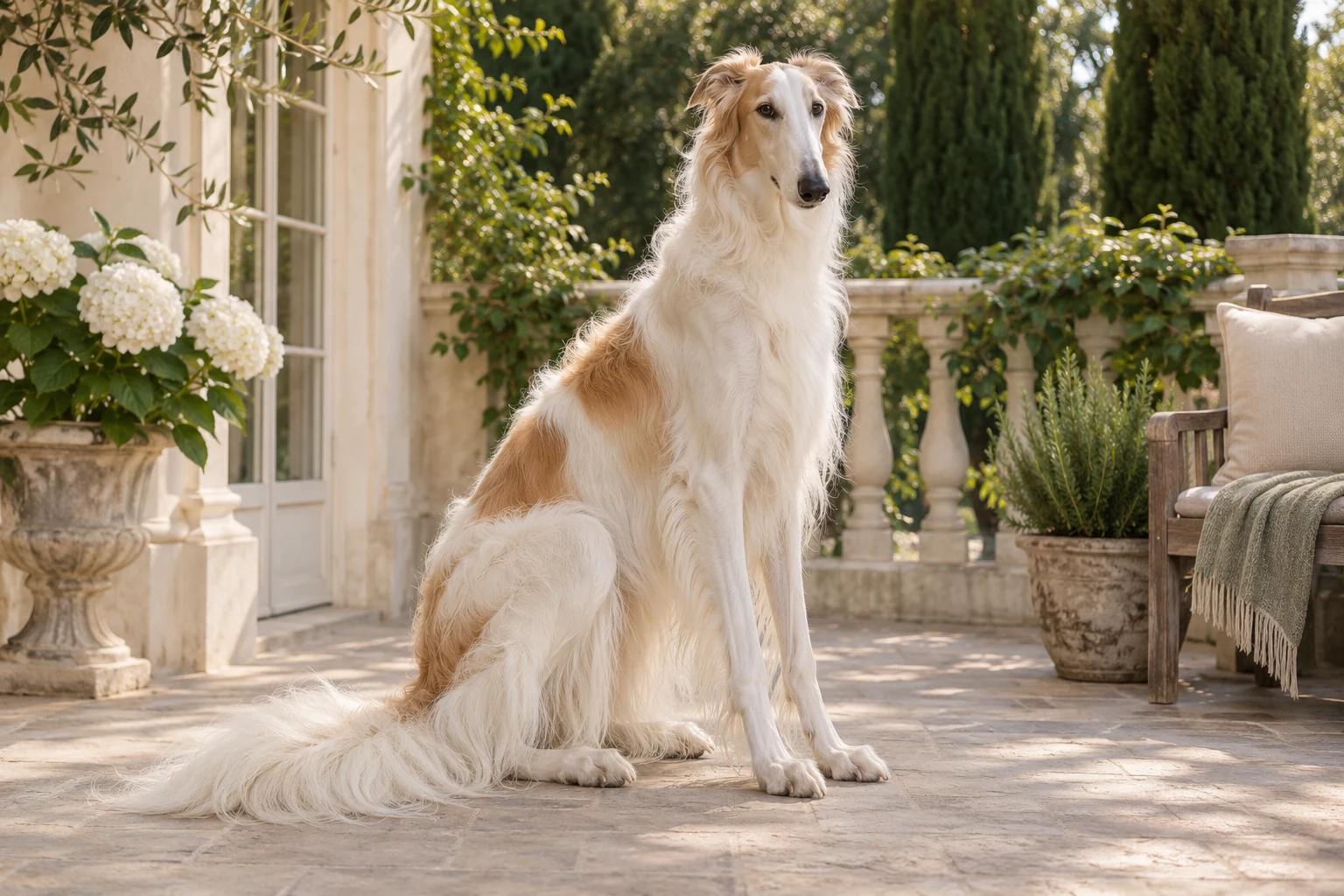
Borzoi grooming is easier to organize when you think in sections rather than treating the entire dog as one large brushing project. The outline may look delicate and flowing, but everyday care is about reaching the coat comfortably, noticing changes, and keeping a routine you can repeat.
The Borzoi profile suggests brushing once or twice a week as an everyday starting point. Your dog's coat condition, activities, and tolerance for handling should shape the details. A brushing session does not have to become a full salon appointment to be useful.
Borzoi grooming starts with understanding the coat
The UKC Borzoi standard describes silky hair with variation in its shape and fuller furnishings on the tail and hindquarters. That uneven distribution is useful to notice: the same sweeping brush movement will not necessarily work equally well on every part of the dog.
Before buying a collection of tools, ask someone experienced with Borzoi coats to show you a suitable brush and comb on your own dog. Explain whether you are maintaining a companion's everyday coat or preparing for a particular event. Those conversations need not lead to identical equipment lists.
Look at the coat when the dog is standing comfortably and again when resting. Which areas can you reach without leaning across the dog? Where does the hair overlap? A little attention to your working position can make regular care much less awkward.
Create room for a tall dog
Choose a well-lit area with secure footing and enough space to move around the dog. Avoid arranging the session in a narrow passage where someone else must keep stepping over a tail or squeezing past your equipment.
Keep tools within your reach but out of the dog's walking path. Put a towel or washable cover where loose hair can be collected easily. The aim is a familiar, unhurried setup, not an elaborate grooming station that takes longer to assemble than to use.
How to brush a Borzoi without rushing the difficult areas
Learning how to brush a Borzoi should include a demonstration of pressure, direction, and how to check a finished section. A groomer can watch your technique and correct a small misunderstanding before it becomes a frustrating habit.
The AKC home-grooming guide recommends gentle brushing and professional guidance on suitable tools. Use that as the basis for hands-on instruction rather than assuming that a stronger tool or firmer stroke will solve resistance.
Start where your dog accepts handling comfortably. Work through an agreed sequence so you know which areas are finished. For example, you might record one side as complete and leave the remaining section for a later short session if the dog needs a break.
Do not repeatedly drag a tool through a place that catches. Pause, look closely, and seek help when you cannot work comfortably. A difficult tangle and a dog learning to stand for brushing are two separate problems; trying to solve both through persistence alone can make the session worse.
Keep the coat map simple
A note on your phone can list the sections your groomer wants you to check. It might identify a recurring trouble spot or distinguish areas that need different handling. Record the actual location rather than writing only “brushed dog.”
This is especially helpful when care is shared. Someone taking over should know what remains to be done, not assume that every part received attention because the brush is sitting beside the bed.
Borzoi shedding and the household routine
Borzoi shedding belongs in the practical plan, even when the coat looks tidy. The site's reference describes regular loose hair rather than a hair-free household. Decide where you want to concentrate cleanup instead of treating every strand as evidence that grooming has failed.
A washable cover on a favorite resting place can be easier to manage than repeatedly cleaning an entire piece of furniture. Store a suitable cleanup tool near the area where hair actually collects. Build washing and vacuuming into the week alongside coat care.
Notice changes without trying to diagnose them. If hair loss is unusual for your dog, or the skin looks altered or uncomfortable, contact your veterinarian. Buying another brush is not a substitute for investigating a new concern.
Avoid comparing the amount collected with photographs posted by other owners. Coat condition, the time since the last session, and how the hair was gathered make those comparisons unreliable. Your own record is a more useful reference.
Borzoi coat care after ordinary outings
Borzoi coat care should fit the places you visit. After a muddy path or an outing through vegetation, give yourself a moment to look over the dog before settling indoors. This is an opportunity to notice what needs attention, not a requirement to wash the whole dog after every walk.
Keep the return-home arrangement straightforward: somewhere to stand, a towel within reach, and room to check without blocking a doorway. If the coat needs more work than you can manage comfortably, arrange help rather than squeezing a difficult job into the final minutes before leaving for work.
For bathing, ask your groomer about products, rinsing, drying, and a workable interval for this dog. Consider the physical logistics too. Can the dog enter and leave the washing area comfortably? Can you reach each side without an awkward lift? A professional appointment may solve a space problem as much as a styling problem.
Make appointments useful between visits
Bring specific questions to a grooming appointment. Ask which parts of the coat were straightforward, what needs closer attention at home, and whether your tools remain suitable. Photographs of a recurring issue can help explain what happens between appointments.
Keep nail, ear, and dental-care questions on the same list, while getting individual instruction from the appropriate professional. This article is not a treatment or trimming manual. If handling seems painful, stop and speak with your veterinarian.
For a separate look at an outdoor activity, read planning a first Borzoi lure-coursing visit. If you are still choosing a breed, the breed quiz can help you consider coat care alongside space, activity, and companionship.
FAQ
How often should I brush a Borzoi?
My Breed Atlas gives once or twice weekly as a starting point. Ask a groomer to adapt that routine to your Borzoi's coat and activities, and keep track of areas that need attention between planned sessions.
Does a Borzoi shed?
Yes. Regular loose hair is part of the site's Borzoi care profile. Plan for both brushing and household cleanup rather than expecting coat care to eliminate shedding.
What is the best brush for a Borzoi?
Choose a tool after a groomer has assessed your dog's coat and demonstrated its use. A comfortable technique and a way to check your work matter more than buying the largest grooming kit.
Can I handle all Borzoi grooming at home?
Some routine care may be manageable at home with instruction. Difficult tangles, awkward handling, or tasks beyond your experience are reasons to seek professional help. Pain or an unusual skin change belongs with your veterinarian.
Sources behind this article
Article source checked: November 14, 2026. Source checked 2026-11-14
Keep reading

Affenpinscher Grooming: A Practical Coat-Care Routine
Read article →