Bordoodle vs Aussiedoodle: Compare Dogs, Not Promises
Compare Bordoodle vs Aussiedoodle through parentage, coat care, activity, and individual history without treating crossbreed labels as guarantees.
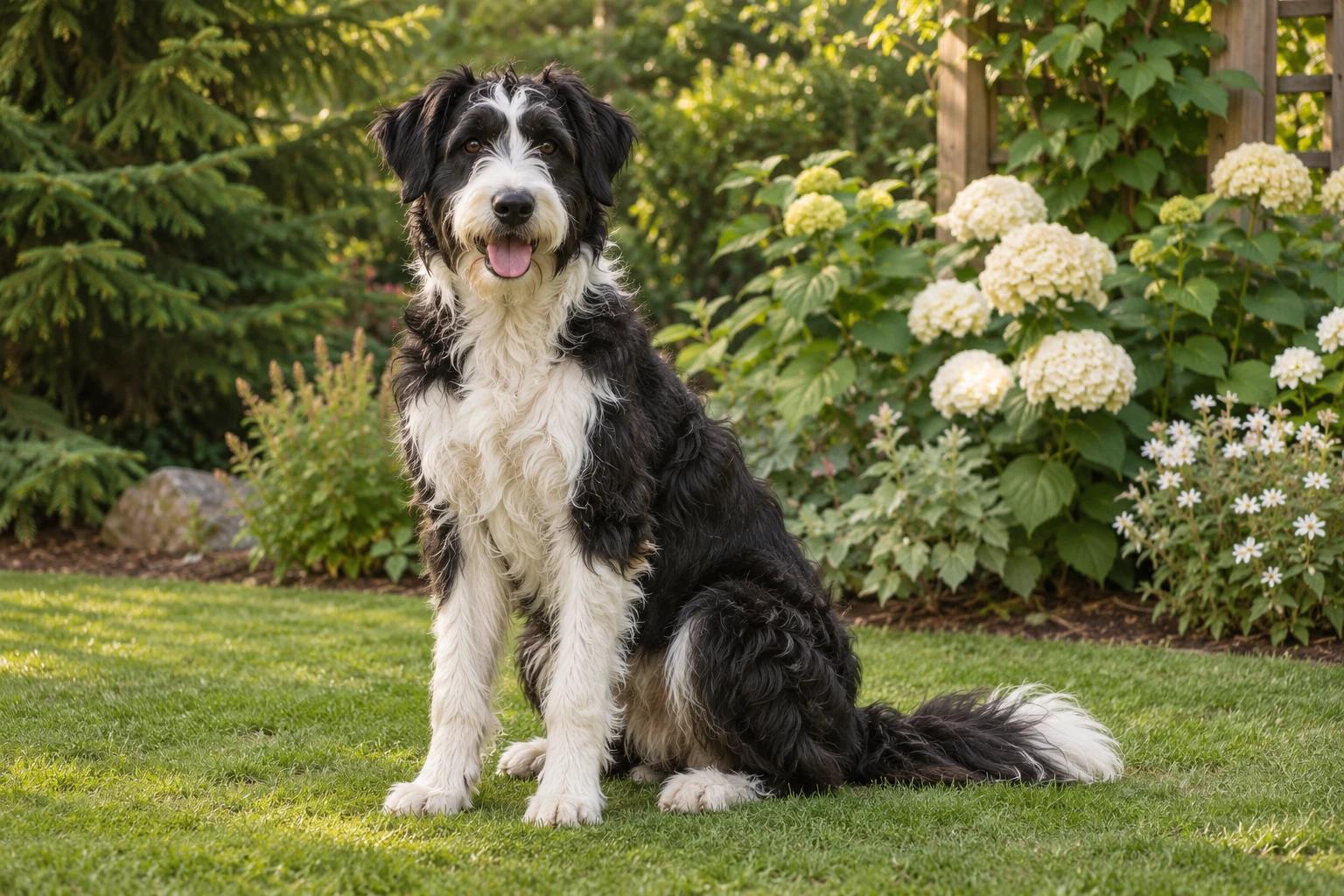
Bordoodle vs Aussiedoodle begins with a straightforward ancestry difference: the Bordoodle combines Border Collie and Poodle ancestry, while the Aussiedoodle combines Australian Shepherd and Poodle ancestry. Beyond that distinction, a useful comparison needs information about actual dogs rather than a promise that either cross inherits a particular combination of traits.
The Bordoodle profile and Aussiedoodle profile separate reported descriptions from editorial estimates. Read those qualifications alongside the headline traits. Neither profile is a standardized prediction for an individual puppy.
Bordoodle vs Aussiedoodle: start with the family information
Ask which dogs are in the lineage and what is known about them. A familiar crossbreed name may summarize ancestry, but it does not identify the parents, explain a backcross, or establish the reliability of a size or temperament estimate.
The AKC Poodle overview recognizes different Poodle varieties. That makes the Poodle side worth discussing specifically rather than assuming it contributes the same background in every Bordoodle and Aussiedoodle.
Keep the questions plain. Which variety is involved? What are the parents like in ordinary home life? Which information comes from direct observation, and which is an expectation? A clear explanation is more useful than a string of generation abbreviations without supporting detail.
Parent descriptions are background, not an inheritance recipe
The AKC Border Collie overview emphasizes an energetic worker. The AKC Australian Shepherd overview describes a ranch-dog background. These sources explain the parent breeds; they do not establish that either cross will behave as an average of its parents.
Use that background to decide what to investigate. Ask about activity, responses to movement, familiar teaching routines, and life between outings. Do not turn a parent-breed adjective into a guaranteed feature of a puppy you have not met.
Size comparisons need more than two labels
When looking at Aussiedoodle vs Bordoodle, ask for the specific size information behind each dog. The Bordoodle page reports a typical 33–66-pound description, with explicit uncertainty. It is not a rule that makes every Bordoodle larger or smaller than every Aussiedoodle.
The most useful comparison is between actual measurements and clearly explained estimates. Adult dogs can be measured directly. With puppies, ask what information supports the prediction and acknowledge what cannot yet be known.
If your home, transport, or physical circumstances impose a firm size limit, discuss that before becoming attached to a listing. A vague assurance that a dog will be “medium” is not enough when you need something more precise.
Avoid comparing the largest number from one description with the smallest from another. That can create a dramatic-looking difference without telling you anything useful about the two dogs you are considering.
Activity: compare the ordinary day
Both site profiles describe dogs for whom outings and learning matter. The Bordoodle notes favor a brisk outing over a brief stroll; the Aussiedoodle notes describe a longer, purposeful outing. Those are broad lifestyle descriptions, not exercise prescriptions or a precise ranking of individuals.
Ask each caregiver to walk you through a normal weekday. Where does the dog go, what happens during the outing, and who participates? A description of one exciting weekend is less helpful than understanding the routine that happens repeatedly.
Consider your own interests. Do you enjoy teaching small skills, exploring new routes, or joining a class? Choose activities you can realistically maintain instead of building a fantasy schedule around the most impressive examples of either cross.
A shared interest in learning does not mean the dog should be entertained every minute. For a separate discussion of quiet relaxation, read helping a Bordoodle learn to settle. That article addresses a practical skill rather than declaring one cross naturally calmer.
Coat care is an individual assessment
A visible difference between Bordoodle and Aussiedoodle may be coat texture, but appearance varies within each cross. The Bordoodle profile includes straight, wavy, and curly descriptions; the Aussiedoodle profile includes wavy and curly descriptions. Do not select a maintenance routine from the name alone.
Both profiles call for regular coat care, but the individual texture and intended finish should guide the routine. Ask about brushing, detangling, and professional appointments without assuming either cross requires less work.
Ask a groomer to assess the coat you are considering and explain the upkeep. A longer finish may involve different practical work from a shorter one, even on the same dog. Find out what you would do at home and what professional appointments would cover.
Be wary of using a soft-looking photograph as evidence that the coat will be easy. A picture does not show the grooming history, the technique used, or the maintenance required between photographs.
Learning, company, and household fit
Both profiles describe engaged companions, but neither name tells you how a dog will manage your particular household. Ask about familiar cues, handling, visitors, and time spent with different caregivers. Request examples rather than accepting only a cheerful adjective.
If several people will care for the dog, discuss who teaches which routines and how information is shared. A capable learner can still receive confusing instructions when the household uses different cues or rewards different actions.
For a home with children or other animals, focus on the actual dog's history and appropriate introductions. A favorable description of either cross is not a compatibility test. Arrange supervision and space in a way that fits the individuals involved.
Noise also deserves a direct question. Ask what triggers vocal behavior in the current setting and what the caregiver observes over an ordinary day. Do not choose from a claim that one label always means quiet and the other always means loud.
Choosing a Bordoodle or Aussiedoodle
Choosing a Bordoodle or Aussiedoodle should become a comparison of evidence: known background, observed behavior, care needs, and the support available after the dog comes home. Keep uncertain points visible rather than filling them with your preferred outcome.
The breed quiz can help you organize priorities such as activity, grooming, and companionship. Use the result to sharpen questions, not to replace conversations with caregivers or professional advice about an individual dog.
You do not have to choose a winner between two labels. The right next step might be meeting adult dogs, learning more about coat maintenance, or waiting until your arrangements are clearer. A careful comparison is successful when it improves the decision, not merely when it ends in a purchase.
FAQ
What is the main difference between a Bordoodle and an Aussiedoodle?
Their named ancestry differs: Bordoodles combine Border Collie and Poodle ancestry, while Aussiedoodles combine Australian Shepherd and Poodle ancestry. That distinction is a research starting point, not a complete prediction of an individual dog's appearance, behavior, or care needs.
Is a Bordoodle always calmer than an Aussiedoodle?
No reliable individual comparison follows from the names alone. Ask about ordinary behavior, familiar routines, and life between outings. Both profiles describe engaged dogs, and the actual dog's history matters more than a broad claim about which cross is calmer.
Which cross is smaller?
Neither name alone settles the size of the dog you will meet. Ask about actual parent information and the basis of any puppy estimate. If size is a firm constraint, assess adult measurements where possible rather than relying on a label.
Which cross needs less grooming?
Compare individual coats and the finish you intend to maintain. Site summaries offer starting points, but texture, length, and existing condition matter. Ask an experienced groomer to explain both home maintenance and professional appointments before deciding that one dog will be easier.
Sources behind this article
- AKC Border Collie overview: parent background only ↗
- AKC Poodle overview: parent background only ↗
- AKC Australian Shepherd overview: parent background only ↗
Article source checked: November 14, 2026. Source checked 2026-11-14
Keep reading

Affenpinscher vs Brussels Griffon: Everyday Differences
Read article →