Bordoodle Size: Reading Height and Weight Estimates
Understand reported Bordoodle size ranges, ask useful parentage questions, and plan equipment and living space without treating estimates as promises.
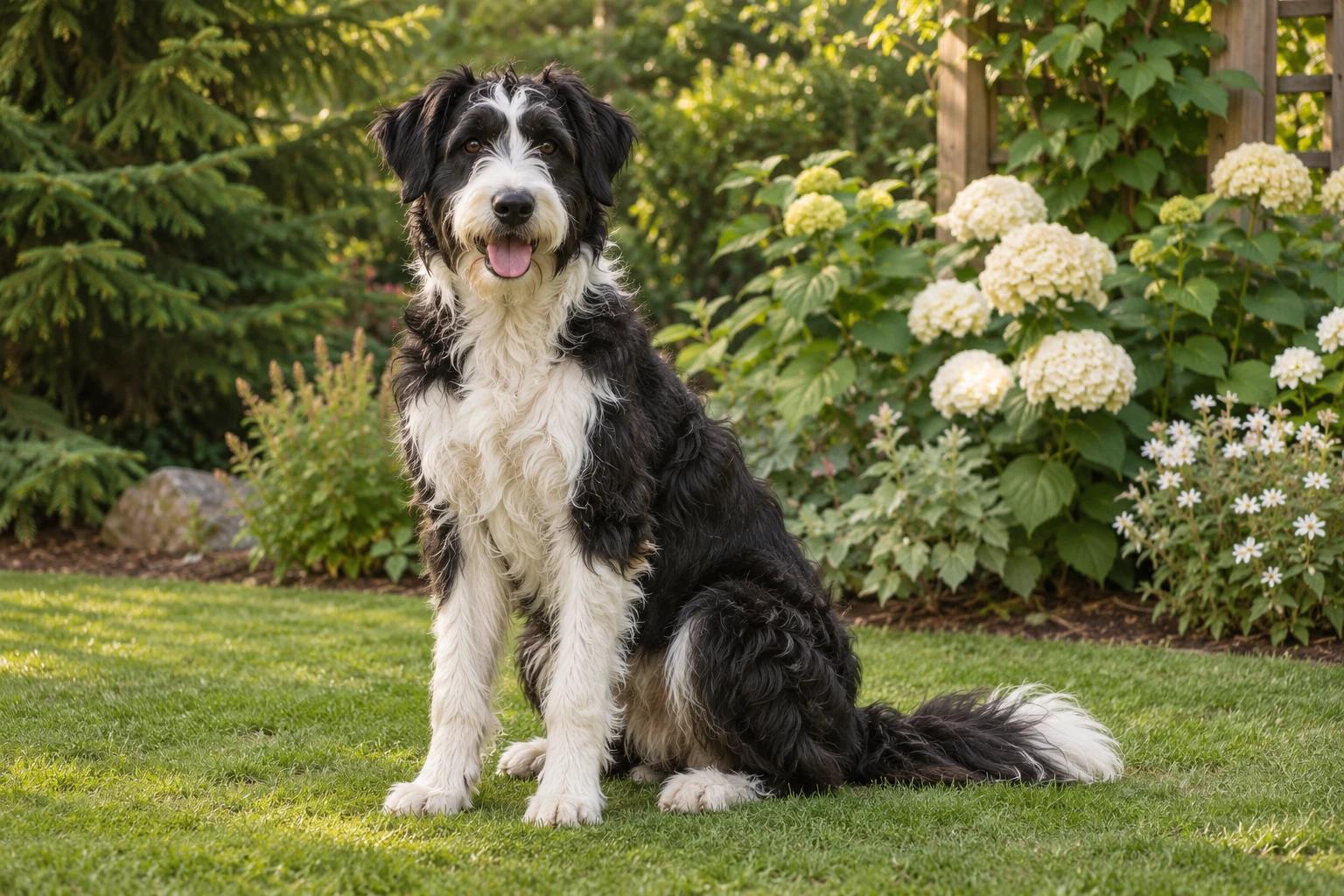
Bordoodle size is usually described with a range, not a fixed adult measurement. My Breed Atlas reports a typical height of 12 to 22 inches and weight of 33–66 pounds, while clearly noting that parent variety and individual dogs can differ. Those figures are planning references, not a guarantee for a puppy.
The Bordoodle profile identifies Border Collie and Poodle ancestry. To understand a particular dog's likely scale, ask about the actual parents and the basis of any estimate instead of relying on the crossbreed name alone.
Bordoodle size: what the published range does and does not mean
A reported range is useful when you are trying to picture whether your home and routine can accommodate a dog. It does not certify that every adult must fall inside its endpoints. Nor does it tell you which point within the range is most likely for a puppy you have seen online.
Keep the source and its wording beside the number. “Reported typical range” communicates a different level of certainty from a measurement taken from an adult dog. Removing that context can make an estimate look like a rule.
If size is a firm constraint, say so early in conversations with breeders or rescues. Explain the practical reason, such as a housing restriction or a limit on what you can lift. That lets you discuss the uncertainty honestly rather than hoping the dog will fit a boundary later.
Do not turn a label into a measurement
Words such as small, medium, or mini may be used differently by different people. Ask what a label means in that particular conversation and request actual information about the parents. A description without measurements is not enough when exact dimensions matter to you.
Likewise, a generation label does not give you a finished adult height or weight. Keep ancestry descriptions and size estimates as separate questions, even when they appear together in a listing.
Why the Poodle background deserves a specific question
The AKC Poodle overview recognizes Standard, Miniature, and Toy varieties. That makes “Poodle parent” incomplete information for someone trying to understand a Bordoodle's background. Ask which variety is involved and what is known about the actual dog's measurements.
The AKC Border Collie overview provides background on the other parent breed. Neither parent's profile is a formula for calculating an individual crossbred puppy's adult dimensions.
Ask the person giving an estimate to explain their reasoning. Are they referring to the parents, adult relatives, previous litters, or only a general chart? You do not need a complicated prediction model. You need to know what evidence is available and what remains uncertain.
Photographs of relatives can be helpful context, but ask whether the dog pictured is an adult and how its size was recorded. A close-up of a fluffy coat is a poor substitute for an actual measurement.
Bordoodle weight is not a target to force
Bordoodle weight figures describe reported adult sizes; they should not become a feeding goal. Do not try to make a dog reach the middle of the published range or remain below its lower end. Discuss appropriate growth, body condition, and feeding with your veterinarian.
Keep dated veterinary weights if you want a reliable record. Include the dog's age and the circumstances rather than comparing an isolated number with an unrelated puppy's online update. Your veterinarian can interpret changes in the context of the individual.
If an adult's weight differs from the published description, that alone does not establish a problem. It is a reason to look at the actual dog with professional guidance, not to make a diagnosis from a breed page.
For household planning, weight matters in practical ways too. Think about lifting into a vehicle if assistance becomes necessary, arranging care with someone able to manage the dog, and choosing equipment with appropriate limits.
Bordoodle height and the space you actually have
Bordoodle height is another useful reference, but it does not describe every dimension relevant to daily life. A doorway, resting area, carrier, or vehicle arrangement may require different measurements. Follow the equipment maker's fitting instructions rather than substituting a breed average.
Measure the space before buying large items. Check the usable interior, not just the outside dimensions. Consider where the item will sit and whether doors or walkways remain accessible once it is in place.
If you are preparing for a puppy, prioritize adaptable arrangements where practical. Avoid making every expensive purchase around one narrow adult-size prediction. Reassess fit as the dog grows instead of assuming an early purchase will remain suitable indefinitely.
Look past the coat's outline
A fuller coat can change the visual impression of a dog. When equipment fit matters, ask for help measuring and checking the dog itself rather than estimating from a photograph or from the outermost hair.
Bring the actual item to a fitting appointment when possible. A professional who can see both the dog and the equipment can answer a more useful question than someone looking at a product picture alone.
How big do Bordoodles get in a real household?
The question how big do Bordoodles get often hides a second question: will this dog fit my life? Separate those questions so that a plausible size estimate does not stand in for the whole decision.
A dog that fits your vehicle still needs a workable outing routine. A dog you can lift still needs teaching and appropriate handling. Size can affect arrangements, but it does not tell you how much engagement, company, or coat care the individual will need.
The breed quiz can help organize those broader preferences. For a different part of Bordoodle life, read learning to settle, which focuses on quiet relaxation rather than dimensions.
If you need more certainty about adult size than a puppy estimate provides, consider whether an adult dog would suit your search. You can assess present measurements directly while still asking about behavior, care history, and the practical transition to your home.
FAQ
What is the typical Bordoodle size?
My Breed Atlas reports a typical height of 12 to 22 inches and weight of 33–66 pounds. These are reported descriptions, not guaranteed boundaries. Parent variety and individual dogs can differ, so ask about the particular dog and the basis of any estimate.
Does a mini label guarantee a small adult Bordoodle?
No. Ask what the label means to the person using it and request actual parent information. A marketing description or generation label is not an individual adult measurement and should not be treated as a size guarantee.
Should my Bordoodle weigh the middle of the published range?
No. A published range is not a feeding target. Your veterinarian should help you assess appropriate growth, body condition, and feeding for the individual dog. Do not change feeding simply to make the dog match a number on a profile.
How can I plan if adult size is uncertain?
Use the available parent and relative information, choose adaptable equipment where practical, and reassess fit as the dog grows. If exact adult dimensions are essential, meeting adult dogs may give you more useful certainty than relying on puppy predictions.
Sources behind this article
Article source checked: November 14, 2026. Source checked 2026-11-14
Keep reading

Airedale Terrier Temperament: What Everyday Life Can Feel Like
Read article →