Bombay vs Burmese
Compare Bombay vs Burmese cats using current adult weights, distinctive coats and practical companionship questions without ranking individuals.
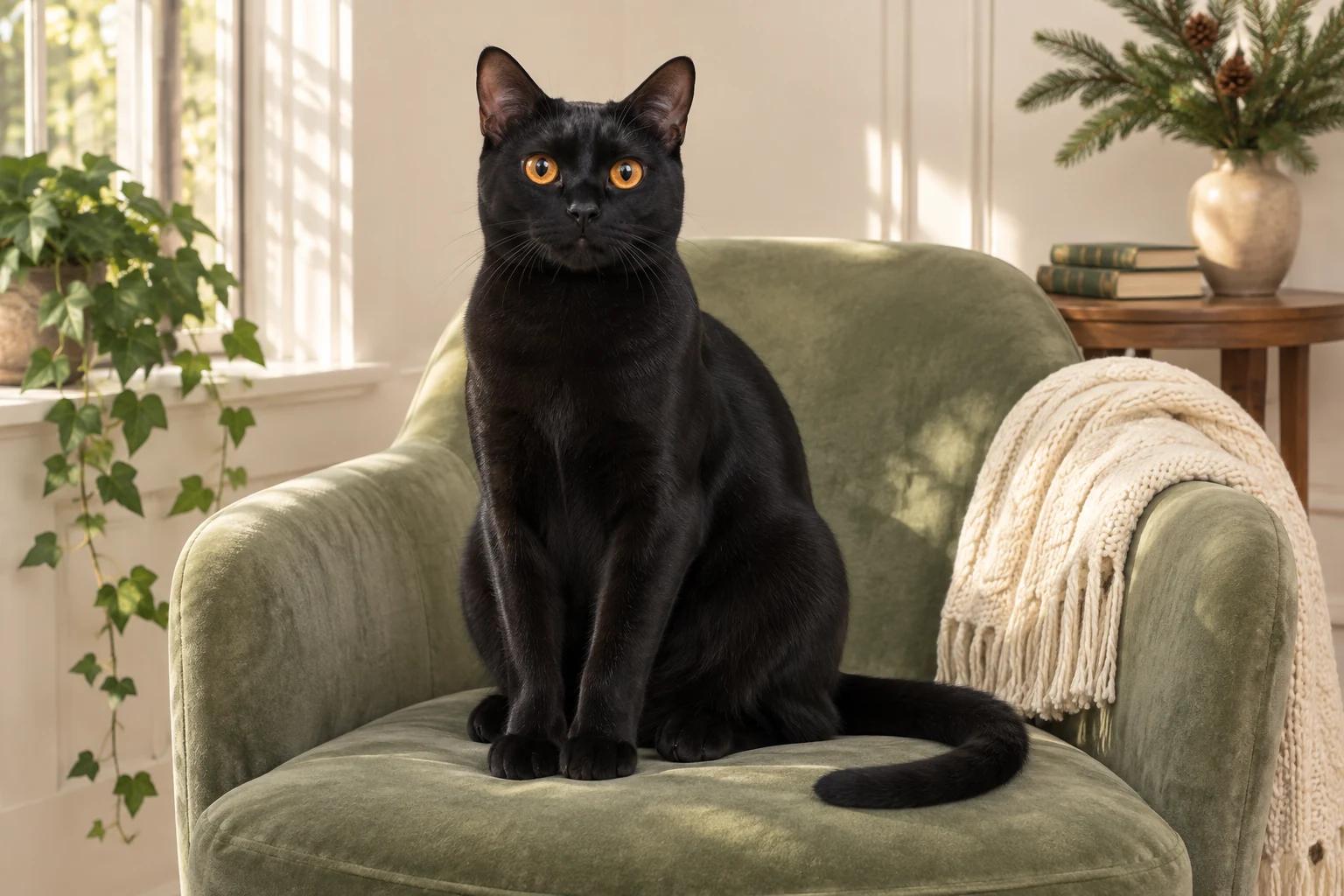
Bombay vs Burmese is not simply a choice between two differently named black cats. The current Bombay profile and Burmese profile describe separate breeds with their own reference ranges. Compare the particular animals as well as their appearances: matching female weight bands do not make their identities interchangeable.
Bombay vs Burmese: what the current weights tell you
The current adult references are:
- Bombay females: 6–9 pounds.
- Bombay males: 8–11 pounds.
- Burmese females: 6–9 pounds.
- Burmese males: 11–14 pounds.
The female bands are identical, while the male bands meet at 11 pounds. That is more informative than a blanket statement that one breed is always larger. A nine-pound female falls within either female range; an eleven-pound male falls within either male range. The number on a scale cannot identify the breed by itself.
When comparing equipment needs, keep these ranges separate from measurements of the actual body. Two cats of equal weight need not occupy an identical outline. A bed's usable surface and a carrier's internal space deserve their own check. Weight capacity is only one part of fit, not a substitute for length and width.
The Bombay's outline matters as much as its black coat
CFA's Bombay account describes a medium-sized, solidly muscular cat with a short, dense coat lying close to the body. Its head and short broad muzzle have rounded contours, with medium-sized ears and rounded eyes set apart. The eyes range from gold to copper.
This is a domestic breed developed using American Shorthair and Burmese cats, not a small wild cat. The panther comparison concerns its intended appearance. It should not be used to invent an exotic temperament or unusual household requirements.
For an owner comparing photographs, the close coat makes the body's outline particularly important. Look at the whole animal rather than treating black color as the complete description. A black cat in an advertisement does not become a Bombay simply because its coat looks glossy. Establish the animal's identity through its background, then consider what its actual build and individual history mean for life with you.
A Burmese has its own compact, muscular identity
CFA's Burmese description emphasizes substantial bone and muscle in a medium-sized, compact frame. A rounded head and broad, short muzzle contribute to its contours. The very short, fine coat lies close and has a glossy finish. CFA recognizes sable, champagne, platinum and blue.
These details make the difference between Bombay and Burmese more useful than a simple contrast of dark and light coats. A sable Burmese is not merely an alternative label for a black Bombay. The breed identity and the registry's color description belong together, even if a poorly lit image makes two coats appear similar.
Do not make a decision from a photograph's brightness setting. If a listing gives only a color and a nickname, clarify what animal it actually describes. A comparison is meaningful when the names refer to the breeds you intend to compare, rather than to any cat that happens to resemble a familiar picture. The outline, coat description and documented identity answer different parts of that question.
A kitten photograph is not a permanent color sample
TICA's Burmese account explains that young Burmese can have darker extremities, while the body color deepens as the coat matures and the contrast becomes less pronounced. This is useful when comparing kitten images with pictures of adult cats: they do not necessarily represent the same stage of development.
Treat an older photograph as a record of appearance at that time, not a guarantee of an unchanged adult shade. If you are choosing a companion, a slight difference between photographs should not become the entire basis of the decision. Lighting, age and the actual animal in front of you are more informative together than a tiny color sample on a screen.
For a Burmese vs Bombay comparison, distinguish an adult description from a kitten advertisement. Ask which photographs show the same individual and when they were taken. This is an appearance question, not a method of judging personality. A darker or lighter-looking image cannot tell you how the cat will respond to your household.
Compare real activities rather than choosing an imagined opposite
VCA's Burmese account describes an interest in learning and games, and recommends toys, scratching opportunities and sturdy elevated perches. Those are concrete needs to consider instead of assuming that a compact companion only wants to occupy a lap.
A prospective owner should find out which opportunities the particular cat actually uses. An elevated place must be suitable for that individual, and a collection of toys is useful only when it offers something the animal wants to do. Observe an ordinary activity rather than demanding an impressive demonstration on the day you meet.
When choosing a Bombay or Burmese, do not use one breed as a convenient opposite for an expectation you have attached to the other. A smaller-looking animal is not necessarily a less involved companion. The practical comparison is between the activities and relationships of the particular cats available to you, and what you can accommodate consistently, rather than between two imagined extremes.
The Bombay front-door guide covers entrance management as a separate household task. The cat quiz helps you reflect on broader ownership preferences.
FAQ
Are the current female weight references different?
Bombay and Burmese profiles both list adult females at 6–9 pounds; that overlap does not make the breeds interchangeable.
Can an eleven-pound male fit either reference range?
An eleven-pound male fits both Bombay and Burmese references: eleven pounds is the upper end of the Bombay male band and the lower end of the Burmese male band.
Can a weight reading alone establish which breed a cat is?
Weight alone cannot identify a Bombay or Burmese; it measures size, not ancestry.
Sources behind this article
Article source checked: November 16, 2026. Source checked 2026-11-16
Keep reading

Abyssinian vs Somali: Coat, Size and Everyday Company
Read article →