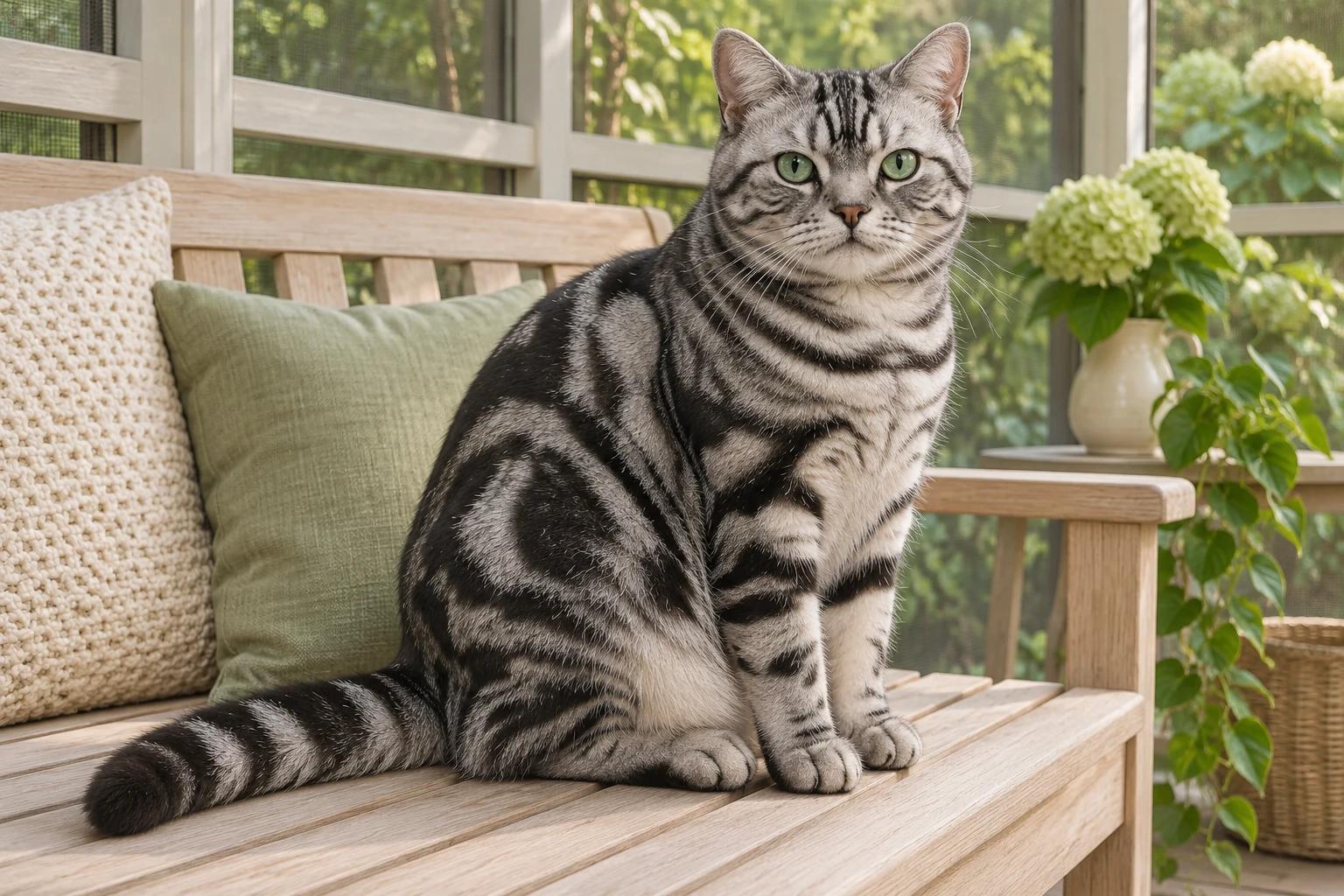
Bombay cat training
Build Bombay cat training around a hand target, a chosen station, a voluntary lie-down and positive social experiences suited to the individual.
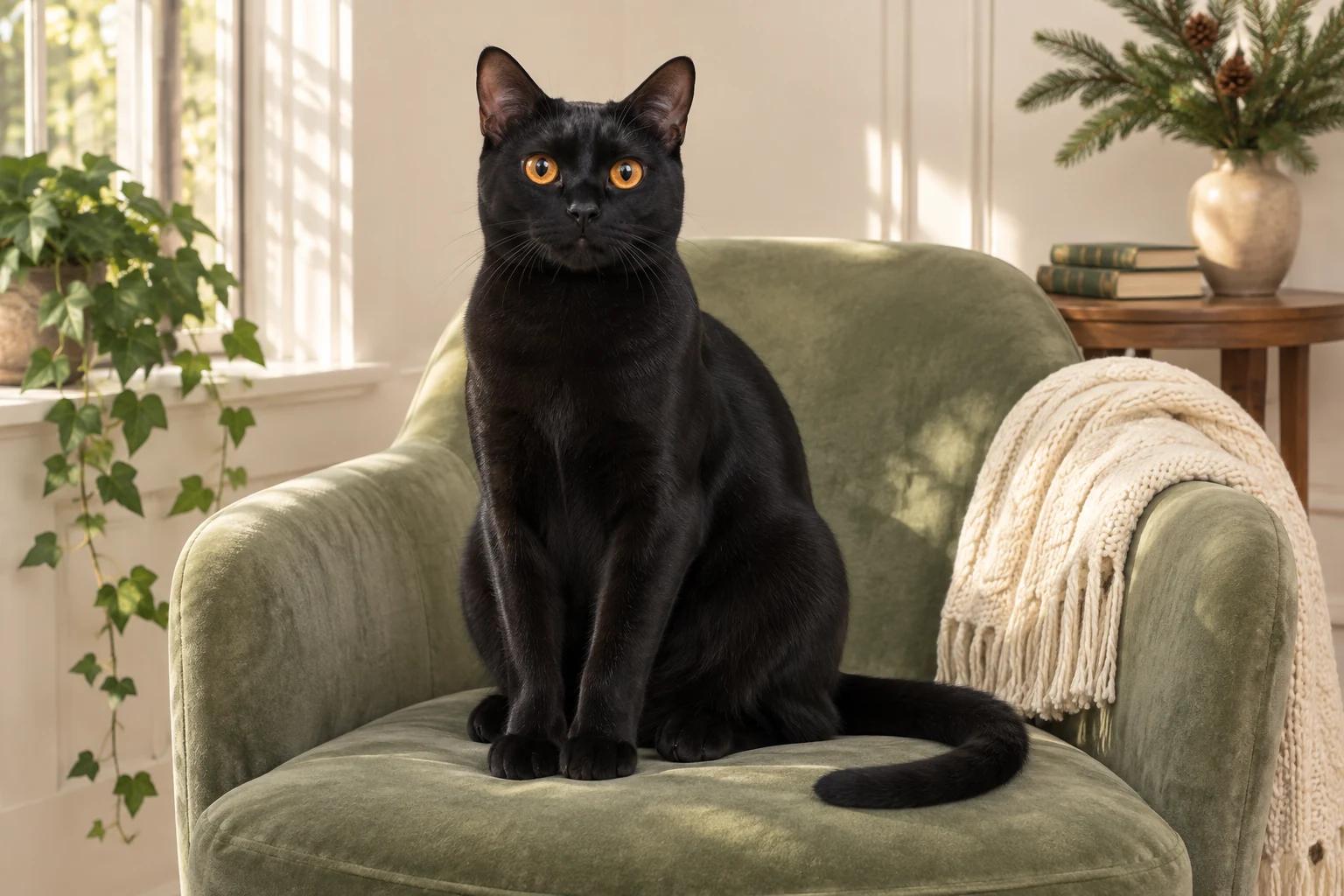
Bombay cat training is most useful when a lesson has a recognizable purpose: a particular destination, movement or position. The current Bombay profile introduces the breed, but the animal's existing lessons belong to its individual history. Find out what it already understands before treating a familiar cue as a new one.
Bombay cat training: teach a chosen station
AAHA's cat-training guide describes teaching a cat to go voluntarily to a mat or other designated place. Begin with a flat, non-slip surface on the floor and allow investigation. Mark and reward interest, then work toward paws on the surface and eventually all four paws.
Once arriving is reliable, gradually extend the stay and reward while the cat remains on the mat. Add a spoken cue when the action is predictable. Let the cat finish eating before asking for another movement away from its station. Arriving and remaining are separate achievements; do not physically place the cat or repeatedly return it to the station.
An empty hand can become a destination
VCA's target-training handout describes starting with a small treat in a closed fist. Mark nose contact and release the reward. Once the action is familiar, present the same closed hand without food inside, then reward from the other hand or a pouch.
The important transition is from following a visible food opportunity to touching a recognizable target. Move the empty hand only a little at first, increasing the distance as the response develops. The hand is not meant to bump the cat's face; the animal supplies the approach and contact.
This is a concrete starting point for learning how to train a Bombay cat. You can tell whether its nose touched the hand, whereas “be good” leaves the requested action undefined. Keep the target still enough to be reachable rather than repeatedly moving it away as the cat arrives. A clear destination makes the task understandable without physically directing the body into position.
A lie-down starts with a known sit
Cats Protection's lie-down lesson is for a confident, physically able cat that already knows a sit cue. In a quiet setting, lower a treat from near the nose toward the floor, then gradually move it away from the seated cat. Following the movement can bring the front legs down. Mark and reward the resulting position.
The guide then reduces dependence on a food-filled hand, develops a hand signal and adds a spoken cue before that signal. Keep the stages separate. An empty guiding hand does not mean the reward disappears; it comes after the successful response.
Bombay cat obedience should not become a demand to force the body into a pose. Allow the cat to stop, and do not push it down. Also choose a cue that is not already associated with a different task. Asking for a lying position and asking the cat to leave a piece of furniture are different requests, even if a person casually calls both “down.”
Positive social experience is not a performance test
VCA's kitten-socialization guidance emphasizes experiences tailored to the individual. When introducing a kitten to an unfamiliar person, let the kitten initiate contact; the visitor can offer an appropriate toy or treat without grabbing it. The purpose is a comfortable encounter, not the highest possible number of introductions.
Bombay cat socialization should therefore not depend on demonstrating tricks to an audience. A kitten might know a task with one familiar person while still finding the proposed social situation unfamiliar. Learning history and experience of people are related parts of life, but they are not interchangeable records.
Keep the introduction manageable and seek professional advice if fear persists. Do not repeatedly intensify the encounter in the hope that sheer exposure will solve the difficulty. A breed reputation for sociability cannot tell you what this kitten has experienced or how it will respond today. Positive experience matters more than producing a friendly-looking photograph for visitors to share.
Physical fit matters, but weight does not grade learning
The current adult references are 6–9 pounds for females and 8–11 pounds for males. They describe physical scale, not a training level. An eight-pound cat might have a substantial lesson history or none; the measurement alone cannot distinguish those situations.
When assessing a work area, consider the actual space the animal occupies. A surface labeled for a small cat can still be too narrow for a particular position. Check usable dimensions rather than assuming an adult within the lower end of the range needs little room. A product's decorative border does not add to the area available for the body.
A previous caregiver's example should identify the particular cat and the period being described. Experience from an earlier home is useful background, not a complete description of life in yours.
Entrance safety remains a separate household responsibility, covered by the Bombay front-door guide. The cat quiz addresses broader ownership preferences rather than an individual cat's training history.
FAQ
Does a breed description tell me which words this Bombay knows?
A Bombay breed description cannot identify learned words; cues belong to the individual’s experience. Ask about the actual signal previously used.
Can adult weight identify an advanced learner?
A Bombay’s adult weight measures physical scale, not advanced learning, previous lessons or task understanding.
Should an example from a former home be treated as current observation?
A Bombay’s behavior in a former home is not current observation. Establish when and where it occurred so you can distinguish past experience from what you are seeing now.
Sources behind this article
Article source checked: November 16, 2026. Source checked 2026-11-16
Keep reading

Abyssinian Cat Training: Useful Skills for an Active Cat
Read article →