Boerboel Size: Understanding the Adult Commitment
Understand Boerboel size through adult reference ranges, space, transport, equipment, and the daily realities of handling a very large dog.
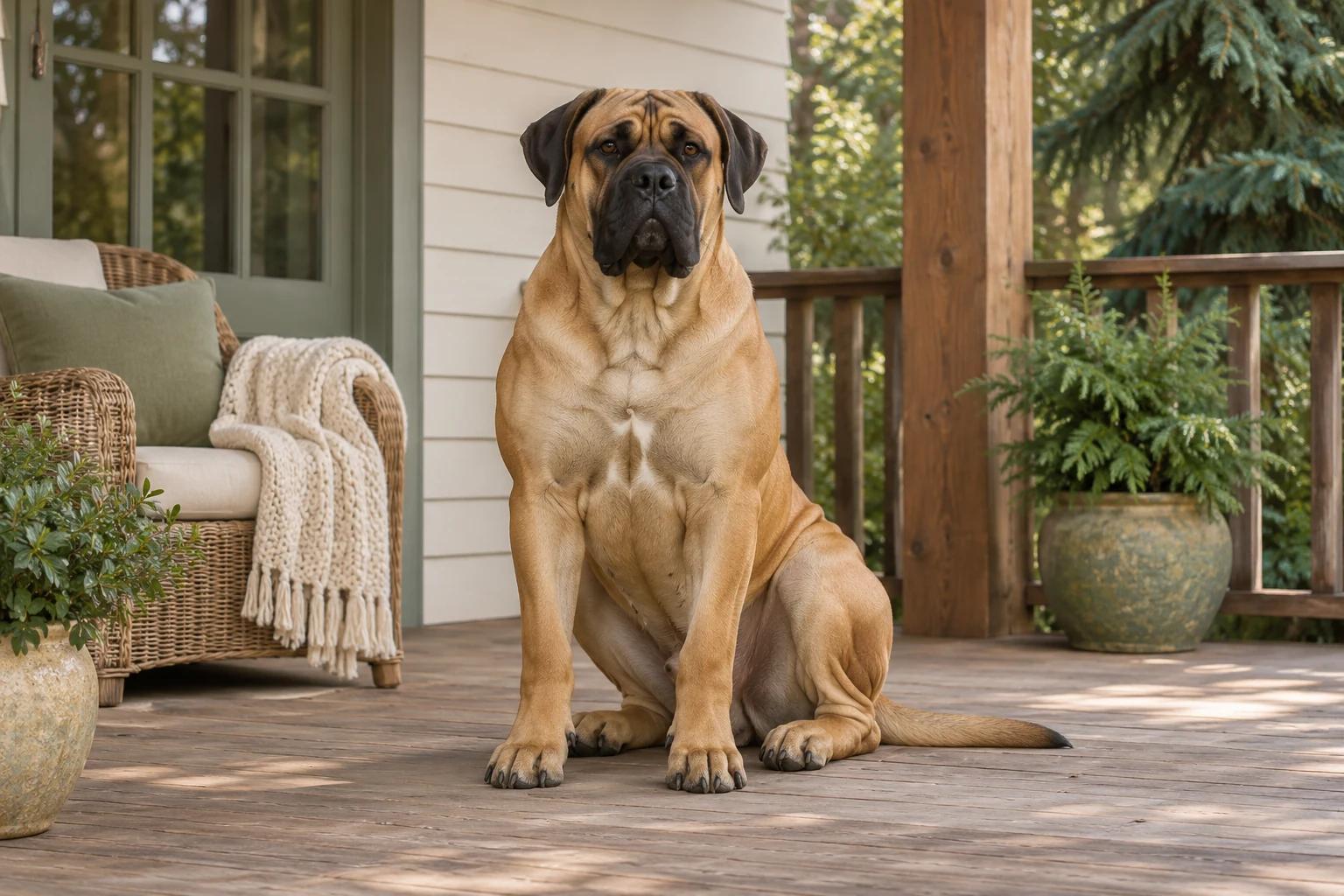
Boerboel size is a practical ownership question before it is an impressive statistic. My Breed Atlas lists an adult weight range of 150–200 pounds, with males standing 24–27 inches and females 22–25 inches at the shoulder. Those figures affect transport, equipment, appointments, and the way people move through the home.
The Boerboel profile provides the wider reference picture. Use the measurements to plan for an adult, while remembering that a breed range does not predict a particular puppy's final size or establish an ideal weight for every dog.
Boerboel size is about proportion, not a record
The AKC official standard gives priority to balance and proportion rather than size alone. That is a useful corrective to advertisements focused on the biggest possible dog. A headline weight cannot tell you how comfortably an animal moves or how well it fits your household.
The AKC breed overview describes a confident dog with a willingness to learn. Physical scale therefore belongs alongside behavior and daily skills in your decision. Space alone does not explain how life with a large, watchful companion will work.
Avoid choosing a puppy on the assumption that larger automatically means better. Ask about the adult relatives, their recorded measurements, and their everyday lives. Concrete information is more useful than an ambitious prediction about how huge a youngster might become.
Read Boerboel height correctly
Boerboel height refers to the shoulder area, not the top of the head. That matters when looking at vehicle openings or choosing an enclosure. A shoulder measurement is only one dimension of a dog that also needs room for its head, body, and comfortable movement.
The standard describes a body longer than its height. When planning floor space, measure length as well as height and consider how the dog rests. A large animal lying on its side occupies a different footprint from one standing neatly for a photograph.
Boerboel weight and everyday handling
The site's 150–200-pound adult reference makes it unwise to assume that a single person can lift or reposition the dog whenever needed. Think about assistance before it becomes urgent. Discuss appropriate handling arrangements with your veterinarian when mobility or recovery creates a need.
For ordinary routines, teach the dog to participate. Moving toward the vehicle, standing for equipment, and walking through a doorway calmly are skills that reduce reliance on physical maneuvering. They are worth practicing while the dog is still small enough for mistakes to seem less consequential.
Weight is not a feeding goal. Do not try to make a dog reach the top of the breed range or reduce it toward the bottom without considering the individual. Your veterinarian can assess body condition and explain what the measurements mean for that dog.
Check the home at dog level
Walk from the sleeping area to the exit and notice the narrow places. Dining chairs, bags, and low tables can turn a reasonable room into a cramped route. A clear passage makes life easier for both the dog and people carrying objects through it.
Choose a resting area that remains usable during ordinary household activity. If the bed must be moved every time a door opens, it is probably not in a sustainable place. Marking the proposed footprint on the floor can reveal a problem before you buy equipment.
Consider guests and children separately. A large dog resting quietly can still be awkward to step around. Arrange routes that do not require people to squeeze past or disturb it, and give the dog a retreat that household members respect.
Outdoor space needs a usable layout
A garden's total area does not tell you whether its gates, entrances, and boundaries suit your routine. Inspect the route in and out and decide how the dog will be managed when people enter. A large open space does not replace a controlled arrival plan.
Keep the purpose of outdoor time clear. The site's newer daily-life notes describe a substantial outing or purposeful activity, not simply occupying a garden. A property can have plenty of square footage while its occupants still lack time for shared activity.
Transport deserves a rehearsal
Measure the actual vehicle space with the normal passengers and luggage in mind. A setup that works only with every rear seat folded may not work for a family trip. Look at the opening as well as the space inside.
Follow the chosen travel equipment's instructions for fit, installation, and use. Check that doors can open without creating an uncontrolled exit. If the dog is unfamiliar with the arrangement, introduce it gradually before relying on it for an important appointment.
Think about the destination too. Ask a boarding facility, groomer, or veterinary practice what arrangements they use for very large dogs. This is not a request for special treatment so much as a practical conversation about space, access, and handling experience.
Equipment and services should match the individual
Product names such as giant or extra-large are not standardized measurements. Read dimensions, adjustment ranges, and intended-use instructions. A bed, harness, and travel enclosure each solve a different problem and should not be selected from the same weight chart alone.
Ask service providers about their actual facilities rather than assuming acceptance means every setup is suitable. Can the dog enter comfortably? Is there room to turn? What do they expect the dog to know about handling? Those details help you prepare.
Budget by asking for current quotes based on the dog's real needs. Avoid multiplying a smaller dog's costs by a simple factor and assuming the result will be accurate. Equipment replacement, transport, and professional services do not all scale in the same way.
How big do Boerboels get in an individual family?
“How big do Boerboels get?” is a useful opening question, but follow it with questions about the specific line and dog. Ask which measurements are documented and which are estimates. A responsible discussion can acknowledge uncertainty without inventing a precise forecast.
Size is also separate from formal assessment. Read the Boerboel appraisal-score article if you want to understand that paperwork, and use the breed quiz to place physical scale beside the rest of your ownership priorities.
FAQ
What weight range does My Breed Atlas list for Boerboels?
The site lists an adult reference range of 150–200 pounds. This is an ownership-planning figure, not a recommended target for every individual. Discuss body condition and weight questions with your veterinarian.
How tall are adult Boerboels?
The profile lists males at 24–27 inches and females at 22–25 inches at the shoulder. Head height and body length are additional measurements to consider when planning equipment and transport.
Is the largest puppy necessarily the best choice?
No. Size alone does not establish suitability, health, or future behavior. Ask about adult relatives and the individual puppy, and consider whether your household can support the eventual adult's needs.
Can a large garden make Boerboel ownership easy?
Not by itself. Access, boundaries, daily activity, training, and adult handling arrangements still matter. Evaluate how the space will actually be used rather than relying only on its area.
Sources behind this article
Article source checked: November 14, 2026. Source checked 2026-11-14
Keep reading

Airedale Terrier Temperament: What Everyday Life Can Feel Like
Read article →