Berger Picard vs Briard: two French herders compared
Compare Berger Picard and Briard size, coat care, learning and home logistics to see which French herding breed suits your priorities.
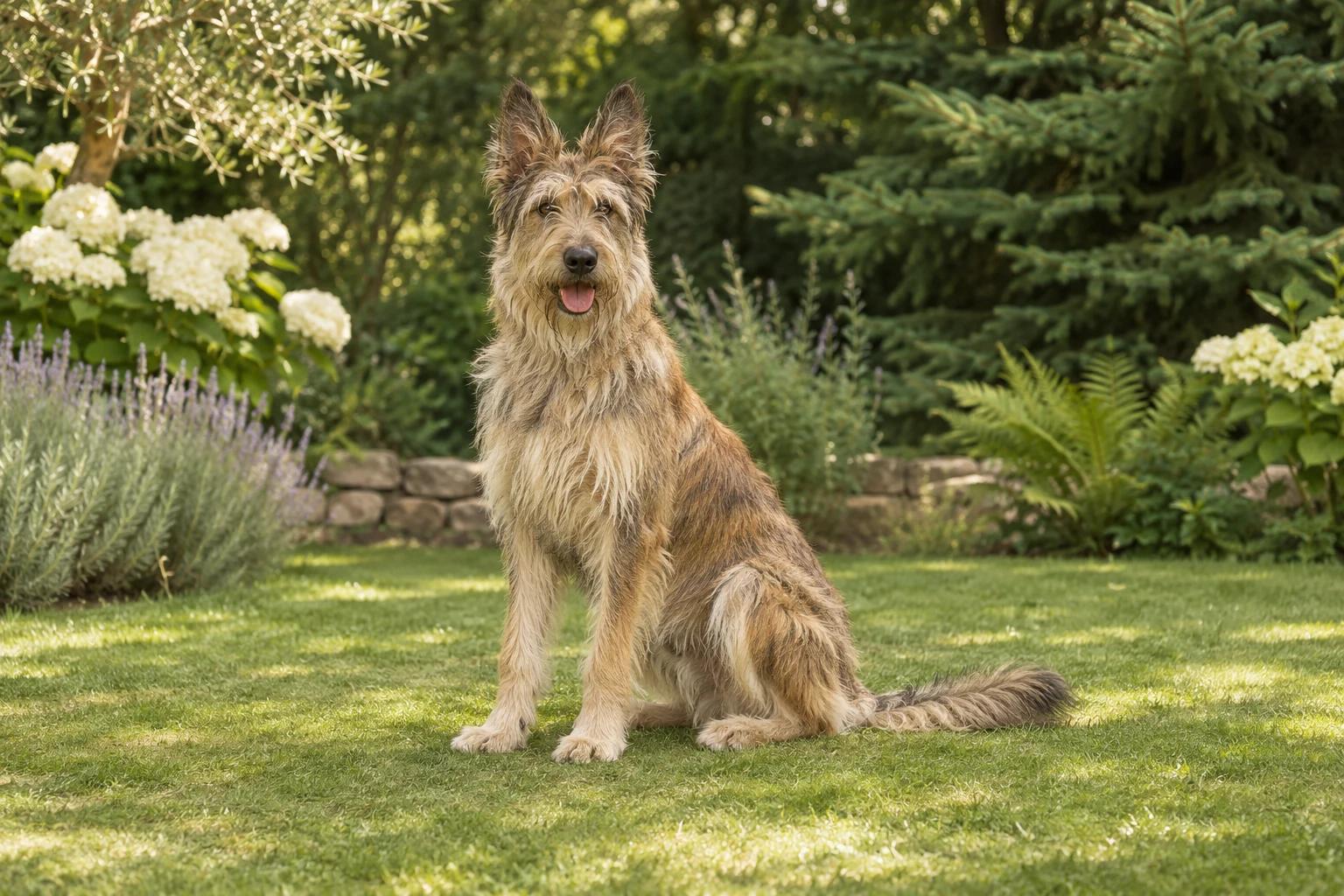
Berger Picard vs Briard is a useful comparison if you like French herding dogs but want to understand the care behind their appearance. The Picard has a medium wiry coat and a lean-looking outline. The Briard has a longer, wavy double coat and a broader adult weight range. Those differences affect more than which photograph catches your eye.
Begin with the Berger Picard profile and Briard profile. Compare the adult measurements and everyday care before making assumptions about personality. Individual dogs vary, and a shared herding background does not make two breeds interchangeable.
Berger Picard vs Briard: the practical differences
My Breed Atlas records these adult reference figures:
| Feature | Berger Picard | Briard |
|---|---|---|
| Male shoulder height | 23.5–25.5 inches | 23–27 inches |
| Female shoulder height | 21.5–23.5 inches | 22–25.5 inches |
| Adult weight | 50–70 pounds | 50–100 pounds |
| Coat | Medium and wiry | Long, wavy double coat |
| Usual brushing plan | Once or twice weekly | Most days |
The height ranges overlap, but the weight ranges do not describe identical dogs. A Briard near the upper end presents a different transport and handling question from a Picard near the lower end. Measure the individual rather than choosing equipment simply marked for a French shepherd.
Look at the dog beneath the styling
The Picard club's standard describes a sturdy, slightly longer-than-tall dog with natural erect ears and a rough coat. The AKC Briard overview describes a substantial, muscular dog. Neither should be judged entirely by the volume or arrangement of hair in a photograph.
When possible, watch adults moving and resting. That makes scale easier to understand than a posed head shot. Ask for current measurements if you are comparing particular dogs rather than relying only on the breed averages.
Coat care is the clearest scheduling contrast
The Picard's ordinary brushing commitment is less frequent than the Briard's listed routine. If grooming time is a major part of your decision, make that difference concrete. A task scheduled once or twice weekly occupies a different place in your week from one planned for most days.
For the Briard, arrange to see a complete coat-care demonstration rather than only the finished appearance. Where does the owner work? How do they organize the coat into manageable areas? Which tools do they use, and how do they check that the work is complete?
For the Picard, learn how its rough texture should feel and what routine care preserves that natural look. A shorter grooming schedule does not mean no inspection, handling or cleaning. You still need to notice changes and know when to ask for help.
Compare access to experienced help
Before choosing Berger Picard or Briard, check who can assist with the actual coat you will have. A convenient grooming appointment is useful only if the service matches the breed and your goals.
Ask about the work expected between appointments. If the home-care portion is unclear, you cannot judge the true time commitment from the booking interval alone. Include products, tools, travel and space for care when thinking about the overall arrangement.
Learning: compare individuals, not reputations
The Picard profile describes responsive learning, while the Briard profile emphasizes motivation and consistent practice. These are starting points for questions, not a verdict that every Picard will learn faster than every Briard.
Watch a familiar everyday skill when meeting either breed. A caregiver preparing for a walk or moving the dog to a resting place can show you the communication already established. Ask which parts took practice and what remains unfamiliar.
Think about the teaching you enjoy. Do you want to attend a class, work on practical household skills or investigate an activity together? A clear goal helps you find support. Simply wanting an intelligent dog leaves the actual learning plan undefined.
Activity still needs a real place in the day
Both choices call for an owner who will organize outings and engagement. Do not choose the longer-haired dog on the assumption that it wants only a quiet corner, or the leaner-looking dog on the assumption that it can supply its own entertainment.
Discuss the actual routine of the dog you are considering. Ask about preferred activities, familiar environments and how the caregiver handles days when normal plans change. Those answers help you assess fit without inventing an exact exercise comparison from appearance.
Talk with your veterinarian about introducing demanding physical activities. Breed background can suggest interests to explore, but it does not determine what is appropriate for a particular dog's age and circumstances.
Home logistics can settle a close choice
Picture the first wet-weather return from an outing. Where will equipment go? Where can you check the coat? Can the dog move from the entrance to its resting place without squeezing past furniture? The coat difference and possible weight difference make this a useful practical comparison.
Then picture a car journey. Check the travel space and the equipment's instructions. Consider how you would assist the dog if the usual entry route became difficult. A breed's published height alone does not tell you whether your setup works.
Finally, think about the people sharing care. Can everyone learn the handling and grooming routine? Is there a workable alternative when the usual caregiver is unavailable? A plan that depends on one person's uninterrupted availability deserves another look.
Decide what matters most
The difference between Berger Picard and Briard is especially clear in coat length, brushing frequency and the upper end of adult weight. Those are concrete factors you can compare before trying to rank less predictable traits.
For a Briard vs Berger Picard decision, list your non-negotiable practical limits first. Then meet dogs and ask questions within those limits. The dog breed quiz can help organize priorities, while our Winn-Dixie casting article offers a separate look at the Picard's public profile. Enjoy the appearance, but choose the daily commitment with equal care.
FAQ
Is a Briard bigger than a Berger Picard?
The adult height ranges overlap, but the Briard has a higher upper weight range. My Breed Atlas lists Picards at 50–70 pounds and Briards at 50–100 pounds. Compare individual measurements for transport and fitted equipment.
Which breed needs more brushing?
The site's usual plan is brushing most days for the Briard and once or twice weekly for the Berger Picard. Individual coats and circumstances vary. Ask an experienced groomer to demonstrate the routine you would need to maintain.
Are Berger Picards and Briards the same breed?
No. They are distinct French herding breeds with different coat profiles and adult size ranges. Similar background or appearance in one photograph does not make their care needs or individual behavior identical.
Which one is easier to own?
There is no universal winner. The Picard's less frequent listed brushing may fit one household, while another is comfortable with Briard coat care and size. Compare your resources, the individual dog and the support available.
Sources behind this article
- Berger Picard Club of America breed standard ↗
- AKC Briard ↗
- Hill’s Australia adult reference — adult-weight reference ↗
- Embark adult reference — adult-weight reference ↗
Article source checked: November 14, 2026. Source checked 2026-11-14Article source checked: November 18, 2026. Source checked 2026-11-18
Keep reading

Affenpinscher vs Brussels Griffon: Everyday Differences
Read article →