Bergamasco Sheepdog vs Puli: size, coats and daily life
Compare Bergamasco Sheepdog and Puli size, coat structure, learning and practical care without mistaking a similar silhouette for the same dog.
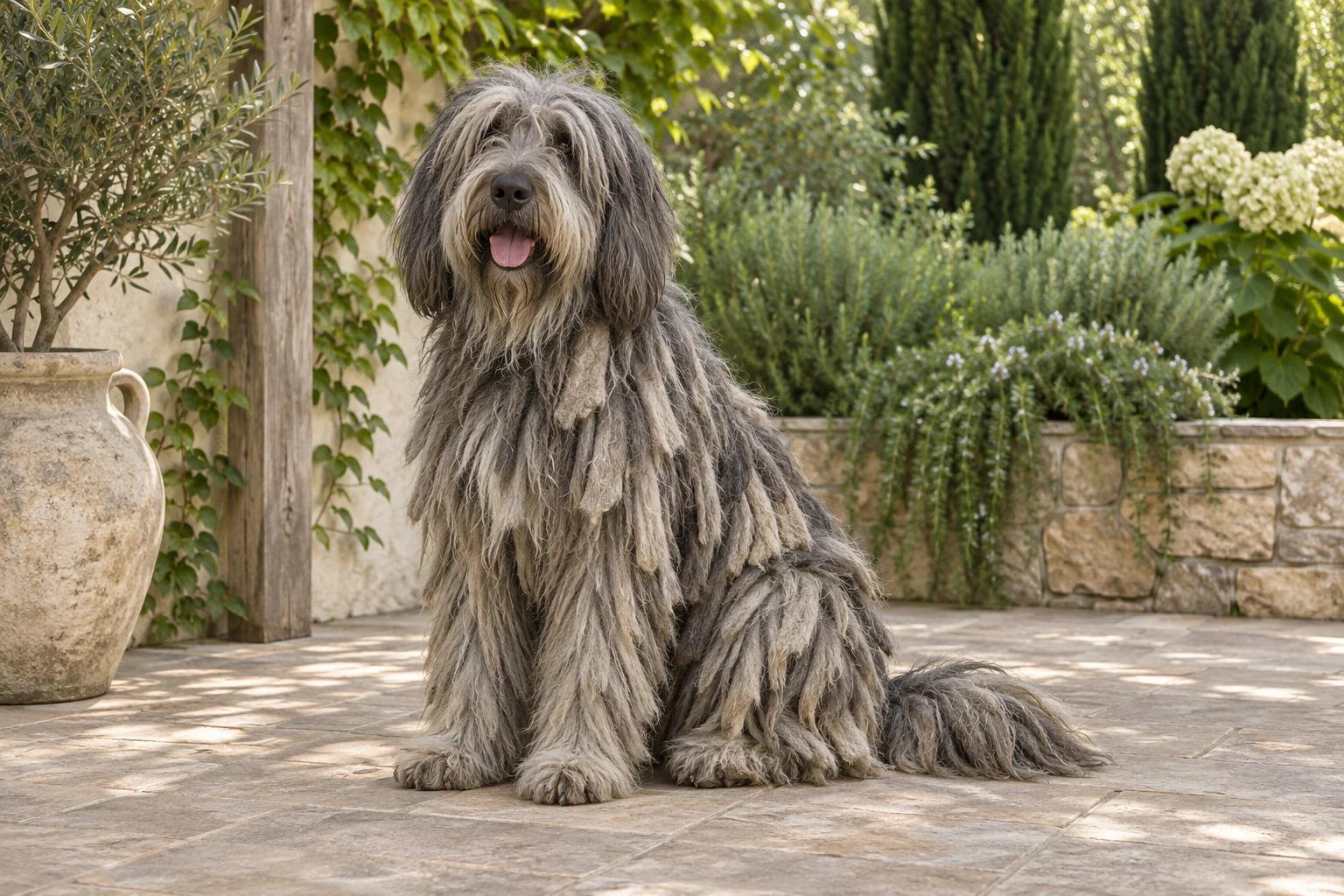
Bergamasco Sheepdog vs Puli often begins with a double take: both can have striking coats that conceal much of the body. Look beyond that first impression and a major difference appears immediately. The Bergamasco is substantially heavier, while the Puli has a smaller frame. Their coats also need to be understood on their own terms rather than treated as matching hairstyles.
Read the Bergamasco Sheepdog profile and Puli profile together. They provide a clearer foundation than comparing two carefully posed photographs. Individual dogs vary, even within the same breed.
Bergamasco Sheepdog vs Puli: the size difference
My Breed Atlas lists these adult reference measurements:
| Measurement | Bergamasco Sheepdog | Puli |
|---|---|---|
| Male shoulder height | About 23.5 inches | About 17 inches |
| Female shoulder height | About 22 inches | About 16 inches |
| Male weight | 71–84 pounds | 29–33 pounds |
| Female weight | 57–71 pounds | 22–29 pounds |
| Listed origin | Italy | Hungary |
The difference affects transport, beds, equipment and how much physical assistance you might need to provide. A Puli is not simply a Bergamasco in a smaller haircut, and the Bergamasco's weight should not be dismissed because a coat hides its body.
Measure your vehicle and the spaces the dog would use. Then consider the adult measurements, not only the puppy you are meeting. A smaller dog may require less physical space, but that does not automatically make the rest of its care easier.
Flocks and cords are not interchangeable terms
The Bergamasco club's judges overview describes flat, irregular flocks and distinguishes them from cords. The AKC Puli overview identifies the Puli's characteristic corded appearance. That is the central coat distinction for this comparison.
Do not use a care demonstration for one breed as a complete tutorial for the other. Ask an experienced person to show you the actual coat you will be caring for, including what needs attention now and what may change as it develops.
Our article on Bergamasco flock development covers that breed's stages in more detail. Here, the important ownership point is to arrange the right instruction before assuming that either coat is simply left alone.
Compare the practical care setup
Ask to see where an owner carries out coat care, what tools are used and how cleaning and drying fit into the household. You are assessing a process as well as an appearance. The equipment needs a place to live, and the work needs room in your schedule.
If you plan to use professional help, check that a groomer has relevant experience with the particular breed and coat stage. A familiar local salon may be convenient, but convenience alone does not answer whether the service matches what you need.
Both profiles put loose hair at the lower end. That does not make their care routines identical or remove the need to learn them. Decide whether the hands-on care interests you before letting the finished look settle the choice.
Compare learning without assuming size predicts it
The Puli profile emphasizes responsive learning and a strong need for mental engagement. The Bergamasco profile describes learning that benefits from motivation and consistent practice. These are tendencies to investigate, not a guarantee that one particular dog will learn a task faster.
The AKC describes the Puli as an agile herder that works closely with people. In practice, plan activities that involve communication rather than assuming the smaller dog can be entertained entirely by available floor space.
For either breed, ask to watch a familiar task. A caregiver may demonstrate moving to a designated place, putting on equipment or participating in handling. Notice the cues and support involved. What looks effortless may reflect a great deal of prior teaching.
If you enjoy training, consider which kinds of lessons you want to maintain. If you dislike teaching and hope a breed will arrive with all the necessary skills, neither a quick-learning label nor a calm description solves that mismatch.
Daily activity: plan the individual, not the hairstyle
Both site profiles place activity in the middle range. That supports regular outings, play and learning rather than choosing either breed as a decorative presence. A photograph of a resting dog tells you little about the rest of its day.
When comparing Puli vs Bergamasco Sheepdog, ask what a normal outing involves for the dog you are considering. Where does it walk? What games or skills are familiar? What happens on a day when the usual plan changes?
Choose activities around the individual dog's experience and circumstances. Talk with your veterinarian before introducing demanding new exercise. Physical appearance and breed heritage are not substitutes for advice about a particular dog's needs.
Home layout can make the difference clearer
Imagine preparing for a trip with each breed. Where does the dog travel? Where are the care supplies stored? Can the dog turn and settle in the space provided? The Bergamasco's greater adult weight makes transport planning especially important, while the Puli still needs equipment that fits properly.
Now imagine routine coat handling at home. Can you work around the dog comfortably? Is there a suitable surface and adequate light? Will other people constantly need to pass through the same space? These questions reveal practical differences that a beauty comparison misses.
Meeting adults of both breeds can help. Ask permission to observe normal care or movement rather than expecting a posed photograph to communicate scale. Seeing a dog beside ordinary furniture or entering transport can make the measurements more tangible.
Choosing between two distinctive companions
The difference between Bergamasco Sheepdog and Puli is not a simple ranking of better and worse. Size is a clear contrast; coat structure is another. Learning preferences and household fit need a closer look at the individual.
If you are choosing Bergamasco Sheepdog or Puli, use the dog breed quiz to identify your practical priorities. Then arrange conversations around those priorities, especially adult size, coat support and daily activities. Choose the care commitment you understand, not just the silhouette you recognize.
FAQ
Is a Bergamasco Sheepdog bigger than a Puli?
Yes. My Breed Atlas lists Bergamasco males at 71–84 pounds and females at 57–71 pounds, compared with 22–33 pounds for the Puli. The Bergamasco is also taller at the shoulder.
Do Bergamascos and Pulis have the same coat?
No. Bergamascos develop flat, irregular flocks, while the Puli is known for cords. Each coat requires breed-specific understanding. Do not assume that care instructions for one can be applied unchanged to the other.
Is a Puli automatically easier because it is smaller?
No. Smaller size changes transport and equipment needs, but it does not remove training, activity or coat-care commitments. Compare the complete routine and the individual dog's experience before deciding.
Which breed should I choose?
Choose according to the adult size you can manage, the coat care you are prepared to learn and the individual dog's fit with your household. Neither breed's appearance alone provides enough information for that decision.
Sources behind this article
Article source checked: November 14, 2026. Source checked 2026-11-14
Keep reading

Affenpinscher vs Brussels Griffon: Everyday Differences
Read article →