Bergamasco Sheepdog temperament: life beyond the coat
Explore Bergamasco Sheepdog temperament, independent thinking and everyday companionship, with practical questions to ask before choosing a dog.
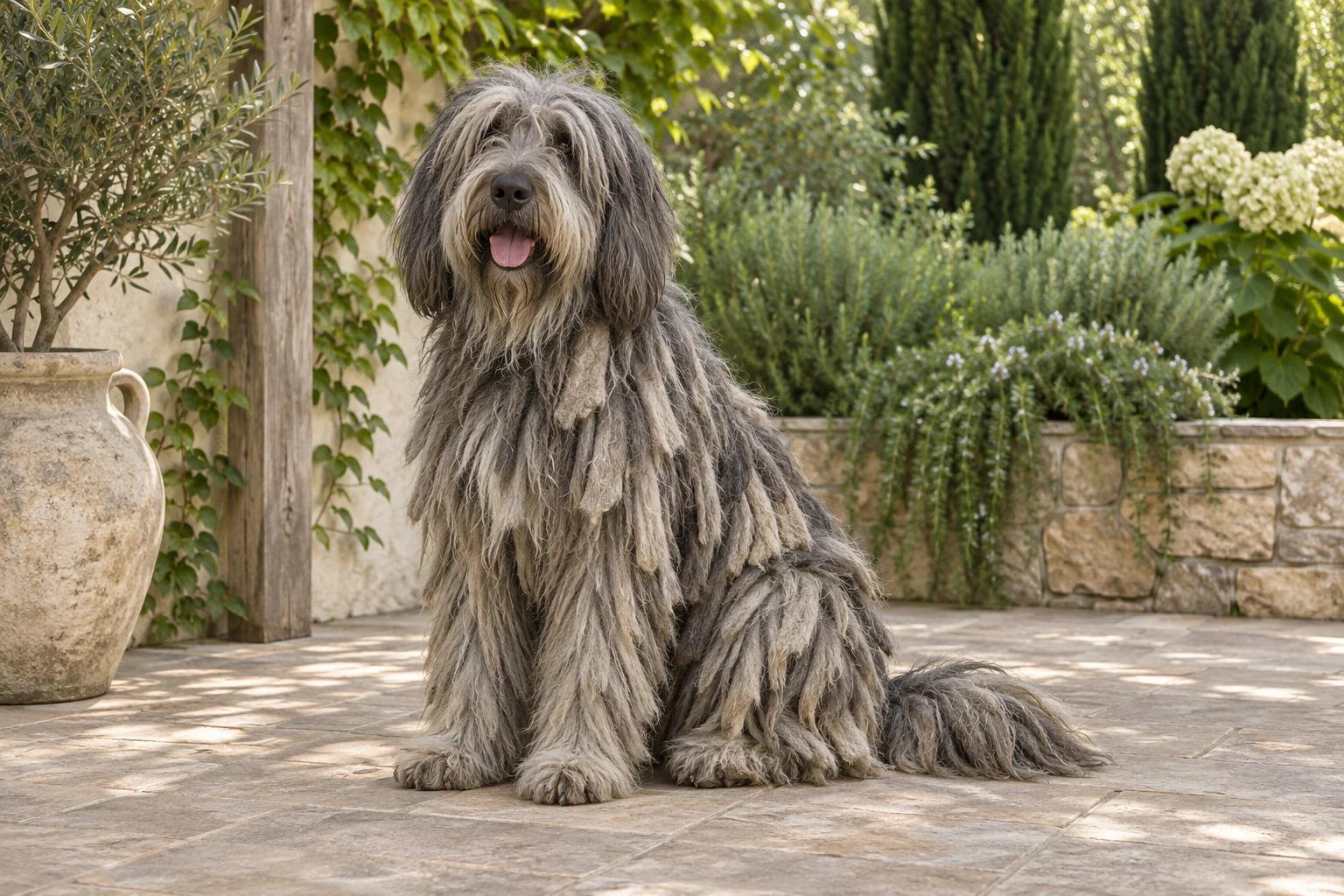
Bergamasco Sheepdog temperament deserves as much attention as the breed's unmistakable coat. Behind the flocks is a substantial herding dog with its own preferences, learning history and ways of responding to the world. An appealing appearance can introduce you to the breed, but it cannot tell you how a particular dog will fit your home.
The Bergamasco Sheepdog profile describes a combination of independence, intelligence and sociability. Those words are useful starting points when you translate them into everyday situations rather than treating them as promises about every dog.
Bergamasco Sheepdog temperament: thoughtful does not mean inactive
The breed club's standard describes an intelligent, even-tempered dog. The AKC overview also highlights persistence in work. Together, those descriptions suggest a breed worth getting to know beyond the assumption that a calm-looking dog wants nothing to do.
My Breed Atlas places activity in the middle of its reference scale. Think in terms of regular outings, play and learning rather than either constant sport or permanent sofa time. A calm presentation and an interest in activity can belong to the same dog.
When you meet an adult, ask what happened before the visit. A dog resting after an outing presents a different snapshot from one waiting for its first activity of the day. Context makes an observation more useful without turning the visit into a formal test.
Independence changes the conversation about learning
Independent thinking is not a reason to abandon teaching. It is a reason to explain the task clearly and notice what motivates participation. If you ask for an unfamiliar action and receive no response, the next step is to make the task understandable, not attach a personality label.
Choose a small skill with an obvious purpose, such as stepping onto a mat before coat handling. Begin with an easy version, reward success and build from there. You can see the learning more clearly than if you ask the dog to tolerate an entire unfamiliar routine at once.
When discussing Bergamasco Sheepdog personality, ask a caregiver how the dog learns new tasks. What gets its interest? Which skills needed extra practice? What does the person change when a lesson becomes confusing? These answers tell you more than a blanket claim that the dog is either stubborn or obedient.
Give the dog useful choices
A choice can fit inside a clear household routine. You might offer two suitable resting places or allow exploration on a permitted section of a walk. Boundaries and opportunities to choose are not opposites.
Decide what genuinely matters to you before insisting on precision everywhere. Getting into the right space for a car journey is useful. Requiring a particular pose during every casual interaction may not serve your household. Thoughtful priorities make teaching more consistent for both of you.
Watchfulness needs an everyday plan
The site lists watchfulness among the breed's more noticeable tendencies. In practical terms, consider how you want to handle arrivals, deliveries and people moving near the property. Do not leave the dog to invent the household's entire response to each event.
Set up a place where the dog can be out of the busiest route while you answer the door. Practise that arrangement when nothing exciting is happening. If it only appears when a visitor arrives, the dog has much more to work out at once.
This is household organization, not a promise about security. Watchfulness does not establish how any individual will react to a stranger. Arrange introductions around the actual dog, with space and an easy way to pause rather than pressure to greet everyone immediately.
Companionship can take more than one form
A dog lying nearby, joining a walk or engaging in a familiar game can all be participating in family life. Constant physical contact is not the only measure of a relationship. Learn which forms of interaction your dog seeks and which it prefers to avoid.
During a visit, watch the dog both when people engage and when they stop. Does it choose a nearby spot? Return with a toy? Move elsewhere? Ask the caregiver whether that is typical. One moment should not become the whole temperament description.
If you work at home, plan both shared time and a usable resting area. If you work elsewhere, discuss the dog's current experience with time apart and the arrangements you can provide. Neither independence nor affection gives you a universal answer about how long a dog can be left.
Handling is part of the relationship
The breed's coat makes comfortable participation in care especially relevant. This article is not a grooming tutorial, but it is worth observing how the dog and caregiver communicate during familiar handling. Can the person reach the coat areas they need? Does the dog understand where to stand?
Ask for a demonstration rather than assuming that a distinctive coat takes care of itself. Our article on how Bergamasco flocks develop covers the separate coat-stage question. A temperament discussion should include whether you are prepared to learn the care routine with the dog, not simply whether you admire the finished result.
If handling causes apparent pain or a sudden change in response, talk with your veterinarian. Do not interpret every difficulty as independence. The immediate situation matters as much as a general breed description.
Questions that make a meeting worthwhile
When researching Bergamasco shepherd temperament, bring questions that invite examples:
- What does this dog usually choose to do after an outing?
- Which household skills are already familiar?
- How do you arrange visits from unfamiliar people?
- What sort of play or learning holds its interest?
- How is routine handling introduced and maintained?
These questions also help distinguish Bergamasco Sheepdog characteristics from the individual dog's experience. You are looking for useful information, not a perfect answer to every question. A clear account of what still needs teaching is more valuable than a string of flattering labels.
Use the dog breed quiz to organize the commitments you want to make. Then compare those priorities with the particular dog and the support available. The best decision comes from connecting breed background to a real household, not expecting a breed name to do that work for you.
FAQ
What is the Bergamasco Sheepdog temperament like?
The breed is commonly described as intelligent and independent, with an even-tempered working background. Individual behavior depends on experience and context. Meet the dog and ask about ordinary routines rather than relying on a short list of personality words.
Does independence mean a Bergamasco cannot be trained?
No. Independent thinking does not remove the ability to learn. Clear tasks, meaningful rewards and consistent practice help build useful skills. Ask the caregiver which approaches the individual dog already understands.
Is a calm Bergamasco a low-activity dog?
A calm moment does not establish low activity needs. My Breed Atlas places the breed in the middle activity range, with regular outings, play and learning in the routine. Consider the whole day rather than a single visit.
How should I assess a Bergamasco puppy's personality?
Ask about behavior across repeated situations and discuss differences among the puppies with the caregiver. A brief meeting is only one snapshot. Use those observations alongside your household needs, available support and willingness to teach.
Sources behind this article
Article source checked: November 14, 2026. Source checked 2026-11-14
Keep reading
Bergamasco Sheepdog size: adult height, weight and space
Read article →