Belgian Sheepdog Temperament: Watchful, Engaged, Individual
Understand Belgian Sheepdog temperament through attention, learning, introductions, and everyday companionship rather than a single personality label.
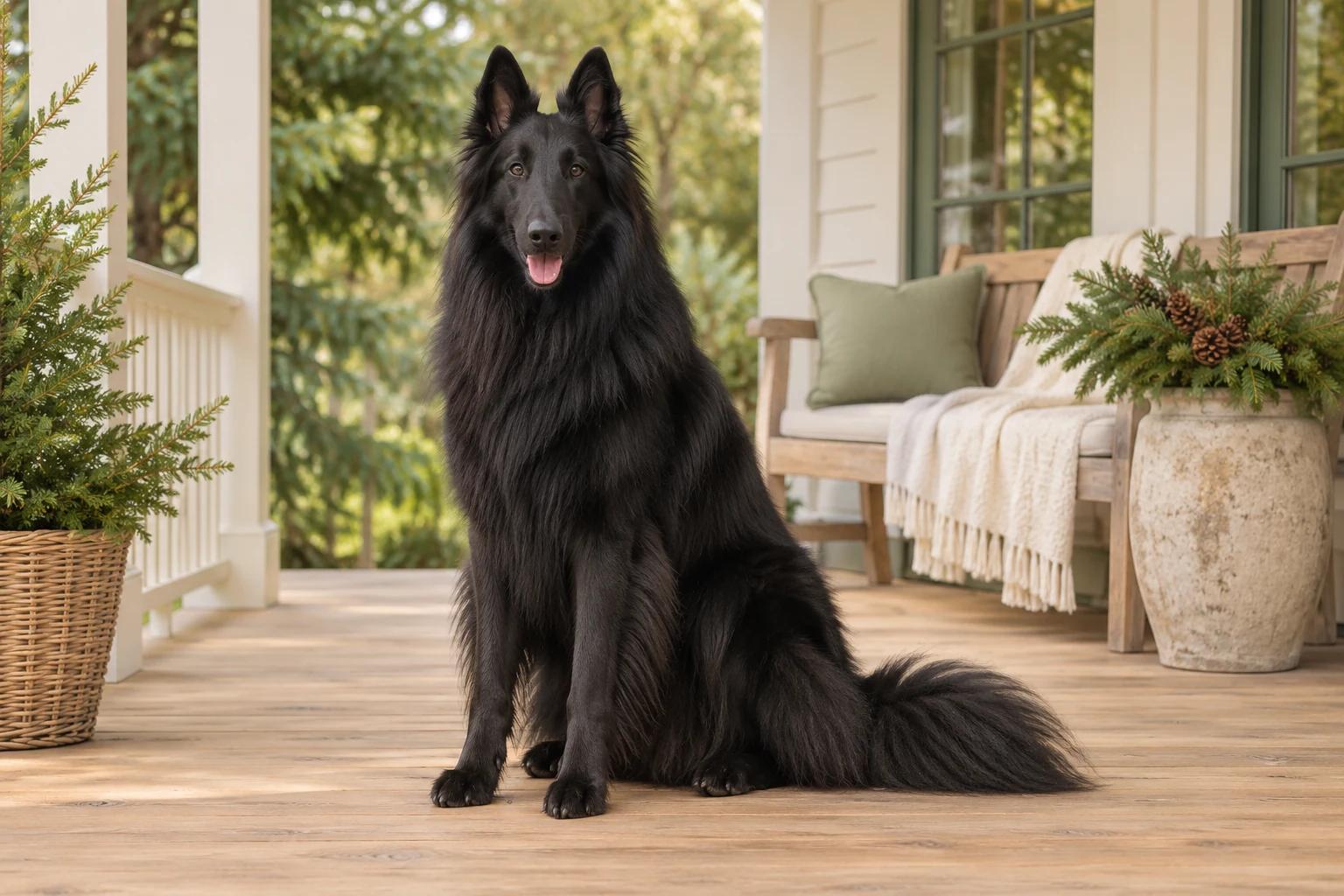
Belgian Sheepdog temperament combines an interest in activity and learning with close attention to the surrounding world. That can make for an engaging companion, but the experience is not captured by saying the breed is smart. You also need to consider how the individual dog handles people, places, everyday care, and the quieter parts of home life.
The Belgian Sheepdog profile describes substantial activity and mental engagement. Those commitments belong beside the striking black coat when you decide whether this is a dog you want to live with.
Belgian Sheepdog temperament includes a range of social styles
The Belgian Sheepdog Club of America’s breed FAQ describes individuals ranging from outgoing to more reserved around unfamiliar people. It distinguishes reserve from fearful or aggressive behavior. That is a useful reason to meet the dog rather than expecting one universal greeting style.
A dog does not have to approach you immediately for a meeting to be informative. Follow the caregiver’s instructions and observe without insisting on contact. Ask what the dog is used to and whether the setting is typical.
If the dog is very enthusiastic, that also needs context. Is this its usual response, or a particularly exciting situation? An outwardly friendly moment does not answer every question about living together.
Keep observations specific. Note how the interaction unfolded and what support the caregiver provided. Avoid turning one encounter into a complete personality label.
An attentive dog needs understandable expectations
Belgian Sheepdog personality is often described in terms of intelligence and responsiveness. The AKC breed introduction emphasizes trainability and a working orientation. That does not mean a dog will automatically interpret every household rule correctly.
Think about which behaviors matter in your home. Where should the dog rest during a meal? How will walking equipment be put on? What will visitors be asked to do? Clear plans make these situations easier to teach than a general expectation that the dog should know better.
Choose a small set of useful goals rather than trying to perfect everything immediately. An instructor can help you identify an appropriate starting point and show how to build on it.
If several people provide care, agree on the expectations together. A dog should not have to guess which version of a cue or rule applies to the person standing in front of it.
Groenendael temperament in ordinary surroundings
You may encounter the name Groenendael while researching the Belgian Sheepdog. For the naming details, see our article on registry context. When considering Groenendael temperament, the practical questions remain about the actual dog and its experience.
Ask to hear about an ordinary day rather than only a favorite activity. What happens when the household is busy? How is time without direct attention organized? What kinds of outings are familiar?
Consider your own environment just as carefully. A household with frequent unfamiliar visitors presents different arrangements from a quieter one. Neither description alone decides suitability, but both should be discussed honestly.
If you expect to use a sitter or another caregiver, include that in the plan before it is needed. A dog’s familiarity with one person does not establish how a new care arrangement will work.
Activity and companionship need separate places in the plan
The site describes a breed that needs substantial activity and opportunities to learn. Do not assume that being present in the same house provides all the engagement required, or that a single energetic outing answers every other need.
Choose activities you genuinely want to share. A suitable class or hobby can give learning some structure, while ordinary outings remain part of daily life. Investigate the beginner process before committing to an ambitious goal.
Physical demands should suit the individual. Talk with your veterinarian about exercise questions and work with qualified instruction for activities that require it. A breed description is not a fitness assessment.
Also make room for quiet time. Ask how the particular dog currently settles and what has been taught. Resting in a household is part of the arrangement to understand, not something you should assume will happen in exactly the same way in every home.
Other animals require more than a breed description
If there are already animals in your home, describe them and their routines to the caregiver or breeder. Ask about the dog’s actual history with familiar and unfamiliar animals rather than relying on a general compatibility claim.
Plan introductions with appropriate guidance. Consider separate resting and feeding arrangements and how you will manage shared spaces. The first meeting is only one part of assessing a possible household relationship.
Do not create a difficult encounter simply to see how the dog reacts. You are gathering information to make a considered decision, not conducting an improvised temperament test.
For behavior that concerns you, seek individual professional help. If there is an unexpected change or a possible connection to discomfort, talk with your veterinarian rather than treating it as a fixed breed characteristic.
Decide whether the daily partnership appeals to you
Belgian Sheepdog characteristics can sound appealing in a short description: bright, watchful, responsive. Translate each word into a responsibility. Learning requires teaching. Activity needs time and suitable opportunities. Coat care needs a routine. Companionship needs an arrangement that survives ordinary schedule changes.
Write down which parts you look forward to and which would be difficult. Then investigate the difficult parts with people who know the breed and the individual dog. An unresolved concern should remain visible rather than being covered by enthusiasm for appearance.
Use the dog breed quiz to organize your preferences, not to replace those conversations. The best decision comes from a realistic match between the dog’s needs and the life you can provide.
FAQ
What is Belgian Sheepdog temperament usually like?
Belgian Sheepdogs are generally described as active, attentive, and interested in learning. Social styles vary between individuals. Ask about the dog’s history and everyday behavior instead of assuming a single description predicts every interaction.
Are Belgian Sheepdogs outgoing with everyone?
Not necessarily. The breed club describes a range from outgoing to reserved around unfamiliar people. Follow the caregiver’s introduction plan and allow space rather than requiring immediate contact as proof of a successful meeting.
Does intelligence make a Belgian Sheepdog easy to live with?
Intelligence does not replace instruction or daily involvement. A responsive dog still needs clear expectations, appropriate activity, and a workable home routine. Choose the breed because you welcome that partnership, not because you expect automatic manners.
What should I assess before choosing a Belgian Sheepdog?
Consider activity, training, social experience, coat care, and arrangements during absences. Meet adults where possible and ask for concrete examples from the individual’s daily life. Those details are more useful than appearance or broad personality labels.
Sources behind this article
Article source checked: November 14, 2026. Source checked 2026-11-14
Keep reading

Airedale Terrier Temperament: What Everyday Life Can Feel Like
Read article →