Belgian Sheepdog Grooming: Work Through the Double Coat
Plan Belgian Sheepdog grooming with attention to the double coat, furnishings, seasonal loose hair, and a manageable home-care routine.
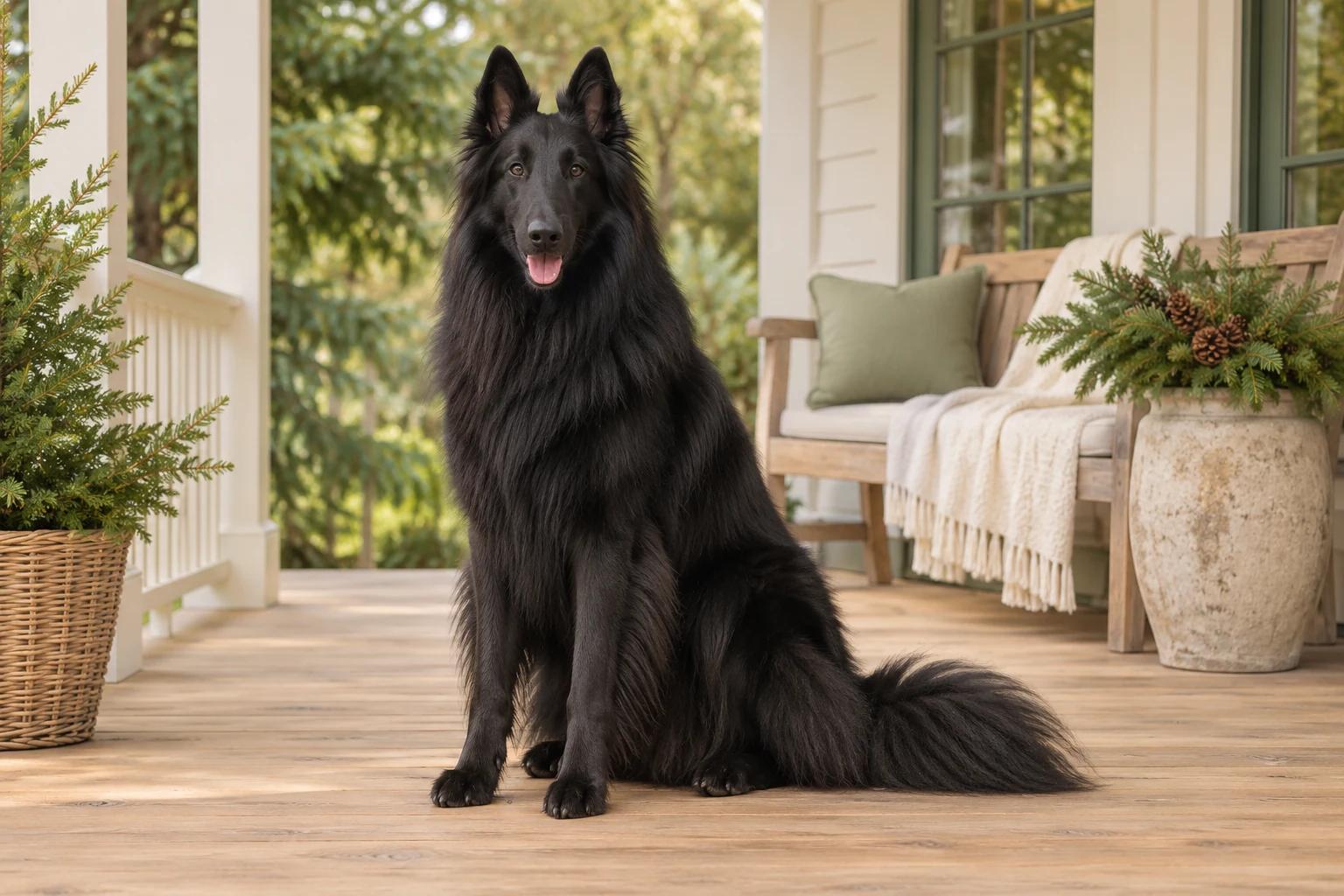
Belgian Sheepdog grooming is about more than brushing the visible black surface. The double coat and its fuller areas need an informed maintenance routine. A tidy outline is welcome, but the useful question is whether you know how to work through the coat and recognize when you need help.
The Belgian Sheepdog profile lists brushing once or twice a week as the usual plan and notes seasonal increases in loose hair. Use that as a starting point, then discuss the individual coat with someone experienced.
Belgian Sheepdog grooming: understand the different areas
The Belgian Sheepdog Club of America’s coat guidance describes an outer layer with a dense undercoat and fuller furnishings around the neck, legs, hindquarters, and tail. That explains why a quick pass over the back does not describe the whole grooming task.
Ask a groomer to show you the different areas on the actual dog. Which sections need particular attention? What does a completed section feel like? How do you check the coat without pulling?
Take notes in plain language that you can use at home. You do not need to memorize a standard to carry out routine care, but you do need to understand the dog’s coat rather than treating every area identically.
The goal is a repeatable process. A demonstration that you can confidently follow is more useful than a large set of tools with no clear purpose.
How to brush a Belgian Sheepdog without only polishing the surface
If you are learning how to brush a Belgian Sheepdog, ask to practice a small area while the groomer watches. This lets you check your technique and pressure before you try to complete the whole dog alone.
Work in the sequence demonstrated for the individual coat. Keep track of where you have been so you do not repeatedly cover one easy section while leaving another unfinished. If you stop midway, note what remains.
Ask how to use a comb or other recommended tool to assess the result. Do not assume that a shiny surface means everything underneath has been addressed.
If a tool catches or a section is difficult, pause rather than repeatedly pulling through it. Difficult tangles need appropriate assessment. If there is discomfort or a skin concern, talk with your veterinarian.
Choose the working position carefully
Have a professional show you a comfortable, suitable setup for the dog and for you. Do not improvise a raised station or restraint simply because it appears in a grooming photograph.
Good lighting and tools within reach can make the task easier. So can choosing a time without competing household activity. The setup should help you work carefully, not force you to rush through an awkward position.
Belgian Sheepdog coat care should preserve a natural outline
The club’s coat discussion describes hair lying naturally along the dog rather than an exaggerated, open presentation. If you are booking a professional service, explain the appearance you want and ask what the proposed work involves.
Bring a photograph if it helps clarify your preference, but discuss the actual coat before agreeing to a finish. A different dog’s photograph cannot establish what maintenance your dog needs today.
Avoid treating every fuller area as a problem to remove. First ask what belongs to the coat’s ordinary structure and what needs care. Understanding that distinction is more useful than trying to make every section the same length or volume.
If advice differs between providers, ask for the reasoning behind the plan. You should understand what the proposed technique is intended to do and which parts you are expected to maintain afterward.
Belgian Sheepdog shedding: separate the dog from the cleanup
The site describes shedding that becomes more noticeable during a season or two. Expect the care workload to change rather than assuming one fixed session will always cover everything.
The AKC’s ownership overview also identifies a double coat and loose-hair maintenance as part of ownership. A brushing routine helps you manage care, but it is not a promise of a hair-free home.
Make a separate plan for bedding, furniture covers, and travel surfaces. Follow the cleaning instructions for the materials you use. Keeping cleanup supplies accessible is often more useful than buying something elaborate that rarely leaves a cupboard.
Notice the dog’s ordinary pattern over time. If hair loss seems unusual or occurs with discomfort or skin changes, talk with your veterinarian. Do not explain every change as seasonal without considering the individual.
Share care without losing track of it
When several people groom the dog, agree on the tools, the sequence, and how to record unfinished work. A simple note such as “left hindquarter needs the groomer’s advice” is more useful than assuming another person will notice the same thing.
Include coat-care instructions when arranging boarding or sitting. Name the professional to contact if something is difficult, and make clear which tasks should not be attempted without guidance.
Before a professional appointment, ask what is included and what home maintenance is expected between visits. Discuss how additional work would be handled if the coat needs more attention than anticipated.
This turns grooming from an occasional rescue mission into an ordinary responsibility. It also helps you estimate the real commitment before choosing the breed.
Make the coat part of the whole decision
The black coat can be a major part of the Belgian Sheepdog’s appeal. Ask yourself whether maintaining it is something you are willing to learn, not merely something you hope will be easy.
Use the dog breed quiz to consider grooming alongside activity and training preferences. If terminology is confusing while you research, the site’s Belgian Sheepdog and Groenendael naming article explains that separate issue.
A practical grooming plan does not need to be complicated. It needs suitable tools, demonstrated technique, consistent attention, and a clear route to professional help. That is a better foundation than judging the job only by whether the coat looks impressive from across the room.
FAQ
How often should a Belgian Sheepdog be brushed?
My Breed Atlas lists brushing once or twice a week as the usual plan. Ask a groomer how the individual coat affects that schedule and reassess when loose hair or maintenance demands increase.
Does a Belgian Sheepdog have an undercoat?
Yes. The breed has a double coat, and the breed club describes a dense undercoat beneath the outer hair. Ask for a demonstration that addresses the coat properly rather than only smoothing its visible surface.
Which areas need attention during grooming?
The neck furnishings, legs, hindquarters, and tail are useful areas to discuss with a groomer, alongside the rest of the coat. Have the individual dog assessed and learn a consistent sequence so sections are not overlooked.
What should I do when a brush catches?
Pause rather than pulling repeatedly. Ask a groomer to assess difficult tangles and demonstrate appropriate technique. If the dog seems uncomfortable or you notice skin changes, talk with your veterinarian.
Sources behind this article
- Belgian Sheepdog Club of America: Coat ↗
- American Kennel Club: Is the Belgian Sheepdog Right for You? ↗
Article source checked: November 14, 2026. Source checked 2026-11-14
Keep reading

Affenpinscher Grooming: A Practical Coat-Care Routine
Read article →