Bedlington Terrier vs Whippet: Coat, Size, and Daily Fit
Compare Bedlington Terrier vs Whippet size, coat maintenance, outdoor arrangements, and everyday responsibilities before choosing.
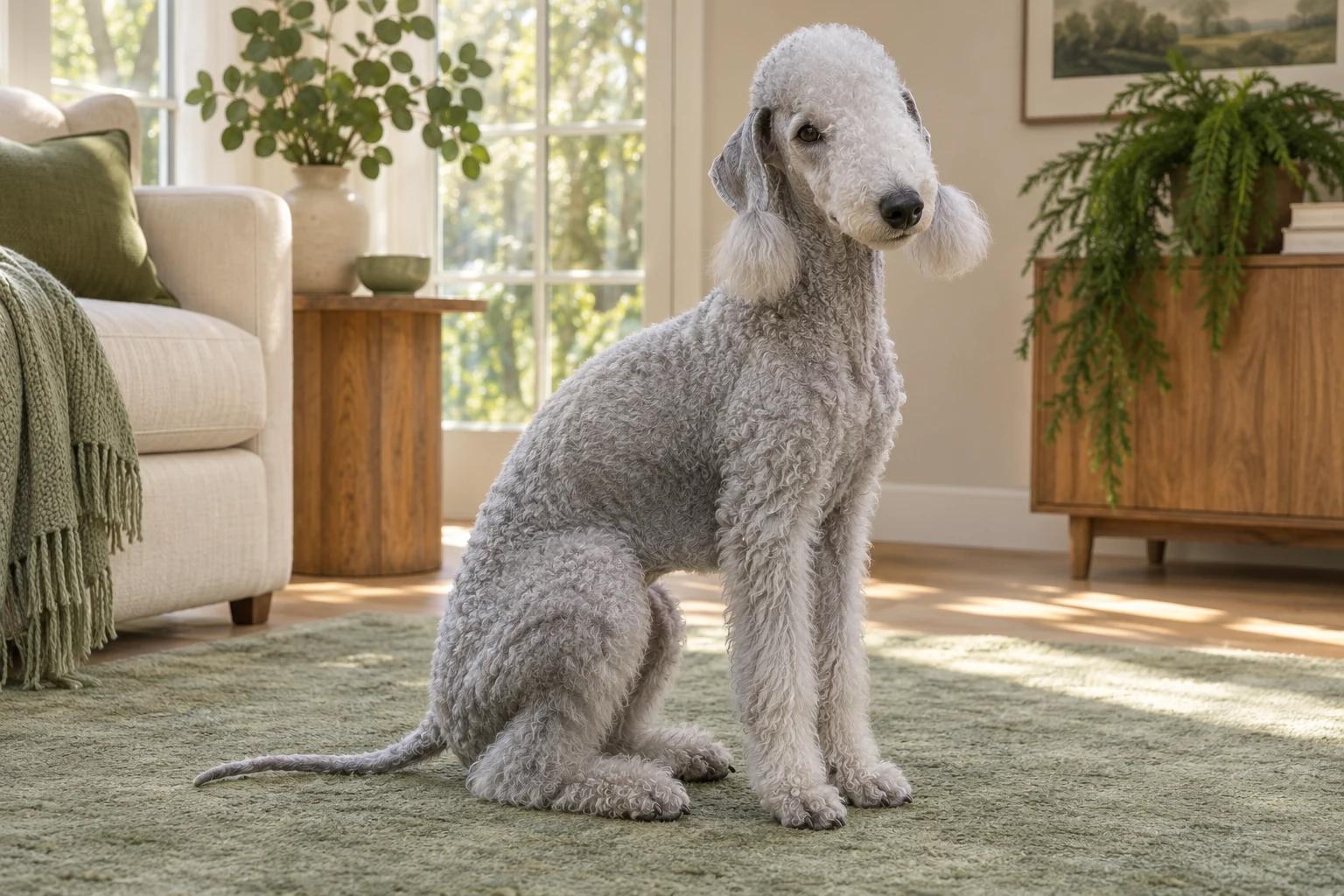
Bedlington Terrier vs Whippet brings together two elegant-looking dogs with very different coats. The Bedlington’s curls and sculpted outline contrast with the Whippet’s short, smooth appearance. That visible difference leads to a practical one: the kind of maintenance you will arrange throughout the dog’s life.
Size, outdoor arrangements, and individual personality deserve equal attention. Read the Bedlington Terrier profile and Whippet profile together, then compare their needs with what you actually enjoy doing.
Bedlington Terrier vs Whippet: start with the measurements
The current My Breed Atlas profiles list the following adult sizes:
| Feature | Bedlington Terrier | Whippet |
|---|---|---|
| Height | 15–17.5 inches | Males 19–22; females 18–21 inches |
| Weight | 18–22 pounds | 20–40 pounds |
| Coat length | Medium | Short |
| Coat type | Curly | Smooth |
In these records, the Whippet has taller listed height ranges and a higher upper weight endpoint, but the weight ranges overlap. That matters when planning travel equipment, resting space, and everyday handling. It is more useful than deciding that both look slim and therefore must fit the same setup.
For a particular adult, measure before buying. Check both the space where equipment will sit and the opening through which it must pass. If you are considering a puppy, discuss adult expectations without treating a range as a guaranteed final measurement.
The clearest difference is the coat-care commitment
A Bedlington Terrier or Whippet decision may become clearer when you consider grooming. The Bedlington’s familiar shape involves trimming and maintenance; the Whippet’s short coat presents a different kind of care task.
The American Kennel Club’s Bedlington history explains that its sculpted presentation developed in the show ring. You can appreciate that style while still asking what a practical companion-dog arrangement would involve.
Before choosing a Bedlington, speak to a groomer familiar with the breed. Ask about the appointment service, home maintenance, and how a preferred appearance would look between visits. Do not compare only a freshly finished photograph with a Whippet standing naturally outdoors.
For the Whippet, ask about suitable routine tools and care rather than assuming a short coat requires no attention. Both dogs need ordinary care; the tasks and time devoted to the coat are not identical.
If you enjoy learning coat maintenance and arranging a particular finish, the Bedlington’s grooming may be part of its appeal. If that work is something you would consistently avoid, the difference deserves serious weight in your decision.
A terrier and a hound, not two hairstyles
The AKC’s Bedlington introduction emphasizes an alert, athletic terrier. Its Whippet introduction highlights a quick dog with a strong interest in pursuit. These are useful broad descriptions, not complete predictions of an individual’s behavior.
Do not assume the Bedlington is passive because it looks soft, or that the Whippet needs nothing except a brief burst of running. Look at the whole day, including shared activity, learning, care, and rest.
Ask owners what they do in ordinary conditions rather than only on ideal weekends. What is the regular local outing? Where do they practice skills? What arrangements do they use when a preferred venue is unavailable?
Those answers reveal responsibilities you can compare with your own life. A breed’s group classification is a starting point for questions, not a substitute for meeting dogs and learning about their histories.
Compare outdoor arrangements before comparing speed
You do not need to rank which breed is faster to make an ownership decision. You need suitable places and equipment for the activities you intend to do.
Check the boundaries of any enclosed area you plan to use. Think about entrances, other users, and how you will move from the car or street into the space. An attractive open landscape is not automatically a suitable place for unrestricted activity.
Talk to an instructor about the skills that support your plans. If you are interested in an organized activity, observe a beginner session and ask about prerequisites. Keep physical demands appropriate to the individual, with veterinary guidance where needed.
The useful comparison is whether you can provide the activity and management each dog requires, not whether you can arrange the most dramatic running photograph. Enjoyment should include the ordinary parts before and after the exciting moment.
Meet the individual behind the breed description
In a Whippet vs Bedlington Terrier comparison, ask about social experience without assuming one breed will automatically be easier around every person or animal. A particular dog’s history gives more information than a broad label.
If you have another dog, describe its preferences and experience honestly. Discuss introductions and the home setup, including separate resting space and how meals will be managed. Do not treat one brief greeting as a complete compatibility test.
If you have frequent guests or changing caregivers, include that in the conversation. Ask how the dog’s existing caregiver handles unfamiliar situations and what support might help during a transition.
Make notes about what you observed, separating observation from interpretation. “Approached after a few minutes” is more useful than “shy.” It gives you something concrete to discuss instead of turning one moment into a permanent personality judgment.
Make the choice with a practical shortlist
The difference between Bedlington Terrier and Whippet ownership is not reducible to one winner. Start with three questions: which adult size suits your arrangements, which coat-care commitment you prefer, and which individual dog fits the life you can provide.
Use the dog breed quiz to organize those preferences. Then investigate the remaining questions with owners, caregivers, trainers, and groomers as appropriate.
Keep medical research separate from an appearance-based comparison. The site’s article on the limits of Bedlington copper-test results offers a specific discussion to take into a veterinary conversation. It is not a reason to invent a broad health ranking between these breeds.
Choose with the ordinary years in mind, not only the first photograph. The coat work, equipment, outings, and shared time are what will make the decision feel right in daily life.
FAQ
Is a Whippet bigger than a Bedlington Terrier?
The site lists Whippets at 20–40 pounds and Bedlington Terriers at 18–22 pounds, with Whippets also having the taller listed height ranges. Use the individual dog’s measurements when selecting equipment rather than relying only on a breed average.
Which needs more coat styling?
The Bedlington’s familiar sculpted appearance involves trimming and maintenance. The Whippet has a short, smooth coat and a different care routine. Discuss actual maintenance with a groomer rather than judging effort from photographs alone.
Is a Bedlington Terrier a type of Whippet?
No. Bedlington Terriers and Whippets are distinct breeds, with separate breed profiles and care requirements. Similar elegance or an arched outline does not make them interchangeable, and a comparison should not be confused with a crossbreed description.
How do I decide between a Bedlington and a Whippet?
Compare adult size, coat-care preferences, outdoor arrangements, and the individual dog’s history. Meet adults where possible and ask about ordinary daily responsibilities. Choose a workable long-term fit rather than selecting only the silhouette you prefer.
Sources behind this article
- American Kennel Club: Bedlington Terrier History ↗
- American Kennel Club: Bedlington Terrier ↗
- American Kennel Club: Whippet ↗
Article source checked: November 14, 2026. Source checked 2026-11-14
Keep reading

Affenpinscher vs Brussels Griffon: Everyday Differences
Read article →