Bedlington Terrier Temperament: Beyond the Lamb-Like Look
Explore Bedlington Terrier temperament, activity, introductions, and other-dog questions without mistaking a soft outline for a personality guarantee.
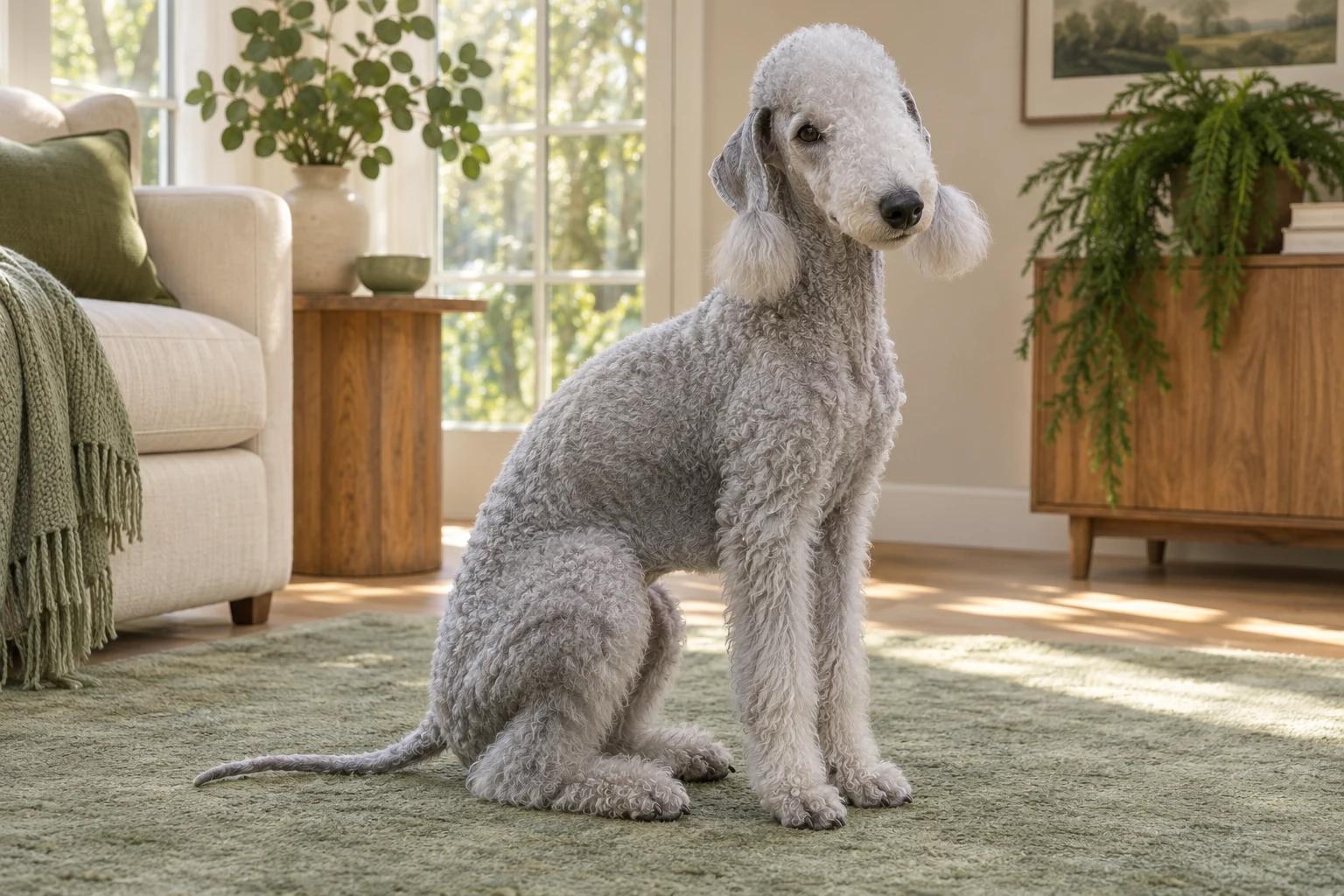
Bedlington Terrier temperament is easy to misread if you start and finish with the haircut. The soft-looking outline belongs to a terrier, not a promise of a quiet ornament. Choosing the breed means looking at activity, training, interactions, and ordinary care as well as its memorable appearance.
The Bedlington Terrier profile describes an active dog with opportunities for daily learning. Use that information to prepare questions, then get to know the individual. A breed tendency is a starting point rather than a complete personality report.
Bedlington Terrier temperament is not determined by the trim
The American Kennel Club’s breed introduction presents the Bedlington as an alert, athletic terrier. That is a useful counterweight to the assumption that a lamb-like appearance must mean a passive dog.
Watch a Bedlington in ordinary motion if you can. A posed photograph tells you very little about how the dog engages with a person, investigates a place, or responds when an activity ends. Ask the handler what is typical about the behavior you are seeing.
Do not replace one stereotype with another, either. Calling a dog a terrier does not explain every action or tell you that all individuals will be alike. The point is to investigate rather than decide from an appearance or a group label.
When discussing a particular dog, ask about its familiar routine, previous experience, and current training. These provide more useful evidence than a description composed entirely of flattering adjectives.
Bedlington Terrier personality and outdoor interest
VCA’s breed overview notes the Bedlington’s tendency to chase and recommends managed outdoor access. That is an important planning consideration, not a reason to test the dog around small animals to see what happens.
Consider the places you would use for walks and play. Is there a suitable enclosed area for activities that require it? Can you manage ordinary outings on a lead? Does everyone providing care understand the arrangement?
A garden may be useful, but check the actual boundaries and access points rather than assuming the space is enclosed because it looks that way from the house. Keep the outdoor plan consistent when someone else is caring for the dog.
Training and management serve different purposes. Teaching useful responses is worthwhile, but it does not turn every open setting into an appropriate place to let the dog choose its own direction. Discuss your goals with an instructor and build skills in suitable conditions.
Bedlington Terrier temperament with other dogs
The question of Bedlington Terrier temperament with other dogs needs an individual answer. Ask what the dog has experienced with familiar companions, unfamiliar dogs, and shared living space. Avoid treating a short encounter as proof of future compatibility.
If you have a resident dog, describe that dog accurately to the breeder or caregiver. Include its usual play preferences, previous housemates, and any situations that are difficult. An honest description helps plan a meaningful introduction.
Think about the home arrangement as well as the first meeting. Can the dogs rest separately? Can meals and valued items be managed without crowding? Can one dog have quiet time while the other is active?
These are planning questions, not predictions that problems will occur. They help you avoid relying on a broad assurance that a breed usually gets along with other dogs. For concerns or a complicated introduction, seek qualified professional guidance.
Learning should suit the individual
The site describes training games as part of the Bedlington’s everyday picture. Choose a few useful skills and work on them clearly rather than assuming a small dog will fit into the household without instruction.
For example, decide how you want the dog to participate when walking equipment is prepared or when a care session begins. Teach those expectations with appropriate guidance. Make the intended behavior specific enough that every household member understands it.
A successful response in a quiet room is not the same as reliable performance in every setting. Ask your instructor how to progress without rushing. If an exercise becomes difficult, describe what happened rather than deciding that the dog is being deliberately awkward.
If behavior changes unexpectedly or appears connected to discomfort, talk with your veterinarian. Breed personality should not be used to explain away a sudden change.
Evaluate the day beyond playtime
Bedlington Terrier characteristics matter during quiet and inconvenient moments, too. Ask how the particular dog spends time when nothing exciting is happening, how care is handled, and what support is needed when the usual caregiver is away.
A useful conversation covers ordinary details:
- What does the dog do after its main outing?
- How are unfamiliar people introduced?
- What training is being practiced now?
- How does the caregiver organize coat maintenance?
- What arrangements are used when the household schedule changes?
You are not looking for a perfect answer to every question. You are learning whether the actual responsibilities fit your interests and resources.
The site lists a typical adult weight of 18–22 pounds. That may make some practical arrangements different from those for a much larger dog, but it does not remove the need for activity, learning, grooming, or thoughtful handling.
Choose the commitment, not only the character
If you enjoy an engaged dog and are interested in the care behind the distinctive coat, the Bedlington may deserve a closer look. If you mainly want the appearance with minimal involvement, investigate the everyday work before deciding.
Use the dog breed quiz to organize your preferences. Then discuss the individual dog with people who know it, rather than allowing a quiz result or a photograph to settle the decision on its own.
Health questions belong in a separate, informed conversation. Our article explaining the scope of Bedlington copper-test results is a useful starting point for that subject, not a temperament assessment. Talk with your veterinarian about medical questions and keep behavior observations specific to the dog.
The most useful match is one in which the everyday tasks make sense to you: the outings, the learning, the grooming, and the time together. A memorable silhouette is a pleasant extra, not the whole decision.
FAQ
Are Bedlington Terriers quiet lapdogs?
Do not infer a quiet, passive personality from the lamb-like appearance. My Breed Atlas describes an active breed that benefits from daily learning. Ask about the individual dog’s ordinary activity and resting habits rather than relying on the haircut.
Can a Bedlington Terrier live with another dog?
Compatibility depends on the particular dogs and their experience. Discuss previous interactions, arrange appropriate introductions, and plan separate space where needed. No breed label can guarantee that two individual dogs will live comfortably together.
Do Bedlington Terriers chase small animals?
The breed can show chasing interest, so plan managed outdoor access and appropriate containment. Do not test that tendency around animals or assume training removes the need for management. Discuss practical arrangements with the dog’s caregiver and instructor.
What should I ask before choosing a Bedlington?
Ask about activity, current training, introductions, experience with other animals, and coat maintenance. Request concrete examples from the individual’s daily life. Those details are more useful than broad claims that the breed is easy or affectionate.
Sources behind this article
Article source checked: November 14, 2026. Source checked 2026-11-14
Keep reading

Airedale Terrier Temperament: What Everyday Life Can Feel Like
Read article →