Bedlington Terrier Grooming: Plan the Cut and the Care
Understand Bedlington Terrier grooming, discuss haircut preferences clearly, and plan the maintenance between professional appointments.
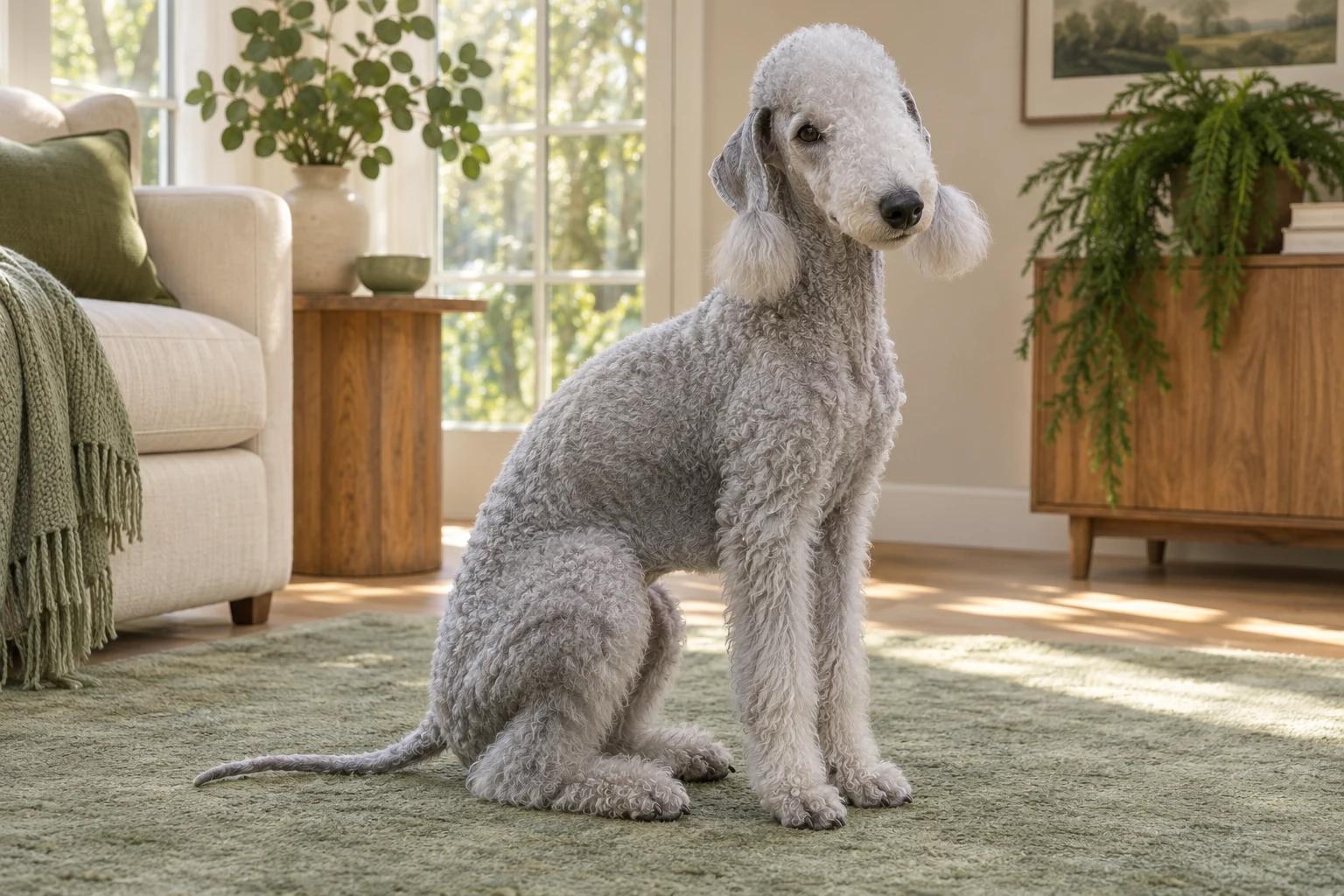
Bedlington Terrier grooming involves two related decisions: how you want the dog to look and how you will maintain the coat between appointments. The familiar sculpted outline is distinctive, but it does not appear by itself. A useful grooming conversation starts with your preferences, the individual coat, and the work you can realistically do at home.
The Bedlington Terrier profile lists a medium-length curly coat, light loose hair, and brushing once or twice a week as the usual plan. Low loose-hair levels do not mean there is nothing to maintain.
Bedlington Terrier grooming: separate shape from upkeep
The American Kennel Club’s breed history explains that the traditional sculpted presentation developed through show-ring grooming. That makes it a recognizable style, not the only way to discuss the appearance of a companion dog.
Start by deciding which parts of the familiar look appeal to you. Is it the overall outline, the head shape, the ear finish, or simply a tidy curly coat? Bring photographs showing those details rather than asking for “the normal Bedlington cut” and hoping the groomer interprets that as you do.
Then ask how your preferred appearance affects upkeep. A style is not just the result on collection day. It is also the condition and appearance you will manage as the coat grows between visits.
Your goal is an agreement you understand. You should be able to explain what will be done, what you will do afterward, and when you will reassess the plan.
Choosing a Bedlington Terrier haircut
A Bedlington Terrier haircut is a skilled job. VCA’s breed-care overview notes that many owners use a professional groomer for the distinctive trim and that learning it takes instruction and practice.
When contacting a groomer, ask whether they have worked with the breed and whether you can discuss examples of their work. A photograph can show a finish you like, but ask what maintenance went into keeping that particular dog’s coat ready for it.
At the consultation, separate preferences from assumptions. You might like the traditional head outline but prefer a simpler body finish. You might want to preserve a familiar feature while reducing the time you spend maintaining another area. Explain those preferences and let the groomer assess what is appropriate for the current coat.
Do not turn a photograph into a demand for an exact result regardless of coat condition. Ask what can be achieved now and what might require a different maintenance plan over time.
Give useful instructions, not a vague adjective
Words such as short, natural, fluffy, and tidy mean different things to different people. Point to the part of the photograph you mean and ask the groomer to describe the proposed result back to you.
A simple written note can prevent confusion: which features you want retained, which you want simplified, and what should be discussed before the plan changes. This is particularly helpful when another household member drops the dog off.
Bedlington Terrier coat care between appointments
Keep home maintenance separate from cutting and shaping. Ask the groomer to demonstrate the brushing or combing they expect you to do, using the tools suited to this dog. Watch how they check whether an area is finished rather than judging only by the surface.
Put ordinary coat care into an existing part of your week. The site’s once- or twice-weekly brushing expectation is a starting point; ask how the individual coat and chosen style affect it. If the coat becomes difficult to manage before the next booking, contact the groomer rather than repeatedly postponing the problem.
Keep a short note of questions that come up at home. “This area catches when I use the comb” is useful information. It is more precise than saying the whole coat is impossible.
Avoid buying specialist cutting equipment before someone has shown you how to use it. An online chart cannot assess the dog’s movement, the condition of the coat, or your handling. Ask what is appropriate to learn at home and what should remain a professional task.
Comparing Bedlington Terrier grooming styles
When browsing Bedlington Terrier grooming styles, compare photographs taken from similar angles. A side view reveals a different part of the finish from a close-up of the face. Lighting and how recently the dog was groomed can also affect the impression.
Save a small set of examples rather than an enormous collection with contradictory details. Note what you like about each one. That lets the groomer distinguish a preference for a certain outline from a preference for a particular photograph.
Ask about the appearance halfway between appointments. If you only like the style immediately after grooming, you may prefer a different arrangement. A practical choice should work on ordinary days as well as in a freshly finished picture.
You do not need to reproduce a show presentation to enjoy the breed’s appearance. You do need a care plan that suits the individual coat and that you are willing to maintain.
Budget for the service you are actually arranging
Request a quote for the proposed service rather than comparing headline prices alone. Ask what is included, how coat condition affects the appointment, and when additional work would be discussed with you.
Also account for travel and availability. A preferred groomer who is difficult to reach may still be worthwhile, but the arrangement needs to fit your calendar. Make plans for holidays or other interruptions instead of assuming an appointment will always be available at short notice.
Keep grooming and medical questions separate. If you notice discomfort, skin changes, or an unusual change in the coat, talk with your veterinarian. The site’s article on Bedlington copper-test results addresses a different subject and should not be used to explain a coat concern without veterinary assessment.
Use the dog breed quiz to compare your interest in regular coat maintenance with other ownership priorities. The useful question is not only whether you like the finished haircut, but whether you want the routine that supports it.
FAQ
Does a Bedlington Terrier need professional grooming?
Many owners use a professional for the breed’s distinctive trim. Home maintenance still matters between appointments. Ask a breed-experienced groomer to explain the service, demonstrate appropriate brushing or combing, and agree on a workable schedule.
What is the best Bedlington Terrier haircut?
The best haircut for your situation depends on the individual coat, your preferred appearance, and the maintenance you can provide. Use photographs to discuss specific features with a groomer rather than relying on vague terms such as short or fluffy.
How often should I brush a Bedlington Terrier?
My Breed Atlas lists brushing once or twice a week as the usual coat plan. Ask your groomer how the dog’s actual coat and chosen style affect that expectation, and seek help if the coat becomes difficult to manage.
Can I learn to groom my Bedlington at home?
You can discuss learning suitable tasks with an experienced groomer, but cutting and shaping require instruction and practice. Start with demonstrated maintenance skills rather than assuming a tool kit or online chart is enough for a complete haircut.
Sources behind this article
Article source checked: November 14, 2026. Source checked 2026-11-14
Keep reading

Affenpinscher Grooming: A Practical Coat-Care Routine
Read article →