Beauceron vs Doberman Pinscher: Compare Everyday Commitments
Compare Beauceron vs Doberman Pinscher size, coat care, training commitments, and practical household fit without relying on appearance.
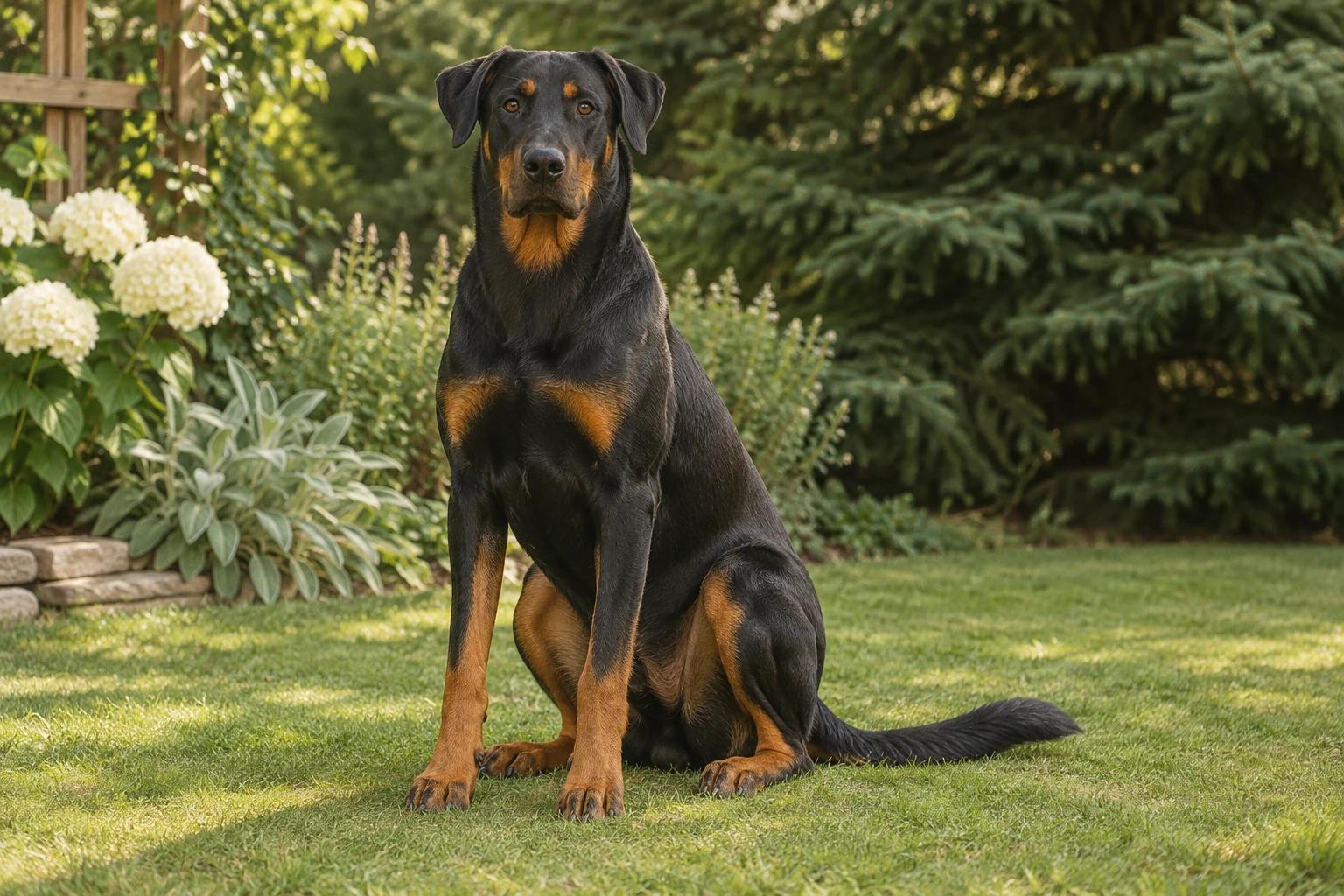
Beauceron vs Doberman Pinscher is not a choice between two versions of the same dog. Their appearance can invite a quick comparison, but the useful differences involve adult size, coat maintenance, learning, and the way you plan to share daily life. Both deserve consideration as individual dogs rather than as symbols of strength.
Read the Beauceron profile alongside the Doberman Pinscher profile. Those records give a practical starting point without deciding which dog is right for every home.
Beauceron vs Doberman Pinscher: the physical comparison
My Breed Atlas currently records these adult measurements:
| Measurement | Beauceron | Doberman Pinscher |
|---|---|---|
| Male height | 25.5–27.5 inches | 26–28 inches |
| Female height | 24–26.5 inches | 24–26 inches |
| Adult weight | 66–99 pounds | Males 88–99; females 71–77 pounds |
| Coat | Short, double and smooth | Short and smooth |
The ranges overlap, so it is not useful to assume every Beauceron is larger than every Doberman. A particular adult’s measurements are more useful for choosing equipment than the upper end of a breed range.
Look beyond height when considering handling. Think about the dog turning in a hallway, traveling in the car, and resting in the room where people spend time. Compare the actual space available and who will be responsible for daily movement and care.
Heritage is a starting point, not a household job description
The American Kennel Club’s Beauceron introduction identifies a versatile herding background. Its Doberman Pinscher introduction emphasizes a powerful, alert dog associated with protection work. These are brief breed descriptions, not instructions to give either dog a guarding role at home.
When evaluating a Beauceron or Doberman, focus on the life you intend to provide. If that is companionship, outings, and training, discuss those goals directly. There is no need to imitate specialized work to justify choosing an active breed.
Avoid asking which dog would be more intimidating. That question tells you little about whether you will enjoy teaching, exercising, and caring for the dog. Ask instead what useful skills you want and whether you have the support to develop them.
A breed’s reputation also cannot promise how an individual will respond to a visitor or unfamiliar situation. Make practical arrangements for introductions rather than relying on assumptions about instinct.
Training: compare the work you want to do
Both site profiles make learning and activity meaningful parts of the ownership picture. Neither should be chosen on the assumption that a clever dog will require little instruction.
Ask an instructor what a beginner path would look like for the individual you are considering. Discuss ordinary goals such as manageable walking, cooperative care, and settling in appropriate places before talking about advanced activities.
If a sport interests you, observe a class. Find out what preparation it requires and what owners practice between sessions. The attractive part may be the performance, but the daily commitment is the learning process that leads toward it.
In a Doberman vs Beauceron decision, be honest about whether you enjoy that process. Do you like practicing details, listening to instruction, and adjusting when an exercise is not working? Or do you mainly want the finished result? That difference can matter more than choosing one breed name over the other.
For physical activities, talk with your veterinarian about suitability and work with a qualified instructor. Choose demands for the actual dog rather than assuming every dog within a breed can follow the same plan.
Short coats do not mean identical maintenance
The Beauceron profile describes substantial loose hair, including heavy shedding seasons. The Doberman profile also calls for a regular coat-care and cleaning plan. A short coat should not be mistaken for a coat that leaves no work behind.
Ask owners to show you their ordinary grooming tools and explain how they use them. Then ask what changes during a heavier shedding period. This gives you a more useful picture than comparing freshly groomed dogs at an event.
Consider the surfaces in your home and car, the cleaning you are comfortable doing, and who will handle routine care. You do not need an elaborate maintenance system, but you do need a realistic one.
A separate Beauceron feature is covered in our article about double rear dewclaw care. Read that as a specific care conversation, not a reason to rank one breed above the other. The appropriate professional can guide care for the dog in front of you.
Meet adult dogs with your actual questions ready
The difference between Beauceron and Doberman Pinscher ownership becomes clearer when you ask about concrete experiences. Request examples of a normal workday, introductions to visitors, travel, and the training currently underway.
The American Beauceron Club’s breed-traits discussion highlights independence and reserve with unfamiliar people. That is a useful reason to ask careful questions about an individual’s interactions, not to assume the Doberman beside it will be the opposite.
Meet more than one dog when possible. One exceptionally outgoing adult or one dog having an unsettled day should not become your entire definition of a breed. Ask the caregiver what is typical and what is unusual about what you are seeing.
Include everyone who will provide daily care in the decision. A dog may appeal strongly to one person while another is expected to handle most walks or appointments. Resolve that mismatch before making a commitment.
Choose the arrangement you can sustain
Put your answers under four headings: physical handling, training, shared activity, and routine care. Identify what already works and what would need to change. This keeps the decision grounded in responsibilities rather than reputation.
Use the dog breed quiz to organize your preferences. Then investigate the individual dog, its history, and the support available to you. Neither breed wins by default; the useful choice is the one whose needs you can meet with consistency and genuine interest.
FAQ
Is a Beauceron bigger than a Doberman Pinscher?
The site’s adult weight ranges overlap. Beaucerons are listed at 66–99 pounds, while Dobermans are listed at 88–99 pounds for males and 71–77 pounds for females. Compare individual measurements rather than assuming one breed is always larger.
Are Beaucerons and Dobermans closely interchangeable?
No. They are distinct breeds with separate backgrounds and profiles. Similar coloring or a powerful appearance does not make their individual behavior, care needs, or household fit interchangeable. Evaluate the actual dog and your daily commitments.
Which breed needs less training?
Neither is a choice for avoiding training. Both need clear instruction and practical everyday skills. Compare the learning process you are willing to support, and discuss an individual training plan with a qualified instructor.
Does either breed have a maintenance-free coat?
No. Both have short coats, but coat care and loose-hair cleanup still belong in the ownership plan. Ask about the individual dog’s maintenance needs and use the site’s coat descriptions as a starting point rather than assuming short means effortless.
Sources behind this article
- American Kennel Club: Beauceron ↗
- American Kennel Club: Doberman Pinscher ↗
- American Beauceron Club: Breed Traits ↗
- Swiss Beauceron Club adult average reference — adult-weight reference ↗
- Dogzone adult reference — adult-weight reference ↗
Article source checked: November 14, 2026. Source checked 2026-11-14Article source checked: November 18, 2026. Source checked 2026-11-18
Keep reading

Affenpinscher vs Brussels Griffon: Everyday Differences
Read article →