Beauceron Temperament: Understand the Dog Behind the Look
Understand Beauceron temperament, introductions, other-dog considerations, and the questions that reveal more than a powerful appearance.
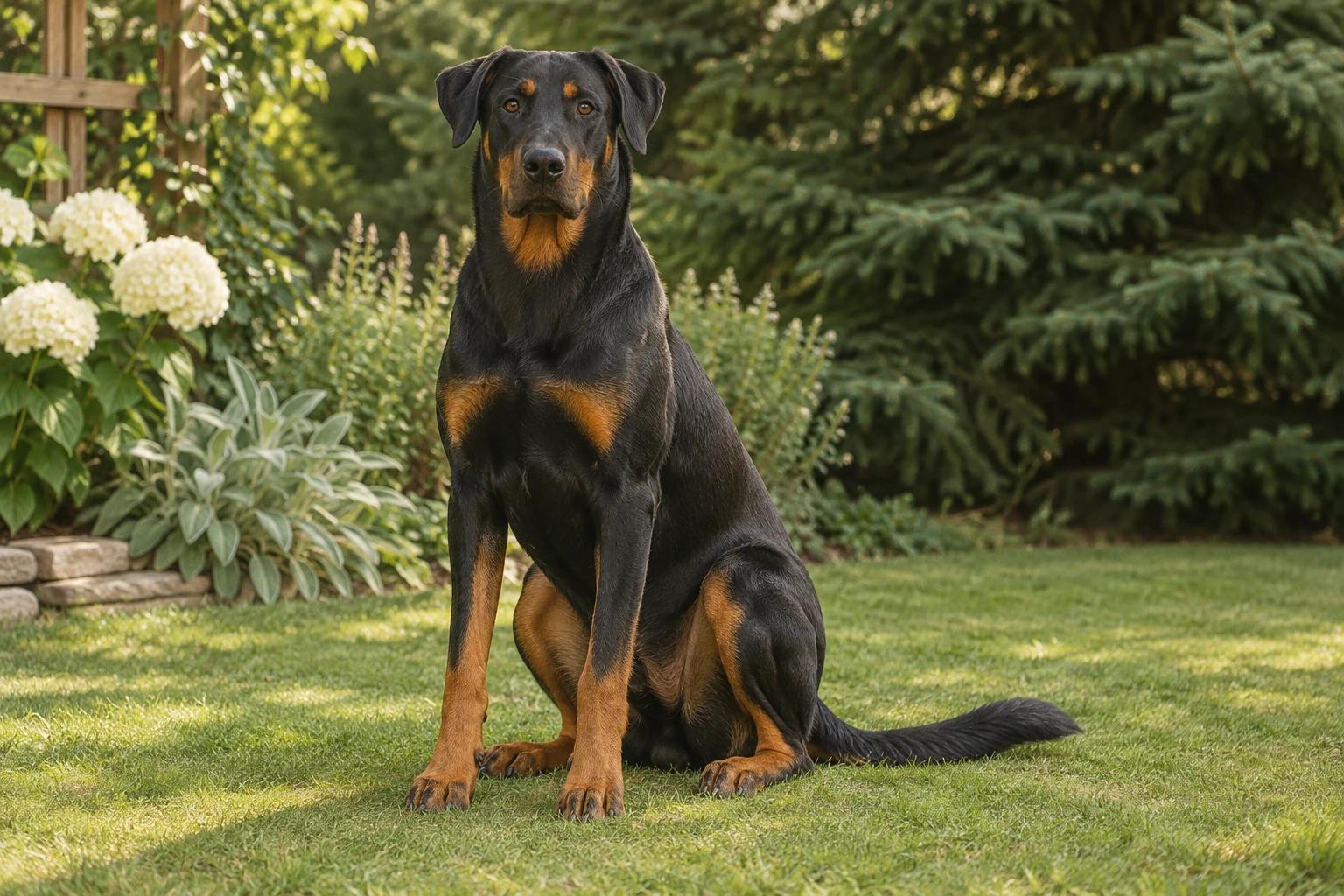
Beauceron temperament deserves a closer look than the breed’s powerful silhouette. A large dog can be watchful, engaged with familiar people, and selective about new situations without fitting a single dramatic label. The useful question is what those tendencies mean in the home you actually have.
Start with the Beauceron profile, which describes substantial activity needs and a dog that may need patient introductions to unfamiliar people. Breed tendencies are a starting point. They do not tell you how an individual will respond in every situation.
Beauceron temperament is more than an imposing presence
The American Beauceron Club’s temperament discussion distinguishes confidence and reserve from fear or unjustified aggression in the breed standard. A standard describes an intended breed character, not a guarantee about every dog carrying the name.
That distinction is useful when you meet a Beauceron. You do not need to provoke a response to learn something. Watch an ordinary interaction, ask the handler what is familiar or unusual about it, and give the dog time rather than demanding immediate contact.
A brief encounter also has limits. A dog at an event, in a familiar home, or after an unfamiliar journey may show different parts of its behavior. Collect examples from more than one context instead of deciding that one impressive moment explains the whole personality.
If you are considering a particular dog, ask what its caregiver has actually observed. Specific descriptions are more useful than assurances that it is protective, loyal, or good at reading people.
Beauceron personality in a busy household
Think through the number of people who routinely enter your home. A quiet household with occasional planned guests presents a different arrangement from one with frequent deliveries, visitors, and changing caregivers.
The question is not whether one arrangement is automatically suitable. It is whether you have a workable way to manage introductions and everyday movement. Decide where the dog can rest, who will handle arrivals, and whether visitors will follow your instructions.
For example, a guest who is happy to wait while you organize the dog is easier to accommodate than someone determined to approach immediately. Set expectations with people before asking the dog to cope with their assumptions.
Do not turn the dog into a test of a visitor’s confidence. You are responsible for the arrangement. If an introduction is difficult, seek qualified help rather than encouraging a stranger to keep trying until the dog accepts contact.
Beauceron temperament with other dogs needs individual evidence
Searches for Beauceron temperament with other dogs often ask for a yes-or-no verdict. A breed label cannot establish whether two particular dogs will live comfortably together. Ask about the individual’s history with familiar dogs, unfamiliar dogs, shared space, and ordinary resources.
Those are different questions. A dog that has lived with one longstanding companion has not necessarily shown how it responds to every new dog. Likewise, a difficult encounter in one setting does not by itself explain all future interactions.
If you already have a dog, consider the practical arrangement before introducing another. Can each have separate resting and feeding space? Can you manage movement through narrow areas? Who will supervise, and what professional guidance is available if the process becomes difficult?
Do not use a crowded gathering of unfamiliar dogs as a shortcut to assessing compatibility. Plan introductions with appropriate help and enough flexibility to adjust. The goal is to learn about the actual pair, not prove a general claim about the breed.
Active companionship comes with responsibilities
The American Beauceron Club’s breed-traits page notes that some Beaucerons can be physically demonstrative and that independence is part of the picture. For a household, that makes ordinary manners worth discussing early.
Think about what you want greeting, play, and quiet company to look like. An enthusiastic interaction may be welcome in one context and disruptive in another. Teach the behavior you want with qualified guidance rather than assuming the dog will infer a different rule for every person.
The site lists a typical adult weight of 66–99 pounds. At that size, practical handling deserves attention even when the dog’s intentions seem friendly. Make sure the people responsible for daily care can manage the agreed routine and equipment.
Activity is another part of companionship. Ask what an ordinary day involves for the dog you are considering. Training, outings, and time together are commitments to schedule, not personality benefits that arrive without work.
Evaluate Beauceron characteristics through concrete examples
Instead of asking only whether a Beauceron is calm, request a description of what happens after an outing, while meals are prepared, or when the household settles for the evening. Instead of asking whether it likes people, ask how introductions are normally handled.
Keep a short list of what matters in your home:
- The frequency of guests and unfamiliar caregivers.
- Existing animals and the space available for management.
- Who handles walking, training, and appointments.
- The daily opportunities for shared activity.
- The places where the dog can rest without interruption.
These questions do not score the dog. They reveal whether your arrangements fit its needs and whether you need more information before deciding.
Avoid selecting a Beauceron mainly because you want a certain image. A dramatic photograph does not show the ordinary work of teaching, cleaning, exercising, and organizing a home around a large animal.
Keep your expectations specific and fair
A useful match does not require the dog to enjoy every person, place, or activity you can imagine. It does require you to understand the individual and provide a workable life. Be honest about which commitments you welcome and which you would resent.
Use the dog breed quiz to organize your preferences, then follow up with individual conversations and meetings. For a distinctive care responsibility separate from temperament, see why the Beauceron’s double rear dewclaws belong in nail checks.
If behavior changes suddenly or seems connected to discomfort, talk with your veterinarian. For ongoing handling or interaction concerns, seek individual professional guidance rather than relying on a broad breed description.
FAQ
What is a Beauceron’s personality usually like?
Beaucerons are commonly described as active, watchful dogs that can show independence and reserve with unfamiliar people. Individual behavior varies. Ask for examples from the particular dog’s daily life rather than treating a breed description as a promise.
Are Beaucerons friendly with strangers?
A Beauceron may need patient introductions to unfamiliar people. Give the dog space and follow its caregiver’s guidance rather than insisting on immediate contact. Confidence and willingness to greet everyone are not the same thing.
Can a Beauceron live with another dog?
Compatibility depends on the individual dogs, their histories, and the household arrangement. Ask about actual experience with other dogs and plan introductions with appropriate guidance. A breed label cannot establish that a particular pair will be compatible.
Is Beauceron temperament suitable for a busy home?
Assess the actual household: visitors, caregivers, existing animals, handling responsibilities, and activity opportunities. A busy home needs clear arrangements, not simply a positive breed label. Meet the individual dog and discuss how its needs fit those arrangements.
Sources behind this article
- American Beauceron Club: The Beauceron Temperament ↗
- American Beauceron Club: Breed Traits ↗
- Swiss Beauceron Club adult average reference — adult-weight reference ↗
- Dogzone adult reference — adult-weight reference ↗
Article source checked: November 14, 2026. Source checked 2026-11-14Article source checked: November 18, 2026. Source checked 2026-11-18
Keep reading

Airedale Terrier Temperament: What Everyday Life Can Feel Like
Read article →