Beagle vs Harrier: a similar look does not mean the same fit
Compare Beagle and Harrier size, activity, care and companionship to understand the differences behind their familiar hound appearance.
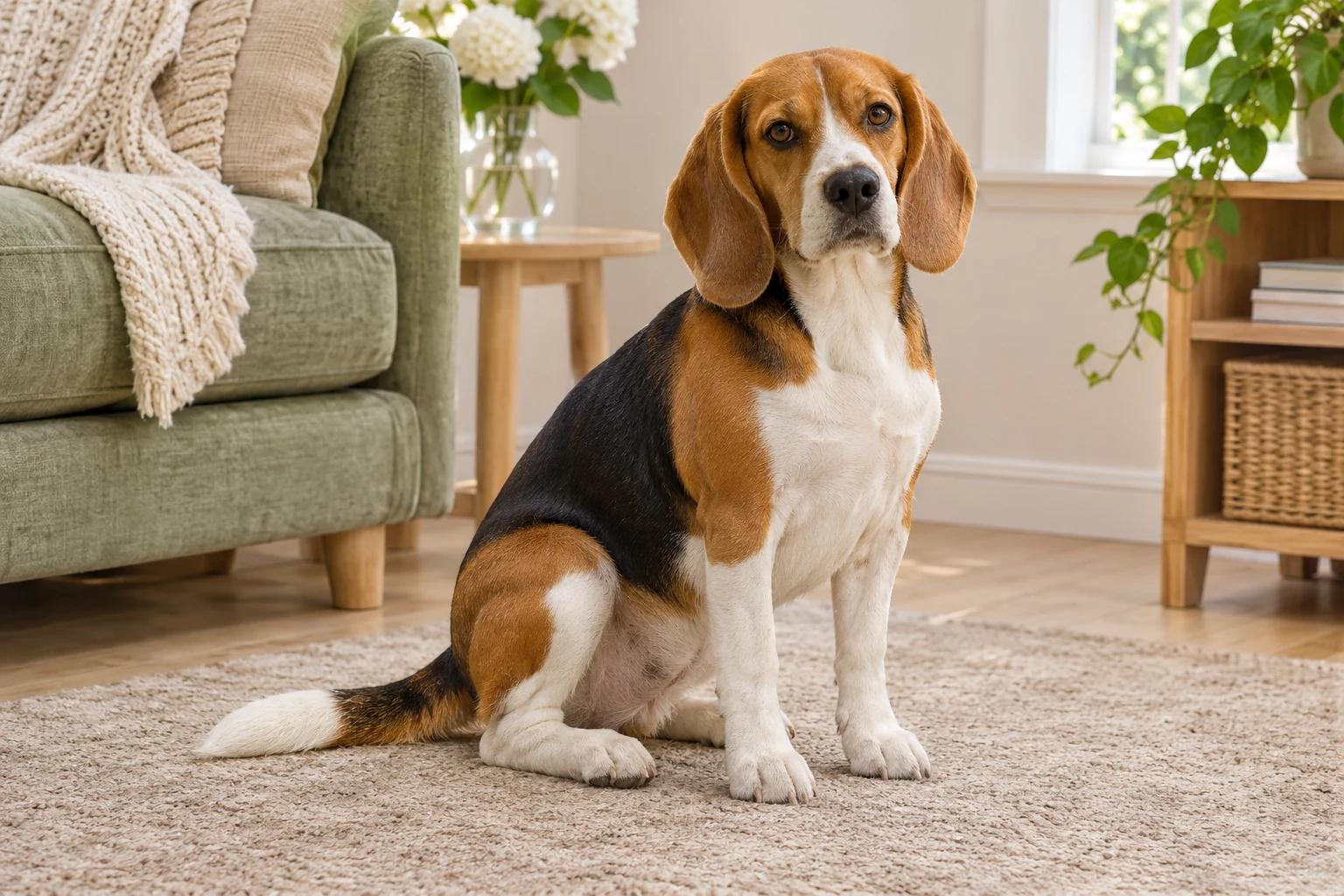
Beagle vs Harrier comparisons often begin with a photograph. Both can have a familiar hound outline, hanging ears and similar color patterns. The resemblance is real enough to prompt questions, but the size difference alone makes it worth looking beyond appearance.
Compare the Beagle profile with the Harrier profile, then consider what you would need for the actual dog. A breed that resembles another is not simply a scaled version of the same ownership experience.
Beagle vs Harrier: size is the clearest starting difference
My Breed Atlas records two Beagle height varieties and a larger range for the Harrier:
| Breed or variety | Height | Weight |
|---|---|---|
| Beagle, smaller variety | 13 inches and under | 15–30 pounds overall; not variety-specific |
| Beagle, taller variety | 13–15 inches | 15–30 pounds overall; not variety-specific |
| Harrier | 19–21 inches | 39–59 pounds |
The Harrier is substantially taller and heavier in these reference figures. That matters when planning vehicle space, equipment and the physical arrangements around care. It is not just a difference you notice standing the dogs side by side.
If an adult dog is available to meet, use its measurements. With a puppy, plan from the breed information without expecting a precise final number. Do not build a decision around equipment or a housing limit that fits only the very smallest possibility.
Think about the people who will help
Can another caregiver manage the dog and its equipment? Is there a suitable arrangement for travel? If the dog needs assistance getting somewhere, have you thought through how that would work?
Those questions are especially important when a photograph makes the Harrier look like a familiar Beagle. Recognizing the visual similarity should not obscure the different scale of the practical task.
Shared hound context, distinct breeds
The American Kennel Club's Harrier overview describes a pack hound developed in England to pursue hare. Its Beagle overview also identifies a pack-hunting background and an interest in company.
Those common roots explain why the comparison is interesting. They do not establish identical personalities, identical care requirements or compatibility between two individual dogs.
When reading Harrier vs Beagle information, check whether a statement describes the breed generally or the experience of one owner. Both can be useful, but they answer different questions. One memorable story cannot tell you what every dog will do.
During a visit, ask about the individual's normal activities and current living arrangements. That gives you something concrete to compare with your plans instead of relying entirely on historical purpose.
Both need activity, but do not copy the schedule
Both site profiles record higher activity and mental-engagement tendencies. The Harrier's detailed activity notes describe a particularly substantial commitment, while the Beagle notes use about an hour as a general reference.
Those are not interchangeable exercise prescriptions. Age, current condition and the individual dog's experience matter. Talk with your veterinarian about an appropriate plan rather than treating a breed note as a compulsory daily workout.
The practical question is whether you can provide suitable activity consistently. Think about where outings can happen, when you can participate and what backup arrangements exist during a busy week.
A smaller Beagle still needs engagement. A larger Harrier should not be selected solely because you sometimes enjoy a long weekend outing. Consider the repeated ordinary days between those more ambitious plans.
Mental engagement belongs in both plans
Learning can be a shared activity rather than an extra task squeezed in after movement. Choose useful skills or suitable games you can practice consistently. A clear, manageable project often tells you more about the dog than constantly changing activities.
If you want to explore a sport, discuss the individual dog's experience with a suitable instructor. Neither breed's background proves readiness for a particular task, and neither requires you to predict a competitive future before enjoying learning together.
Compare care without assuming a short coat is no work
The Beagle profile lists a short, smooth coat, while the Harrier profile lists a short, double coat. Both need routine care. Do not judge maintenance solely by the absence of a long hairstyle.
The Beagle's everyday notes describe ongoing loose hair. Plan routine care for either dog rather than expecting a hair-free home.
Ask caregivers to demonstrate ordinary brushing and explain how care is divided between home and professional help. Notice how the actual dog responds to handling, not just how tidy it looks after the work is done.
Equipment and the care location should fit the individual. A setup that works comfortably for a smaller dog may need reconsideration for a dog in the Harrier's weight range.
Voice and company need individual information
Both profiles include vocal tendencies worth considering, especially where neighbors are close. Avoid choosing one as a guaranteed quiet alternative based on a brief visit or a general comparison chart.
Ask about sounds in context: arrivals, outdoor distractions, waiting and periods when the household is busy. Find out what the caregiver does and whether the behavior you observed was typical.
The Beagle notes emphasize involvement with its people. The Harrier also has a people-oriented description, but that does not tell you exactly how either individual handles time alone or a changed home.
A plan for companionship should be based on your actual availability and the dog's history. Do not assume that adding another dog automatically solves every issue or that shared pack ancestry guarantees a successful pairing.
Make a decision from priorities, not resemblance
When considering Beagle or Harrier, identify the constraints that are not negotiable: available space, physical management, activity time and access to support. Then ask which individual dog fits those arrangements.
Use the dog match quiz to organize your preferences. Our existing article on Beagle walks designed around a scent hound adds practical context for one part of the day without turning the breed's history into a fixed routine.
The difference between Beagle and Harrier ownership is more than height, but height and weight are a useful place to begin. Continue from there to the real dog's habits, experience and needs. A fair comparison should leave you with a clearer plan, not an unsupported claim that one breed is best for everyone.
FAQ
Is a Harrier just a large Beagle?
No. The Harrier and Beagle are distinct breeds, despite a similar hound appearance and related working context. Compare their own profiles and the individual dogs rather than treating one as a simple size version of the other.
How much larger is a Harrier?
My Breed Atlas lists the Harrier at 19–21 inches and 39–59 pounds. The taller Beagle variety is listed at 13–15 inches, with a smaller height variety below that. The profile’s overall Beagle weight range is 15–30 pounds, without a separate weight range for each height variety. Individual measurements still matter.
Which breed needs more activity?
Both profiles record higher activity tendencies, with the Harrier's detailed notes describing a substantial daily commitment. Do not convert the comparison into a fixed workout. Plan suitable activity around the individual and veterinary guidance.
Can I choose between them based on which is quieter?
Neither profile supports a guaranteed quiet choice. Ask about the individual dog's vocal behavior and its circumstances. Combine that history with your housing layout and routine rather than relying on a silent meeting.
Sources behind this article
Article source checked: November 14, 2026. Source checked 2026-11-14
Keep reading

Affenpinscher vs Brussels Griffon: Everyday Differences
Read article →