Why the Bavarian Mountain Scent Hound became a mountain specialist
Changes in hunting and the weight of the Hanoverian Scenthound shaped a lighter dog for difficult terrain. Follow the Bavarian breed’s particular recovery role.
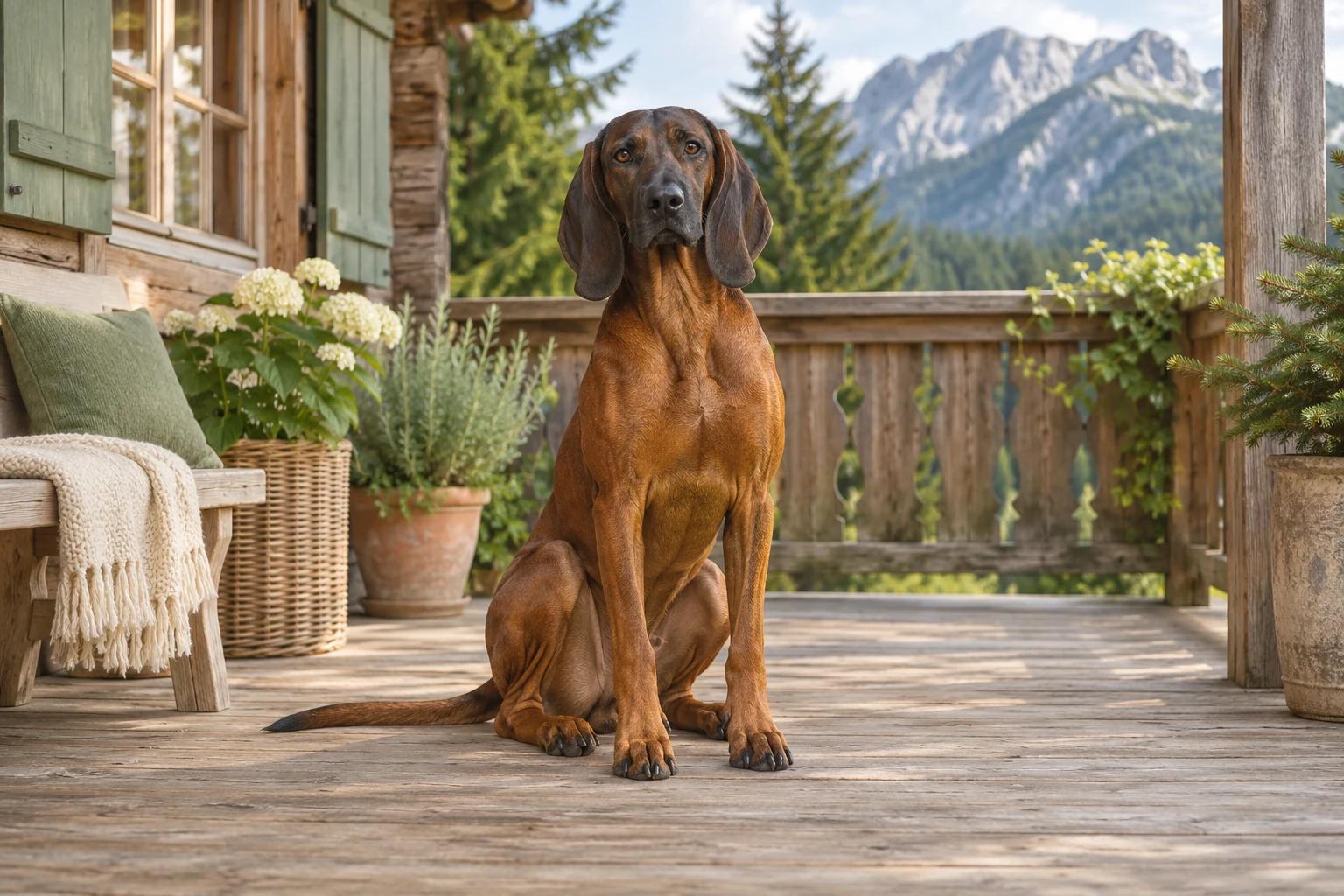
Explore the
Bavarian Mountain Scent Hound
Background, care, and everyday considerations.
View breed profile →The task came after the shot
The FCI standard identifies the Bavarian Mountain Scent Hound as a specialist in searching for hoofed game and places it among leash scent hounds. Its historical account describes a change after 1848: large hunting estates broke up, hunting methods shifted toward stalking and waiting, and improved firearms increased the importance of a dog that could follow wounded game.
The useful distinction is the stage of the work. This history concerns finding the animal after a shot, rather than treating every scent-hound task as interchangeable. “Good nose” alone leaves out what the handler needed the dog to accomplish.
Why a lighter hound mattered
According to the standard, the Hanoverian Scenthound was too heavy for the mountain conditions involved. After 1870, Baron Karg-Bebenburg crossed Hanoverian Scenthounds with red Mountain Scenthounds to develop a lighter working dog. The resulting breed is described as mobile and muscular, with a body somewhat longer than its height. Mountain specialization concerned the dog’s ability to travel the terrain as well as follow scent.
An outline is only part of the qualification
The same standard requires working usefulness to be demonstrated in relevant trials. That separates a breed’s purpose from an individual dog’s proven experience. A puppy photograph can illustrate the type; it cannot document a completed recovery or trial result. Anyone discussing working credentials should ask which dog did what work, and under which assessment, instead of treating the mountain name as the credential.
Sources behind this article
Article source checked: October 20, 2026. Source checked 2026-10-20
Keep reading
Bavarian Mountain Scent Hound temperament: know the individual
Read article →