Basenji exercise needs: give an active hound a useful day
Plan Basenji exercise around purposeful walks, secure activity and mental work, with ideas for adapting the day to your individual dog.
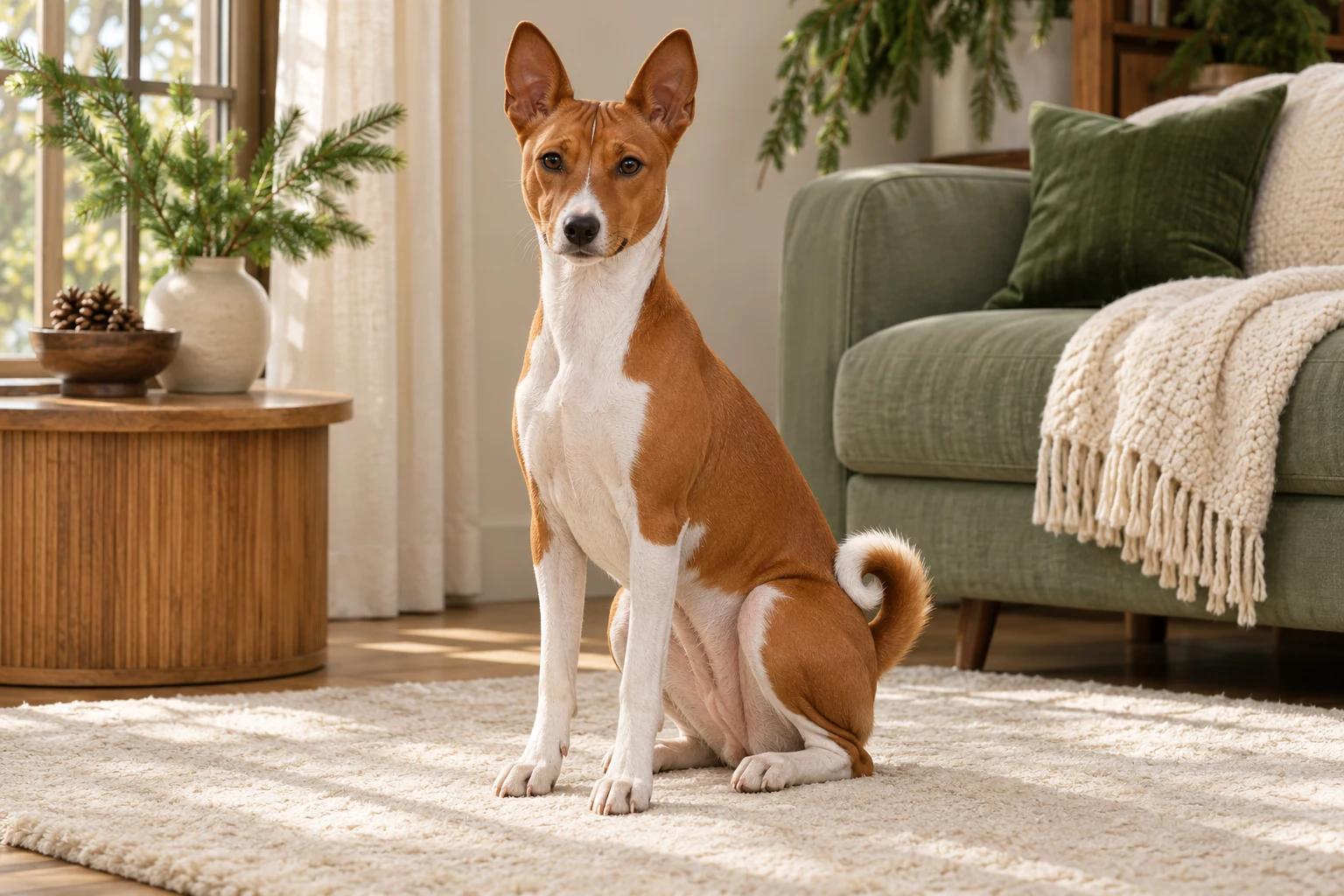
Basenji exercise needs are not explained by the breed's compact size. This is an active hound, and a satisfying day needs more thought than a quick trip outside. Walking, exploration, learning and appropriate play can each contribute something different.
Our Basenji profile describes an active breed and uses about an hour of daily activity as a general reference. Treat that as an ownership-planning starting point, not a compulsory workout or a promise that every dog will be finished after the same number of minutes.
Understanding Basenji exercise needs beyond a timer
When people ask how much exercise does a Basenji need, they often want a single daily number. A better plan also identifies what happens during that time. A hurried loop beside traffic and an unhurried outing with opportunities to investigate are different experiences, even if both appear identical on a calendar.
The American Kennel Club's Basenji overview highlights both exercise and training as important ownership commitments. Make room for both. Adding distance does not automatically provide a learning task, and a puzzle does not replace every opportunity to move outdoors.
Age, current condition and the individual dog's needs matter. Talk with your veterinarian about suitable activity, especially before introducing a demanding sport or changing an established routine. This article is a planning guide, not an exercise prescription.
Sort the day into useful ingredients
Think in terms of opportunities rather than a mileage target:
- A walk where your dog can explore while remaining under control.
- A small learning project that asks for attention and choice.
- Appropriate movement or play in a secure setting.
- Undisturbed time to rest after activity.
You do not need to turn each ingredient into a separate elaborate event. A single outing might include exploring, a little practice and a calm journey home. The point is to notice what the day actually provides.
Make the daily walk more than transportation
A Basenji daily walk can become repetitive if the only objective is reaching the same corner as quickly as possible. Consider varying one feature: the route, the direction, or where you pause to let the dog investigate.
Choose changes that you can manage. A completely unfamiliar crowded route may not be an improvement over a familiar quieter one. A useful outing lets you observe your dog and adjust, rather than continually rushing to keep up with the surroundings.
Before leaving, decide which sections are for moving through and which offer room to linger. This gives you a practical plan for narrow pavements, crossings and quieter stretches. It also helps you avoid asking for uninterrupted close walking throughout the entire trip.
Afterward, note what was useful. Was there enough space? Did a particular stretch become too busy? Would another time of day work better? These details help shape future walks more reliably than comparing your distance with another owner's.
Give chase interests an appropriate outlet
The Basenji Club of America describes a hunting breed whose interest in pursuing animals makes leash control and secure fencing important. A running opportunity should be chosen for its containment and suitability, not simply because the area appears empty.
Check an unfamiliar enclosed space before using it. Look at entrances, gaps and how other people enter. A reserved field, for example, still needs an inspection on arrival. An apparently enclosed location is not the same as one you have checked.
Avoid making wildlife part of an exercise plan. You can explore structured activities without practicing pursuit of living animals. The objective is an enjoyable outlet with appropriate control, not a demonstration of how fast the dog can disappear.
Consider a supervised introduction to a sport
The club's activities guide includes lure coursing, agility and scent-oriented activities. Lure coursing uses an artificial lure rather than live quarry. These are possibilities to investigate, not activities every Basenji must enjoy or enter competitively.
Start by speaking with the organizing club. Ask what a beginner visit involves, what preparation is expected and how they assess whether an activity suits a particular dog. Watch a session before committing to a full program.
Keep the first visit focused on learning about the activity. Travel, waiting areas and unfamiliar equipment are part of the experience too. A suitable sport needs to fit both the dog and the practical arrangements around participating.
Keep mental work manageable at home
Indoor learning does not have to mean a shelf of complicated gadgets. You might practice finding a familiar toy, following a simple hand target, or moving between two clearly defined places for a reward.
Choose an exercise whose success you can see. If a game becomes confusing, reduce the number of choices. A search can start with an object in plain view rather than hidden in a room full of competing objects.
Supervise activities that involve food or movable pieces, and use items suited to your individual dog. Put the game away when finished. The aim is engagement, not leaving an increasingly difficult puzzle available indefinitely and hoping it solves the afternoon.
Do Basenjis need a lot of exercise compared with a less active companion? They do need an intentional activity plan. But the answer is not to fill every quiet moment. Include rest rather than continually looking for another way to keep the dog busy.
Build a plan that survives an ordinary week
Look at the parts of the week that are hardest to organize. If most activity depends on one person finishing work early, decide what happens when that does not occur. A backup walker or a different outing time may be more useful than buying another toy.
For poor-weather days, plan appropriate outdoor opportunities alongside indoor learning rather than improvising at the last moment. For travel days, identify suitable stops and accommodation arrangements in advance. The more predictable the logistics, the easier it is to give the dog meaningful attention.
Use the dog match quiz to compare the breed with your available activity time. Our article on the Basenji's barkless nickname addresses a separate ownership question. Neither small size nor a memorable nickname should substitute for planning the actual day.
FAQ
How much exercise does a Basenji need each day?
My Breed Atlas uses about an hour of daily activity as a general breed reference. Individual needs differ. Combine suitable movement with exploration and mental engagement, and discuss an appropriate plan with your veterinarian rather than enforcing a fixed workout.
Is one long walk enough for a Basenji?
One walk may not provide every kind of activity or outdoor opportunity a dog needs. Consider what the whole day includes: exploration, learning, appropriate play and rest. Judge the arrangement around the individual, not just the length of the walk.
Can a Basenji exercise in an unfenced area?
Use appropriate leash control rather than relying on an open area being quiet. Basenjis have a hunting background, and distractions can appear unexpectedly. Choose inspected, secure spaces when arranging contained activity.
Does every Basenji need to do lure coursing?
No. Lure coursing is one possible activity, not a requirement. Some owners explore other sports or build satisfying routines around walks and learning. Suitability, interest and practical access matter more than choosing a particular sport.
Sources behind this article
- American Kennel Club: Basenji ↗
- Basenji Club of America: The Basenji ↗
- Basenji Club of America: Activities ↗
Article source checked: November 14, 2026. Source checked 2026-11-14
Keep reading

Afghan Hound Exercise Needs: Build a Workable Active Day
Read article →