Australian Terrier Grooming: A Simple Coat-Care Plan
Build an Australian Terrier grooming routine around brushing, comfortable handling, and clear instructions for professional coat care.
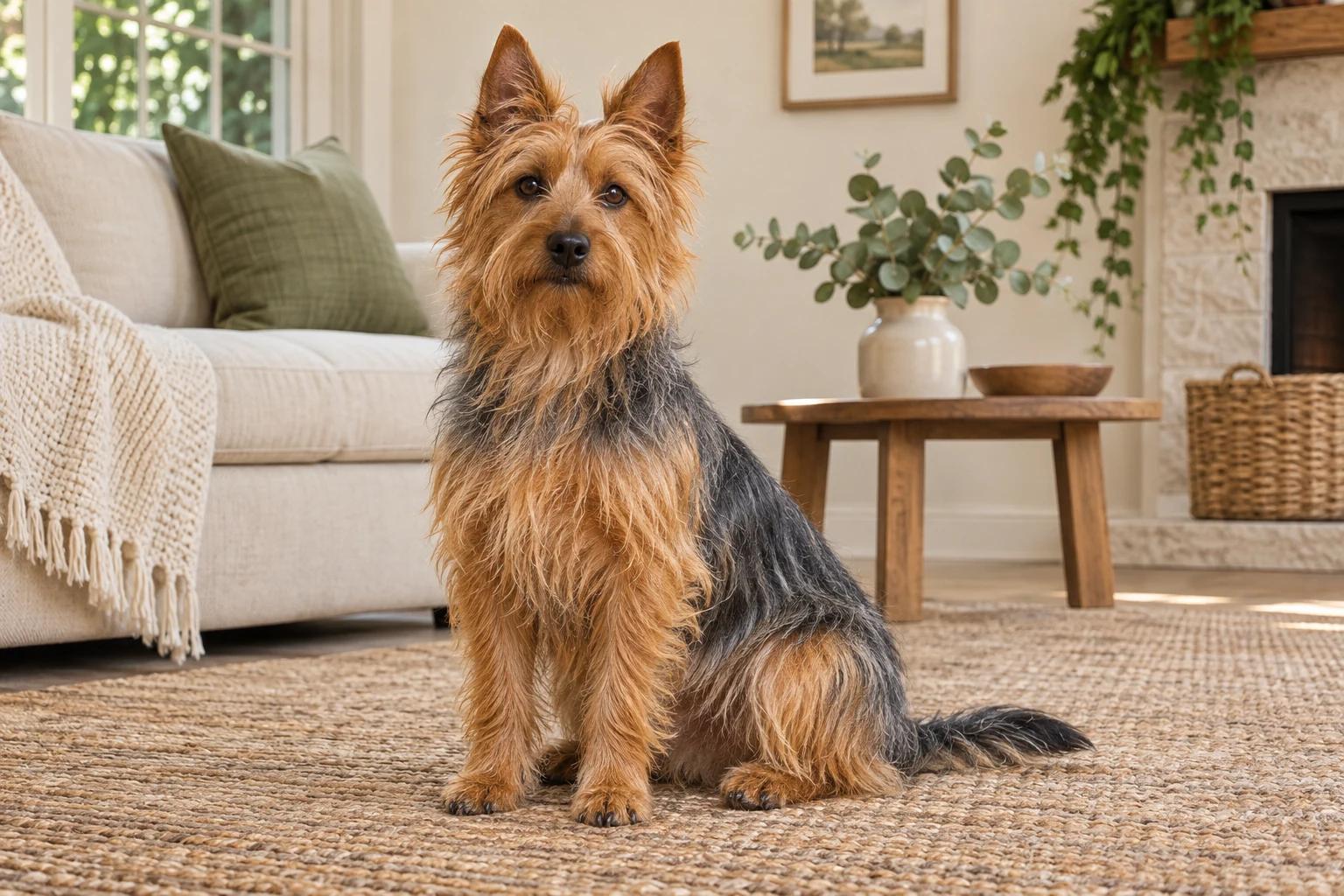
Australian Terrier grooming is about maintaining a distinctive rough coat without turning every session into a major project. The breed's small size makes it easy to overlook the details: the furnishings around the neck, the softer hair on the head, and the places that need checking after a walk. A short, organized routine is more useful than buying a drawer full of tools before you know how to use them.
Start with the coat your dog actually has, then build confidence with handling and ask a breed-experienced groomer to demonstrate anything unfamiliar.
Australian Terrier grooming starts with the coat
The Australian Terrier Club of America describes a harsh body coat with a softer topknot and distinctive neck furnishings. Our Australian Terrier profile records a rough double coat and a usual brushing plan of once or twice a week. Those details give you a starting point for Australian Terrier coat care, rather than a reason to treat every patch of hair identically.
Look at your dog from the side and front before you begin. Notice where the coat naturally lies, which areas are longer, and which parts your dog is comfortable having handled. A photograph of an adult can help you discuss the outline with a groomer, but it should not become a demand to make your dog look identical to a different animal.
Decide what you need from a grooming appointment
Tell the groomer whether your priority is a manageable companion coat, help learning maintenance, or preparation for a particular event. Ask what they propose to do and why. If terms such as stripping, clipping, or tidying are unfamiliar, ask for an explanation before agreeing to a service.
You do not need to perform every technique yourself. Knowing when to ask for a demonstration is part of a workable routine. In particular, leave work close to the eyes or other delicate areas to someone with appropriate experience rather than experimenting from a written description.
Make Australian Terrier brushing easy to repeat
Choose a quiet location with good light and a surface where the dog can stand comfortably without slipping. Keep the session simple: gather the tools you have been shown, remove distractions, and work through the coat methodically instead of brushing the same easy patch repeatedly.
Begin where your dog is comfortable. Pause to check what you are doing, not just how the outer surface looks. If a tool catches or the dog becomes uncomfortable, stop and reassess rather than pulling harder. A groomer can help you identify whether the issue is technique, a tangle, or a tool that does not suit that coat.
A useful home checklist might include the body coat, the longer furnishings, and areas where equipment rests. It does not need to be elaborate. The aim is to remember the whole dog and finish with a clear sense of what you checked.
Keep a small grooming record
Write down the tools recommended, the areas that needed extra attention, and the next appointment if one is planned. This is especially helpful when more than one person cares for the dog. “Brushed today” gives less useful information than “body and furnishings checked; ask groomer about this small tangle.”
Take care not to turn a record into a contest for the longest session. A brief comfortable practice may be a better step than finishing an entire checklist while the dog struggles. Build a routine the dog can participate in, not one you dread starting.
Bathing is a separate decision
The club's care overview recommends bathing when needed rather than by a rigid calendar. That fits an approach based on the individual coat and what the dog has been doing. A muddy outing and an ordinary week at home do not necessarily call for the same response.
Ask your groomer which products and method suit the dog. Have towels and the drying arrangement ready before you start, and follow product directions. Avoid adding unfamiliar products simply because someone describes them as natural or suitable for all dogs.
If you notice a skin change, discomfort, or an unusual persistent smell, talk with your veterinarian. A grooming article cannot tell you the cause, and choosing a stronger shampoo is not a substitute for understanding the problem.
Handle the little details without making big assumptions
Australian Terrier grooming needs include more than the visible outline. Arrange regular attention to nails and other routine care with your veterinarian or groomer, and learn which tasks you can comfortably manage at home. Ask for a demonstration tailored to your dog rather than relying on a generic tool label.
Coat maintenance also creates an opportunity to notice what has changed. You do not need to diagnose anything. Simply being able to say when you first noticed a change and where it appears is useful when seeking professional advice.
The site's existing article on Australian Terrier diabetes research explains a separate health-research topic. It is not a grooming guide or a basis for judging an individual dog's condition. Keep everyday observations and veterinary questions distinct from breed research headlines.
Put the routine into your actual week
Choose two convenient points in the week to look over the coat, with brushing according to its needs and the plan you have been shown. Store supplies together so getting started does not become the difficult part. If the dog stays with someone else, leave clear instructions about what is routine and what should be referred to you or a professional.
Low visible shedding does not mean that coat care disappears. The useful question is whether the maintenance arrangement fits your time, budget, and confidence. If you enjoy a small amount of regular hands-on care, that can become a familiar part of life together.
When comparing breeds, use the dog breed quiz to consider grooming alongside activity, size, and your household routine. A coat you admire should also be a coat you are prepared to maintain.
FAQ
How often should I brush an Australian Terrier?
My Breed Atlas describes once or twice a week as the usual brushing plan. Adjust the practical routine to the individual coat and activities, with guidance from a breed-experienced groomer. Check the whole coat rather than repeatedly brushing only the easiest areas.
Does an Australian Terrier need frequent baths?
The Australian Terrier Club of America recommends bathing when needed rather than following a fixed frequent schedule. Discuss suitable products and technique with your groomer. If a skin or odor concern persists, talk with your veterinarian instead of trying to solve it through repeated bathing.
Should I cut or strip the coat myself?
Ask a breed-experienced groomer to explain the options for your dog's coat and your goals. Do not attempt an unfamiliar technique, particularly close to the eyes, from a short online description. A practical home routine can include regular brushing while professional work remains with the groomer.
Sources behind this article
- Australian Terrier Club of America: Breed Overview ↗
- Australian Terrier Club of America: About Australian Terriers ↗
Article source checked: November 14, 2026. Source checked 2026-11-14
Keep reading

Affenpinscher Grooming: A Practical Coat-Care Routine
Read article →