Australian Terrier Exercise Needs: Walks, Play, and Variety
Plan Australian Terrier exercise with varied walks, shared games, and manageable daily routines that suit this curious small terrier.
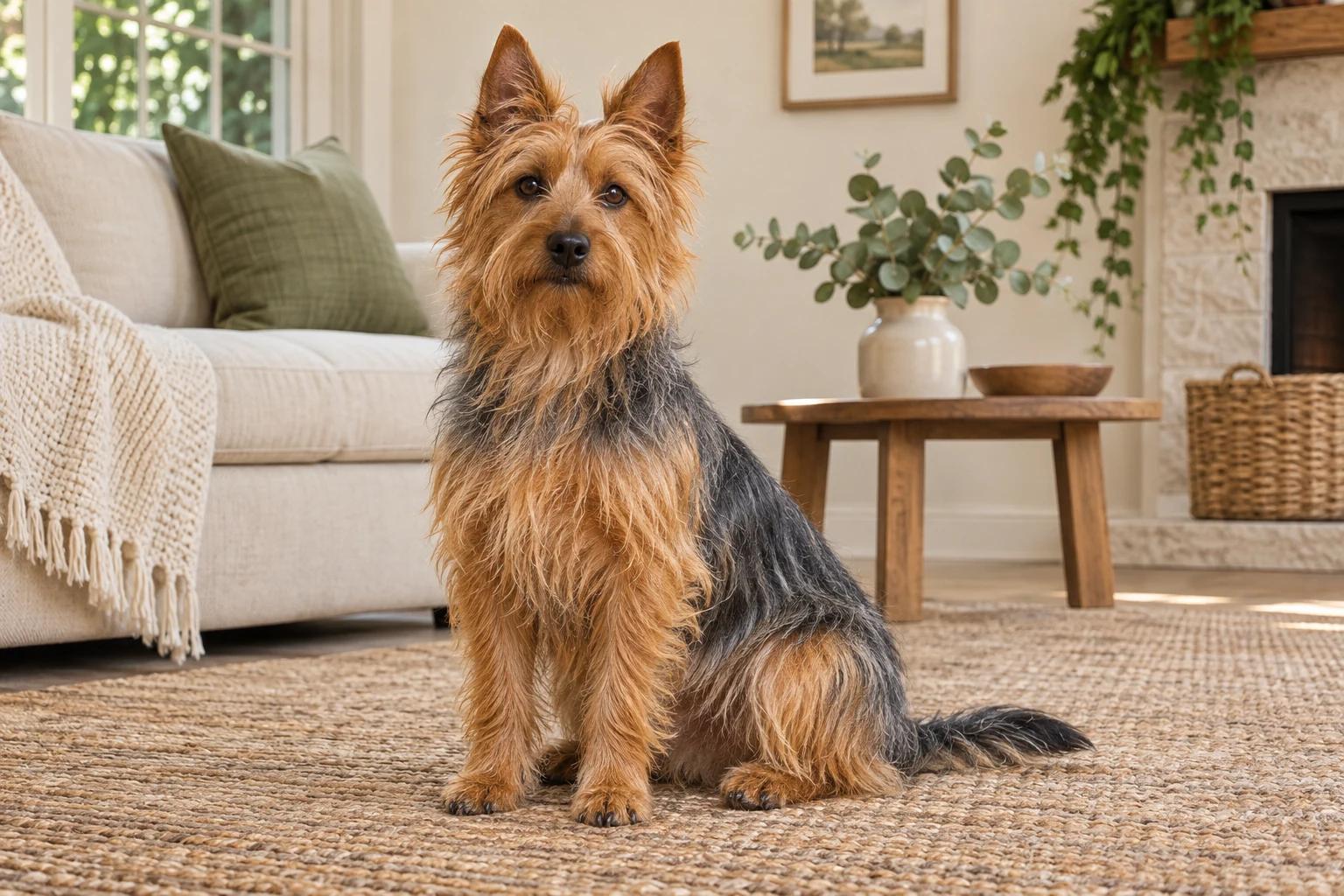
Australian Terrier exercise needs are easy to underestimate if you start with height alone. A small terrier can still want a meaningful part in the day's activities: places to investigate, games to learn, and time doing things with you. The goal is not to turn a compact dog into an endurance project. It is to offer a varied routine that fits the individual and remains practical on ordinary days.
Think in terms of different experiences rather than one impressive walk. Moving, investigating, learning, and resting each have a place.
Australian Terrier exercise needs in daily life
Our Australian Terrier profile describes about an hour of active time as a typical planning picture, alongside daily learning games. That is a reference for organizing your day, not a fixed prescription for every age or individual. For questions about appropriate activity for your dog's health or stage of life, talk with your veterinarian.
The AKC breed introduction emphasizes the Australian Terrier's lively curiosity. The Australian Terrier Club of America's overview also discusses digging, chasing, and the need for controlled exercise. Those tendencies suggest a plan with both interesting activities and thoughtful boundaries.
Break the day into useful parts
An outing before work, a short shared game later, and another chance to explore may be easier to sustain than saving all activity for one large block. Your arrangement will depend on the dog and your schedule. The important point is to be deliberate about what each part provides.
Try writing the purpose beside each activity. A walk may offer new smells and movement. A brief training game may practice attention. A quiet period allows the household to do something else. This helps prevent every restless moment from becoming an automatic request for another fast game.
Make the Australian Terrier daily walk interesting
A familiar route can still have variety if you occasionally change the pace or direction and allow time to investigate suitable spots. You do not need to cover the maximum distance possible during every outing. A walk can be an opportunity to notice the environment together.
Before leaving, consider the route's practical challenges. Narrow paths, busy entrances, loose dogs, and wildlife may change how comfortable the outing feels. Choose a route that lets you keep enough space and make decisions without rushing.
Keep walks on leash, and use securely enclosed areas for off-leash activities. Inspect gates and boundaries rather than assuming a yard is secure because it was fine last week. A terrier's interest in something beyond the boundary is not the moment to discover a gap.
Practice a useful change of direction
On a quiet stretch, invite your dog to turn with you and reward the response. Start when there is little competing for attention. This can become a helpful skill when a path is crowded or something ahead makes another route preferable.
Keep the exercise short and uncomplicated. It is not a test of whether the dog will ignore every distraction. You are building a familiar pattern that can make walks easier to organize.
Give curiosity somewhere to go
Australian Terrier exercise can include a simple search game as well as walking. Let the dog watch you place a familiar toy in an easy location, then invite it to find it. Once the idea is familiar, make the hiding place slightly less obvious without turning the whole room upside down.
Use objects and spaces appropriate for the individual, supervise the game, and put materials away afterward. You do not need elaborate equipment to make a small challenge worthwhile. Repeating a clear, enjoyable game is more useful than adding complexity the dog does not understand.
If you have space for a designated digging area, decide where it can be and how you will supervise its use. That is a household arrangement, not a guarantee that the dog will never investigate another patch of soil. Protect valued plants and manage access while the routine becomes familiar.
A wet-weather plan that is more than a substitute walk
Have a few indoor options ready before bad weather arrives. You might practice finding a toy, moving to a resting place, or following a short sequence of familiar cues. Choose an uncluttered area with footing that suits the activity.
Indoor sessions do not need to be dramatic to be worthwhile. A game with a clear beginning and ending is easier to repeat than a burst of excitement that leaves everyone unsure what happens next. Put toys away when the activity ends and give the dog a chance to settle.
Weather also changes the outdoor plan. Adjust the outing to conditions rather than treating a target duration as something that must be completed at any cost. If you are unsure how conditions or your dog's health affect exercise, talk with your veterinarian.
How much exercise does an Australian Terrier need?
Use the breed profile as an initial planning reference, then look at the individual dog's routine and professional advice where needed. Track the type of activity as well as its length. Two days with the same number of walking minutes can involve very different levels of novelty, excitement, and effort.
Ask a breeder or current caregiver which activities the dog knows and how it behaves afterward. For a puppy or newly arrived adult, begin with the information you have rather than assuming it can immediately join your favorite long outing.
Avoid making “tired out” your only measure of success. A repeatable day with useful activity and comfortable rest is a better planning goal than pushing until the dog stops asking for attention. If behavior or tolerance changes unexpectedly, talk with your veterinarian.
Our related article on Australian Terrier diabetes research concerns a different topic and does not supply an exercise prescription. For choosing a breed, the dog breed quiz helps you put activity beside your other priorities. Then work out the details with the actual dog in front of you.
FAQ
Are Australian Terriers active despite their small size?
Yes, the breed is described as lively and curious, and its activity should be planned separately from its size. Include walks, shared play, and learning opportunities rather than assuming a small home or a short coat means little daily engagement is needed.
Can a yard replace an Australian Terrier daily walk?
A yard provides space, but it does not automatically provide shared activity or varied experiences. Plan how the dog will use it, check its boundaries, and include other opportunities to explore and learn. A securely enclosed yard can be one part of the routine.
What can I do indoors when outdoor plans change?
Try short, supervised search games, familiar cue practice, or finding a toy in an uncluttered room. Keep the tasks clear and manageable, then allow quiet time afterward. Choose activities appropriate for the individual rather than trying to recreate a long outdoor outing inside.
Sources behind this article
- American Kennel Club: Australian Terrier ↗
- Australian Terrier Club of America: About Australian Terriers ↗
Article source checked: November 14, 2026. Source checked 2026-11-14
Keep reading

Afghan Hound Exercise Needs: Build a Workable Active Day
Read article →