Australian Kelpie vs Australian Cattle Dog: Daily Fit
Compare Australian Kelpie and Cattle Dog size, care, activity, training, and household fit without relying on stereotypes.
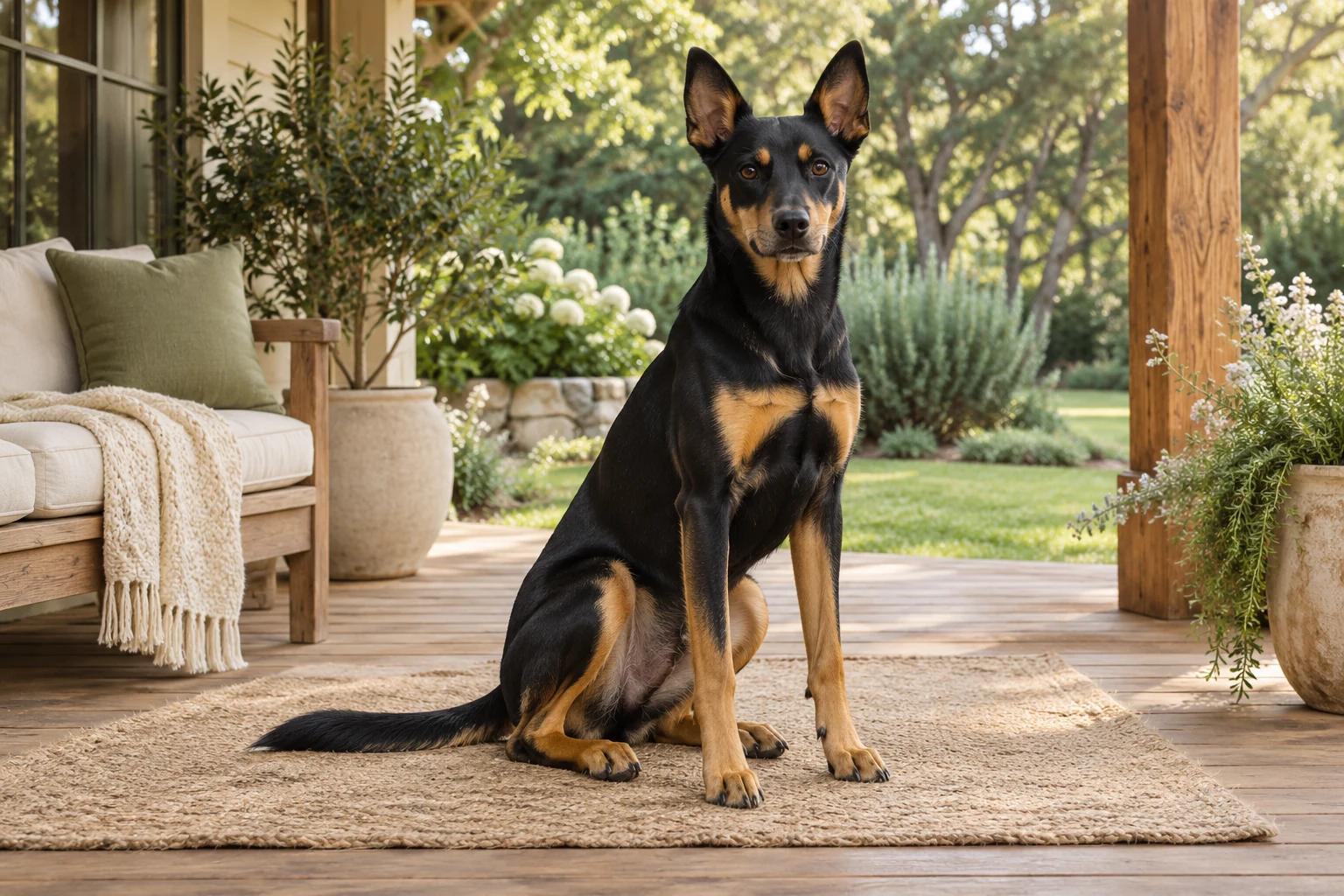
Australian Kelpie vs Australian Cattle Dog is a comparison between two active working breeds, not between an energetic option and an easy alternative. Their short coats and overlapping sizes can make the choice look simple. Everyday fit depends on much more than the silhouette.
Read the Australian Kelpie profile and Australian Cattle Dog profile alongside this guide. Both describe substantial activity and learning needs. The useful question is which individual dog's background, habits, and requirements fit the life you can offer.
Australian Kelpie vs Australian Cattle Dog: the practical starting point
The AKC Kelpie introduction describes a lithe, active dog. The Australian Cattle Dog standard emphasizes a compact, muscular worker developed for moving cattle. Those descriptions explain something about their different outlines and working context.
They do not create a dependable personality test. Avoid turning one breed into the sensitive one and the other into the tough one, or assuming that a particular build tells you how a dog will respond to visitors or training.
Instead, compare known information under the same headings: daily activity, household behavior, care, learning experience, and time spent with people. Where information is missing, identify the question rather than filling it with a stereotype.
Size overlaps more than photographs suggest
The site lists the Kelpie at 17–20 inches, with current Hill’s Australia adult references of 24–35 pounds for females and 33–44 for males. The Cattle Dog references are 33–44 pounds for females and 40–49 for males, with shoulder heights of 18–20 inches for males and 17–19 for females. These references overlap; they do not make every dog interchangeable.
A photograph can exaggerate a difference through angle, stance, or the absence of a size reference. Measure the individual for a harness, travel setup, or sleeping area. Do not buy equipment solely because it was suitable for another dog of a similar weight.
For a puppy, ask about the adults while recognizing that an estimate is still an estimate. If a specific housing limit applies, investigate that requirement directly rather than expecting a breed average to settle it.
Difference between Kelpie and Cattle Dog coats
One visible difference between Kelpie and Cattle Dog examples is often color and outline rather than a dramatic difference in grooming commitment. The site's profiles describe short double coats and regular shedding for both. Neither should be chosen on the assumption that short hair means no loose hair indoors.
Compare the actual care routine. Where does the dog bring in debris? How readily does it accept brushing? What equipment is already familiar? These questions can reveal more about day-to-day effort than inspecting a clean portrait.
Set up a practical place for routine care and cleaning. A washable cover in the car and an accessible grooming kit may matter more to your household than small differences in coat appearance.
Kelpie or Blue Heeler: compare ordinary activity
A Kelpie or Blue Heeler decision should begin with your normal week. Blue Heeler is a familiar name associated with the blue-colored Australian Cattle Dog, not a separate lower-effort alternative. Both breed profiles call for substantial engagement.
Ask an adult dog's caregiver to describe a typical outing and what follows it. Does the dog know the local setting? What activities are familiar? How does the routine work on a day without a special trip? Request examples rather than a general promise that the dog is active.
Then compare those examples with your own resources. Access to a suitable training venue, predictable time together, and workable local routes are concrete advantages. A large property that nobody has time to use with the dog is a less complete answer.
Do not rank them by maximum endurance
Choosing the dog that appears capable of doing the most is not the same as choosing the best fit. Your daily routine includes pauses, errands, and ordinary evenings as well as movement. Find out about those parts too.
If you plan a demanding physical hobby, talk with your veterinarian about the individual dog's suitability. Breed descriptions cannot provide a personalized exercise plan or establish readiness for a particular distance.
Learning style needs observation, not a contest
Both profiles support regular learning opportunities. Rather than asking which breed is smarter, watch how the individual responds to clear teaching in an appropriate setting. Ask what cues it already understands and where it has practiced them.
A familiar demonstration tells you something useful, but do not demand a difficult performance from an unfamiliar dog as a test. The handler, setting, and prior learning all influence what you see. Ask for context before interpreting a moment as a permanent trait.
For your own planning, decide whether you enjoy frequent, thoughtful practice. If you only want to complete one introductory class and be finished with training, reconsider whether either working breed matches that expectation.
Working background and household experience
The Working Kelpie Council's pet discussion concerns working Kelpies specifically. It reinforces the importance of asking about the population and individual background rather than treating the breed name as a complete biography.
Use equally detailed questions for a Cattle Dog. Has the dog lived in a setting like yours? What experience does it have with your likely daily surroundings? Which routines are established, and which would be new?
Discuss other animals, visitors, and household movement as individual introduction and management questions. Neither breed name establishes compatibility. Clear accounts from people who know the dog are more useful than broad claims about what every member of a breed will accept.
Make an Australian Cattle Dog vs Australian Kelpie decision
An Australian Cattle Dog vs Australian Kelpie choice becomes clearer when one option has a routine and support system you understand. The dog match quiz can help organize your preferences, but use it as a starting point for those practical conversations.
If your interest began with a story about Kelpie ancestry, the existing research article addresses that separate topic. For this decision, put known care needs and everyday behavior ahead of a compelling breed story.
The result need not be a universal winner. It can simply be a well-supported choice about a particular dog, or a decision that neither breed fits your current schedule.
FAQ
Is a Kelpie smaller than a Cattle Dog?
Not necessarily. The current sex-qualified weight references overlap: Kelpie females 24–35 pounds and males 33–44; Cattle Dog females 33–44 pounds and males 40–49. Compare individual measurements and proportions rather than assuming the Kelpie will always be smaller.
Which breed sheds less?
Both profiles describe regular shedding and short double coats. Neither is a no-shedding choice. Ask about the individual dog's routine and plan for brushing and household cleaning instead of relying on coat length alone.
Is a Blue Heeler a different breed from a Cattle Dog?
Blue Heeler is a commonly used name associated with a blue-colored Australian Cattle Dog. It is not a separate breed to compare against the Cattle Dog. Use the actual dog's identity and background when reviewing listings or records.
Which breed is better for a quiet lifestyle?
Neither is an obvious minimal-activity choice. Both profiles describe substantial engagement needs. Compare the real routine with what you can sustain, and consider other breeds if regular activity and learning are not appealing parts of dog ownership.
Sources behind this article
- AKC Australian Kelpie ↗
- Working Kelpie Council as a pet ↗
- AKC Australian Cattle Dog standard ↗
- Hill’s Australia adult reference — adult-weight reference ↗
- Australian Cattle Dog adult-weight reference ↗
Article source checked: November 14, 2026. Source checked 2026-11-14Article source checked: November 18, 2026. Source checked 2026-11-18
Keep reading

Affenpinscher vs Brussels Griffon: Everyday Differences
Read article →