Appenzeller Sennenhund vs Entlebucher Mountain Dog
Compare Appenzeller and Entlebucher size, activity, voice, coat care, and daily involvement beyond their similar markings.
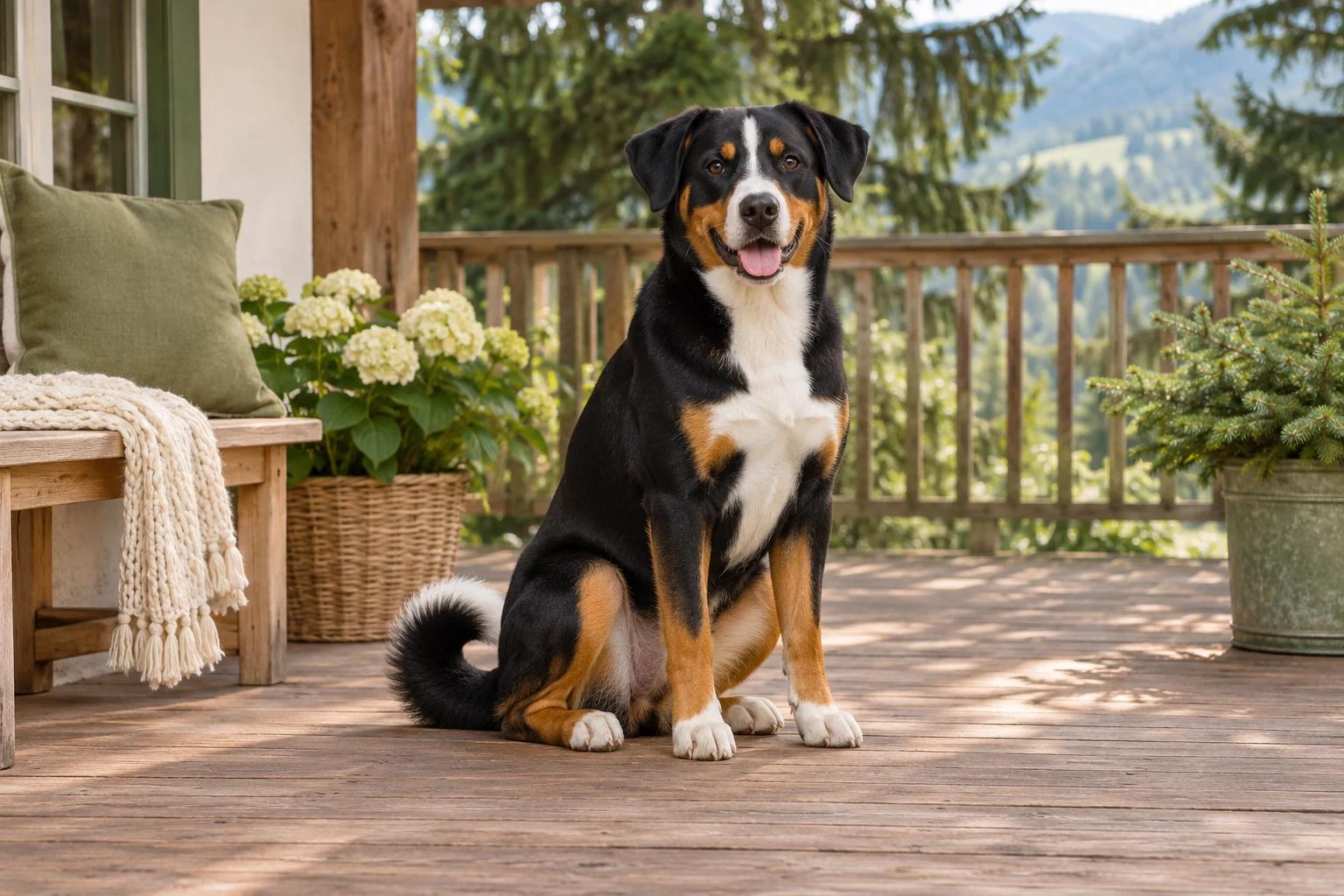
Appenzeller Sennenhund vs Entlebucher Mountain Dog is a useful comparison when you like Swiss working breeds but want to understand more than their similar markings. Both profiles describe substantial activity and involvement. Choosing the smaller silhouette does not automatically mean choosing a quieter or less demanding routine.
Read the Appenzeller Sennenhund profile alongside the Entlebucher Mountain Dog profile. The differences in height, proportions, shedding patterns, and voice can help you form better questions about the individual dogs you meet.
Appenzeller Sennenhund vs Entlebucher Mountain Dog: proportions matter
The FCI Appenzeller standard describes a compact, nearly square outline. The AKC Entlebucher standard describes a more elongated outline and identifies it as the smallest Swiss Sennenhund breed.
The site's Appenzeller range is 20–22 inches and 48–70 pounds. Entlebuchers are listed at 17.5–20.5 inches for males and 16.5–19.5 inches for females, with males at 50–65 pounds and females at 40–55 pounds.
Notice the weight overlap. A shorter dog is not necessarily much lighter than every taller dog. For equipment and transport, use the actual dog's measurements rather than assuming that one breed will fit a substantially smaller arrangement.
Look at the whole outline
Two portrait photographs may emphasize similar faces and markings while concealing the difference in proportions. A natural standing view gives a clearer impression of shape, though it still cannot replace measurements for a practical purchase.
Think about how the dog uses space as well as how it looks. Resting, turning in a vehicle, and moving around household furniture require more than a height measurement. Ask about the individual before organizing a permanent setup.
Appenzeller or Entlebucher: both need an involved routine
When choosing an Appenzeller or Entlebucher, start with the activity commitment they share. Both site profiles describe substantial daily activity and learning. Neither is presented as a low-involvement option simply because it is more compact than some other Swiss breeds.
Ask yourself what you want to do with a dog on an ordinary weekday. A training hobby, familiar outdoor routes, and time for company may all be relevant. An occasional ambitious weekend does not describe the rest of the routine.
Talk with the current caregiver about the dog's actual experience. Which activities are familiar? What does it enjoy learning? What happens during quieter periods? These answers let you compare real routines rather than broad labels such as “working dog.”
Training interests can help narrow the choice
The Appenzeller profile specifically mentions training or dog sport as a regular part of the week. The Entlebucher profile emphasizes daily learning games. Those descriptions suggest engagement for both, not a claim that one arrives more obedient than the other.
If you already enjoy a particular activity, discuss that interest with a knowledgeable instructor and the dog's caregiver. Ask what foundations the individual would need. A breed's working background can suggest possibilities without guaranteeing performance in your chosen hobby.
If you are new to training, find an introductory setting before committing to a demanding plan. You will learn more from understanding the practical teaching process than from collecting a list of sports a breed might participate in.
Compare your interest in the process
Would you enjoy practicing a small skill repeatedly in manageable steps? Can you attend a class consistently, including travel and preparation? Do you like noticing gradual changes rather than expecting immediate results?
These questions apply to both breeds. The best match is not necessarily the dog with the most impressive activity description. It is the individual whose needs fit a process you are willing to maintain.
Voice is a practical difference to explore
The site's Appenzeller notes describe frequent barking. The Entlebucher notes describe alert barking that typically settles after a response. That distinction is worth investigating if noise is an important part of your living arrangement.
Ask for examples from ordinary days. What happens when someone arrives, activity occurs nearby, or the routine changes? A description of the circumstances is more useful than a single quiet meeting or a claim that the dog never makes noise.
Do not translate the comparison into a guarantee about either individual. Instead, explain your surroundings and discuss how the dog's known behavior might fit. Shared walls, nearby paths, and frequent visitors can all make the context important.
Difference between Appenzeller and Entlebucher coat routines
A useful difference between Appenzeller and Entlebucher profiles is the pattern of loose hair. The Appenzeller notes describe seasonal increases, while regular shedding is part of the Entlebucher profile. Both still need ordinary coat care.
Ask what happens during the busiest grooming period and what the caregiver normally does between those periods. This gives you a more concrete picture than calling either coat low maintenance. The amount of hair you notice on furniture is not the only measure of care.
If you are unfamiliar with the coat, request a demonstration of appropriate tools and handling. A manageable routine is easier to maintain when you understand what you are checking and when a groomer should help.
Company and introductions: learn about the dog
Both site profiles describe an interest in close company. That can be an attractive part of sharing life with either breed, but it should be considered alongside the hours when the household is occupied elsewhere.
Ask how the dog spends those periods now and what changes your home would introduce. Learn about familiar visitor routines and introductions rather than assuming a breed label establishes comfort with every person or animal.
A fair comparison uses the same questions for both dogs. Avoid treating one dog's known behavior as evidence while imagining an idealized version of the other breed. Concrete observations keep the decision grounded.
Make the comparison useful, not competitive
An Entlebucher Mountain Dog vs Appenzeller Sennenhund choice does not need a universal winner. You may find that one individual's size, experience, and routine align more closely with your plans, even when both breed descriptions initially appeal.
Use the dog match quiz to organize preferences about activity, voice, care, and company. Our Appenzeller conservation article addresses a separate subject; a preservation interest should not replace attention to everyday fit.
Take the time to understand what you can maintain when the novelty has worn off. These profiles point toward involved lives with their people. The right decision is the one that makes that involvement realistic for both you and the dog.
FAQ
Is the Entlebucher smaller than the Appenzeller?
The Entlebucher is generally shorter, and its standard identifies it as the smallest Swiss Sennenhund breed. Weight ranges overlap. Use the individual dog's measurements for equipment and travel rather than assuming a much smaller size in every dimension.
Which breed needs less activity?
Both site profiles describe substantial activity and learning. Do not choose either as a low-involvement option based only on size. Compare the actual dog's routine with the movement, teaching, and company you can provide consistently.
Which breed is more vocal?
The site's Appenzeller profile describes frequent barking, while the Entlebucher profile emphasizes alert barking. Individual patterns and surroundings matter. Ask about ordinary situations rather than relying on one meeting to establish a noise expectation.
Are their grooming routines identical?
No individual routine should be assumed identical. The site describes seasonal shedding increases for the Appenzeller and regular shedding for the Entlebucher. Ask about the actual coat and request a demonstration of appropriate care.
Sources behind this article
Article source checked: November 14, 2026. Source checked 2026-11-14
Keep reading

Affenpinscher vs Brussels Griffon: Everyday Differences
Read article →