Appenzeller Sennenhund Temperament: An Involved Companion
Explore Appenzeller temperament, voice, company, introductions, and learning interests before choosing an involved companion.
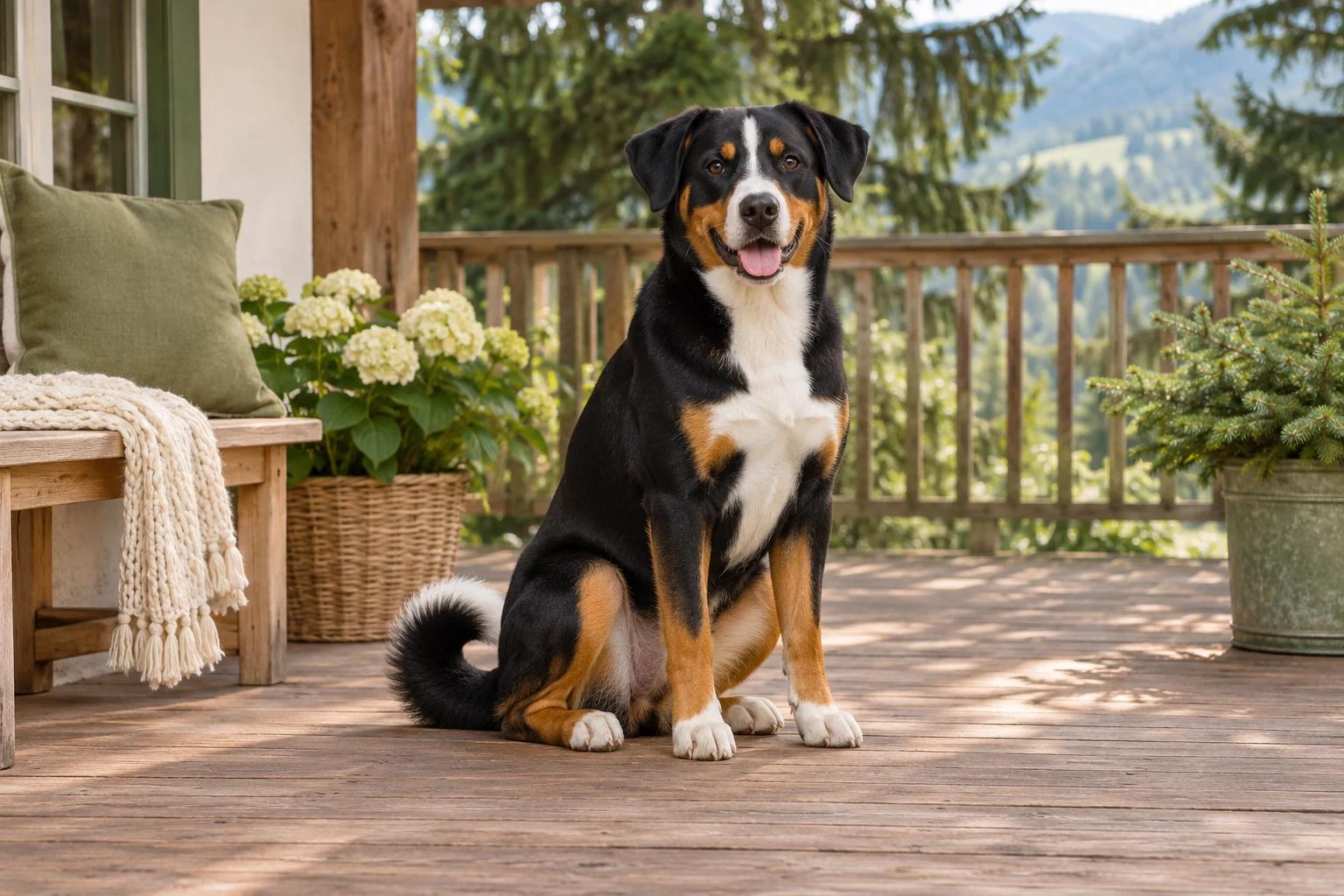
Appenzeller Sennenhund temperament makes the most sense when you picture a dog participating in the day rather than decorating it. The site's profile combines high activity, learning interests, close company, and a noticeable voice. That can be an appealing combination for someone who wants a shared hobby, but it deserves more thought than admiring a striking tricolor coat.
The Appenzeller Sennenhund profile is the starting point for the practical details. Here, the focus is how those tendencies might influence ordinary choices about outings, visitors, training, and quiet time with an individual dog.
Appenzeller Sennenhund temperament: lively and alert
The FCI standard describes a lively, self-assured dog that may be reserved with strangers. AKC's breed introduction emphasizes agility and a versatile working background. These are broad characteristics, not a script for every dog.
For a household, the important distinction is between enjoying an engaged dog and simply tolerating one. Do you like teaching, organizing activities, and paying attention to how an outing unfolds? Or do you mainly want a companion whose day requires little planning?
Neither preference is wrong. Being honest about it helps you choose more thoughtfully. A breed's attractive appearance should not persuade you to adopt a routine you already know you will dislike maintaining.
What are Appenzeller Sennenhunds like at home?
People asking what are Appenzeller Sennenhunds like often want to know whether the energetic description leaves room for ordinary companionship. The site's notes describe an interest in staying close. That does not mean every interaction has to be a game, but company belongs in the plan.
Imagine the hours when you are busy with something else. Where will the dog rest? What familiar activities can happen before and after that period? Which household routines make sense for everyone involved? Planning the quieter hours is just as important as choosing an enjoyable outing.
Ask the current caregiver how the dog spends those periods now. The answer may reveal whether your proposed routine is familiar or a substantial change. Avoid filling in the gaps with a general claim that an active dog will automatically settle after exercise.
Look for the individual's style of contact
One dog may choose to remain nearby while another seeks more direct interaction. Observe what the dog does in a familiar setting and ask how that compares with normal behavior. A first meeting can be unusually exciting.
If several people share the home, discuss what each expects. Someone who wants constant involvement and someone who prefers an unobtrusive companion may picture quite different relationships. Clarify those expectations before deciding that a broad affection label answers the question.
Appenzeller Mountain Dog personality around unfamiliar people
Appenzeller Mountain Dog personality should not be judged by whether the dog immediately greets everyone. The standard's description of reserve gives a reason to make introductions thoughtful rather than demanding instant familiarity.
Give the individual time and an appropriate setting. A visitor can share space without requiring contact. Ask the caregiver or trainer how introductions are normally handled and what the dog already understands about visitors.
If your lifestyle involves frequent unfamiliar people entering the home, explain that clearly when discussing a dog. A quiet household with occasional guests presents a different routine from a busy social space. Consider how you would manage the transition rather than assuming all exposure is interchangeable.
Voice is part of the everyday picture
The site's Appenzeller notes describe frequent barking. That should be considered alongside activity and company, particularly if you live close to neighbors or share access areas.
Ask about the context of vocal behavior. What tends to start it? What does the current caregiver do? How does the dog respond to ordinary changes nearby? Specific examples tell you more than calling the breed either noisy or quiet.
Think through your own surroundings. A busy path outside a resting area or frequent arrivals at a shared entrance may be relevant. You can plan placement, routines, and training, but you should not choose the breed on the assumption that its voice will simply disappear.
Separate observation from interpretation
If the dog barks during a meeting, describe the situation rather than assigning a permanent personality judgment. Was something unfamiliar happening? Was another activity underway? What happened after the setting changed?
The same principle applies to favorable impressions. A quiet visit does not establish how the dog behaves throughout every day. Use several concrete observations and the caregiver's experience to build a more realistic picture.
Appenzeller Sennenhund traits and a shared hobby
Among the Appenzeller Sennenhund traits on the site, interest in learning stands out alongside physical activity. A regular training hobby may be a good way to organize that involvement, provided the individual enjoys it and the instruction is appropriate.
Begin by finding a suitable introductory setting, not by buying advanced equipment. Ask what foundations are taught, how different experience levels are accommodated, and what practice is expected between visits. The practical commitment includes preparation and travel as well as the class itself.
You do not need a competition ambition. Learning a manageable set of skills together can be worthwhile on its own. The useful question is whether you enjoy the process enough to keep participating after the novelty of a new hobby fades.
Decide from the whole routine
A good match includes the ordinary week: activity, care, company, visitors, and rest. The breed's coat also has seasonal shedding in the site's profile, so time spent together is not limited to outings and games.
Use the dog match quiz to compare those preferences. Our article about Appenzeller population conservation addresses a separate topic; rarity or preservation interest should not replace a practical decision about daily life.
Get to know the individual with the same care you give to reading the breed description. Tendencies help you ask better questions. The answers about the actual dog help you decide what living together would involve.
FAQ
What is the Appenzeller Sennenhund temperament like?
The breed is generally described as lively, alert, and engaged, with possible reserve around unfamiliar people. The site's profile also emphasizes activity, learning, and voice. Individual experience and surroundings influence how those tendencies appear in daily life.
Does an Appenzeller need a training hobby?
A regular learning activity can fit the site's profile, but it need not involve competition. Choose a suitable introductory setting and observe what the individual enjoys. The important commitment is meaningful engagement, not collecting titles or buying advanced equipment.
Are Appenzellers immediately friendly with everyone?
Do not expect instant familiarity. The standard allows for reserve with strangers, so introductions should be thoughtful and not forced. Ask about the individual's experience and normal visitor routine rather than relying on a breed-wide promise.
Is barking important when considering this breed?
Yes. The site's profile describes frequent barking, making surroundings and neighbor proximity relevant. Ask when vocal behavior occurs in the individual dog. A quiet first meeting does not establish what every ordinary day will sound like.
Sources behind this article
Article source checked: November 14, 2026. Source checked 2026-11-14
Keep reading

Airedale Terrier Temperament: What Everyday Life Can Feel Like
Read article →