Appenzeller Sennenhund Exercise Requirements: A Useful Routine
Plan Appenzeller activity, learning, rest, and a sustainable daily routine without relying on a one-size-fits-all workout.
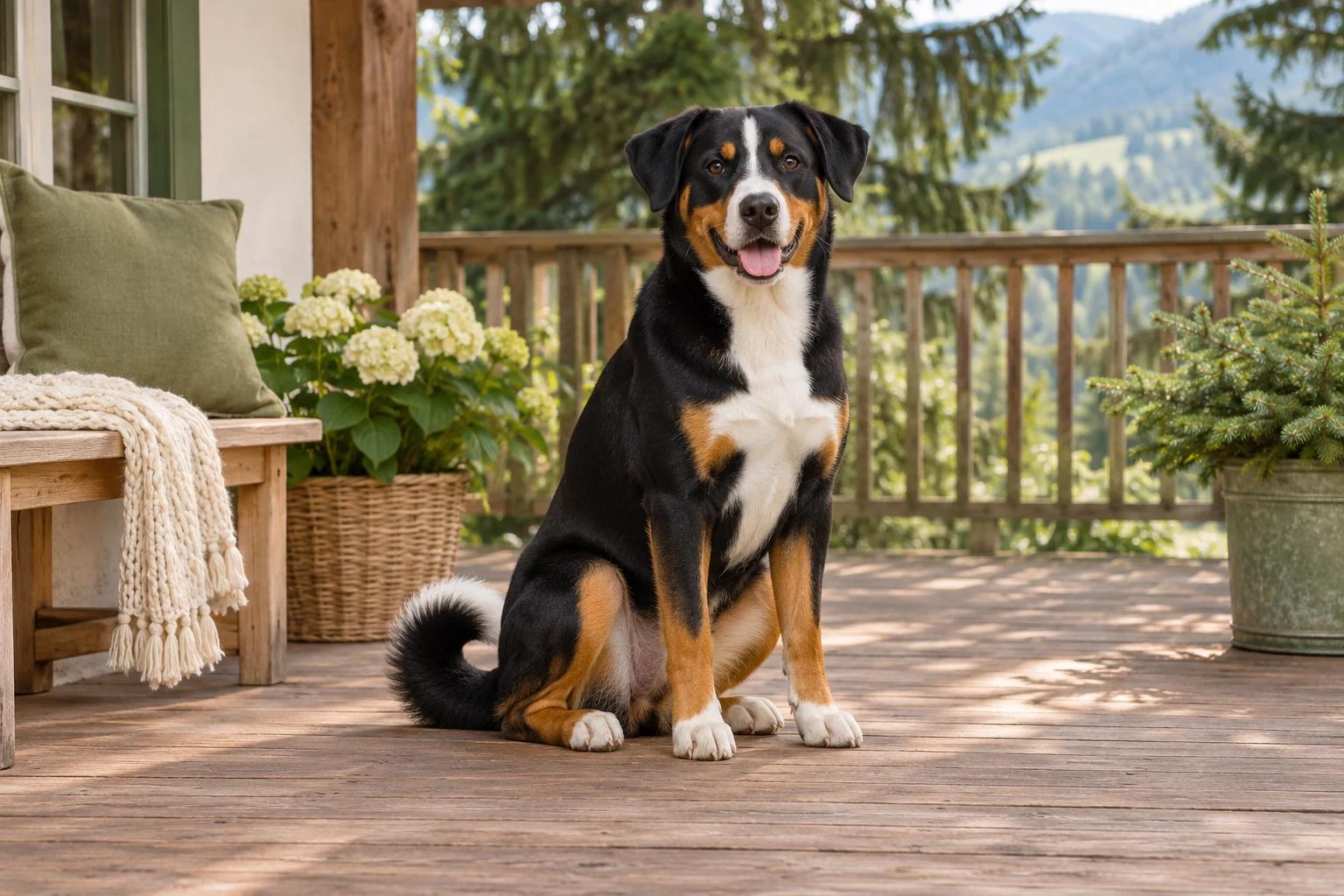
Appenzeller Sennenhund exercise requirements are not well represented by a quick trip outside followed by an otherwise empty day. The site's profile calls for substantial activity and meaningful learning, with training or a dog sport potentially becoming a regular part of the week. The practical challenge is building a routine you can maintain.
Start with the Appenzeller Sennenhund profile, then consider your actual opportunities. A suitable plan includes where you can go, what you will do together, and how the individual dog fits those activities. It is more than a total on a timer.
Appenzeller Sennenhund exercise requirements include engagement
AKC's introduction describes an agile dog with a versatile working background and potential interests in several activities. The FCI standard also presents a lively working breed. Neither description supplies a personal workout prescription.
For ownership planning, distinguish movement from learning. A route provides physical activity and environmental interest; a lesson asks the dog to understand a task. Both can belong in the day, but one does not automatically replace the other.
Think about the kind of involvement you enjoy. If you like practicing skills and noticing small improvements, regular training may fit naturally. If every lesson would feel like another chore, consider that honestly before choosing a breed whose profile emphasizes engagement.
How much exercise does an Appenzeller need?
The question how much exercise does an Appenzeller need is best answered with the breed's substantial activity profile and an individual plan. Age, current experience, and physical circumstances matter. Talk with your veterinarian about appropriate activity rather than adopting a fixed duration or intensity from a general article.
Ask what the dog currently does. An experienced adult's familiar routine and a young dog's introduction to activity are different starting points. A change of home can also alter the available setting, so do not assume the previous routine transfers unchanged.
Avoid using visible athleticism as permission to attempt every sport immediately. If you want to introduce a new physical activity, seek relevant instruction and veterinary guidance. An impressive-looking dog still needs an appropriate learning progression.
Build an Appenzeller Sennenhund daily routine around anchors
An Appenzeller Sennenhund daily routine is easier to maintain when a few dependable activities anchor it. Those might be a familiar outing, a learning period, and time for ordinary companionship. The precise arrangement should fit your household rather than copying someone else's timetable.
Identify what can happen even on a busy day. Which route is reliably accessible? Where can you practice a familiar skill without a long journey? Who can help if the usual person is unavailable? These details make the plan more resilient.
Leave room for rest instead of treating every free minute as a training opportunity. A routine needs a clear transition out of activity as well as into it. Think about where the dog can settle while the rest of the household continues with other tasks.
Keep the plan understandable to another person
If someone else covers an outing, give a practical description. Name the familiar route, the equipment, and any arrangements already established for the individual. “Needs lots of exercise” is not enough information to reproduce your routine.
The same applies to training practice. Explain the specific task and the stage you have reached. A substitute caregiver should not need to invent a harder version or guess which cues mean what.
Choose a hobby before collecting equipment
The Appenzeller Sennenhund activity level on the site makes a regular learning hobby worth exploring. Start by observing or discussing an introductory class. Ask what beginners practice and how lessons are adapted to different dogs.
Consider the setting as well as the activity name. A busy indoor class, a quiet outdoor lesson, and a small group may offer very different experiences. The best first choice is one where you and your dog can learn comfortably, not necessarily the most advanced program nearby.
Ask what is needed for the first session and wait before buying specialized equipment. You may discover that the introductory work uses only familiar basics. Understanding the activity first helps you avoid purchases that do not fit the eventual plan.
Give a new interest time to become familiar
The first visit may mainly teach you about the venue, instructor, and routine. Do not judge the entire hobby from one unusual session. Ask what the next manageable step would be and what you should practice beforehand.
At the same time, do not persist blindly if the arrangement is unsuitable. Describe what was difficult and ask about another format. A different teaching setting may be more useful than simply increasing the amount of practice in the same conditions.
Make ordinary outings purposeful without overloading them
You do not need every walk to include a complete training agenda. Choose a modest purpose: exploring a familiar route, practicing one established skill in a new place, or sharing a relaxed outing. Trying to do everything at once can make the experience harder to interpret.
Notice which parts are already easy and where the setting becomes more demanding. If the dog responds well in one quiet section, use that information when planning future practice. A useful observation is more valuable than deciding the entire outing was either a success or a failure.
Keep the environment in mind. The site's vocal profile means busy surroundings may add another layer of management. Choose places where you have room to pause or change direction rather than committing to a crowded route with few options.
Plan alternatives and review the routine
A closed venue, changed work shift, or unsuitable conditions can interrupt a favored activity. Have an alternative that is realistic, such as another familiar route and a manageable indoor learning task. The alternative should not depend on equipment or space you do not have.
Review the routine as the dog and household change. If participation becomes uncomfortable or a previously manageable activity changes noticeably, talk with your veterinarian. If teaching or environmental demands are the issue, discuss them with your trainer.
Use the dog match quiz to compare your preferences with the breed's daily demands. Our Appenzeller conservation article covers a separate breed topic; the exercise decision should stay grounded in the individual and your ordinary week.
FAQ
Is a short walk enough for an Appenzeller Sennenhund?
The site's profile describes substantial activity and learning needs, not a minimal-outing routine. Plan a sustainable mix of suitable movement, training, and rest. Discuss the individual dog's appropriate physical activity with your veterinarian.
Do Appenzellers need to compete in dog sports?
No. A learning hobby can be useful without competition. Choose an introductory activity and setting that suit the individual, and focus on the shared process. Regular engagement matters more than pursuing a title.
Can I replace outings with training games?
Training games provide engagement but do not automatically replace physical activity. Use them as part of a balanced routine alongside suitable outings and rest. The appropriate combination depends on the individual dog and your available settings.
How should I choose a first class?
Ask about beginner foundations, the teaching environment, and how different experience levels are accommodated. Find out what equipment is actually required before buying specialized items. Choose a format where both you and your dog can learn comfortably.
Sources behind this article
Article source checked: November 14, 2026. Source checked 2026-11-14
Keep reading

Afghan Hound Exercise Needs: Build a Workable Active Day
Read article →