American Water Spaniel vs Boykin Spaniel: Everyday Fit
Compare American Water Spaniel and Boykin size, coat care, activity, voice, and company to understand everyday fit.
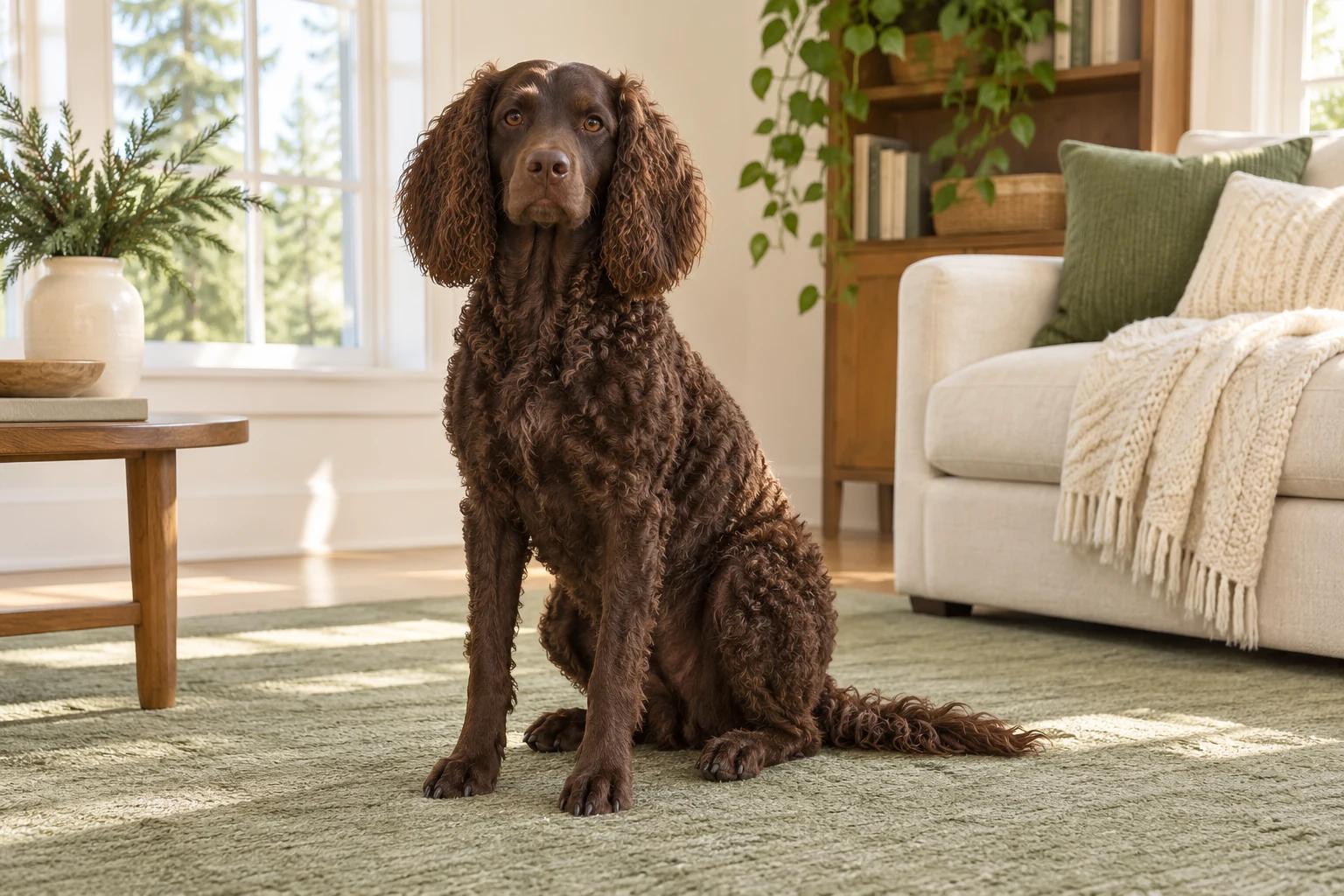
American Water Spaniel vs Boykin Spaniel is a comparison between two compact sporting breeds with enough similarities to make photographs an incomplete guide. Both may appeal to someone who wants an active companion without moving into a much larger size range. Their daily profiles still deserve separate attention.
Read the American Water Spaniel profile and the Boykin Spaniel profile together. This guide looks at size, coat, voice, company, and activities so you can compare the practical commitment rather than deciding from a brown coat and a breed name.
American Water Spaniel vs Boykin Spaniel: overlapping sizes
The site's American Water Spaniel range is 15–18 inches, with males at 30–45 pounds and females at 25–40 pounds. Boykins are listed at 15.5–18 inches for males and 14–16.5 inches for females, with males at 30–40 pounds and females at 25–35 pounds.
There is considerable overlap. An individual comparison is more useful than saying one is always larger. Ask for current measurements when planning equipment, travel, or resting space, especially if you are comparing mature dogs rather than puppies.
The American Water Spaniel standard and Boykin standard describe moderately sized sporting dogs. Their proportions and individual measurements matter more for fitted purchases than a generic “medium” label.
Picture the dog in your actual routine
A compact size can be convenient, but it does not tell you how the dog will spend its day. Consider travel arrangements, the place where it will rest, and the activities you want to share. Then compare those plans with the individual's experience.
Avoid choosing the smallest possible equipment based on the lower end of a breed range. Measure the dog and follow the product's instructions. The range is useful for initial planning, not for guessing the dimensions of a particular animal.
Coat texture makes a visible difference
The American Water Spaniel's coat can range from waves to closer curls. The site's Boykin profile describes a wavy double coat. These textures can make the breeds look similar in some photographs and noticeably different in others.
For ownership, concentrate on care rather than finding a perfect visual identification rule. Ask how the individual coat is maintained, what happens after outdoor activity, and which tasks the caregiver handles at home. Meet the dog with its ordinary grooming rather than relying only on a carefully arranged portrait.
Both site profiles describe regular brushing. The American Water Spaniel's loose hair is characterized as lighter, while regular shedding is part of the Boykin profile. Keep that difference in mind without expecting any individual to leave no hair behind.
Ask the same care questions for both
What tools are used? Which areas need particular attention? Does an outdoor outing add substantial cleanup? Which tasks are handled by a professional? Answers to these questions give you a clearer comparison than calling either coat easy.
If you are new to this type of coat, arrange a demonstration. Understanding a manageable routine matters more than owning a large assortment of grooming supplies. Talk with your veterinarian about physical care concerns rather than treating them as styling questions.
American Water Spaniel or Boykin Spaniel: activity expectations
When choosing an American Water Spaniel or Boykin Spaniel, compare the site's activity descriptions closely. The American Water Spaniel profile uses around an hour of active time as its typical reference. The Boykin profile emphasizes a long outing, meaningful training, or a job.
That makes activity a useful discussion point, not a universal prescription. Ask about the actual dog's routine and consult your veterinarian about appropriate physical activity. A breed description should help organize questions, not replace individual guidance.
Be specific about what you enjoy. If you imagine taking classes, find out what is available locally. If you prefer familiar outdoor routes, consider whether you can maintain them consistently. A theoretical hobby is not yet an activity plan.
Similar sporting interests do not mean identical experience
Both standards connect the breeds with sporting work and small-boat settings. That shared context does not mean every individual arrives knowing how to swim, retrieve, travel by boat, or participate in a structured activity.
Ask which experiences are genuinely familiar. A dog that has practiced a task in one setting may still need guidance in another. Choose an introductory class or instructor around the dog's starting point rather than its breed reputation.
You also do not need to pursue every traditional activity to enjoy either breed. Learning games and suitable outings can be part of the relationship without a competition goal. The question is whether your planned routine offers the engagement the individual needs.
Voice and company can influence the household fit
The site's American Water Spaniel notes allow for frequent barking, while the Boykin notes describe barking as more occasional. If your surroundings make noise particularly important, explore that distinction with the caregiver of the dog you are considering.
Ask when vocal behavior occurs and what the normal environment is like. A dog living with open outdoor space may have a different set of triggers from one in a shared building. Understanding the context makes the answer more useful.
The company notes also differ slightly: the American Water Spaniel may enjoy sharing a room without constant contact, while the Boykin profile describes a closer-contact tendency. Neither predicts every interaction. Learn whether the individual's preferences suit the way your household spends time together.
The difference between American Water Spaniel and Boykin Spaniel decisions
The difference between American Water Spaniel and Boykin Spaniel choices often becomes clearer when you compare actual dogs. You may find one individual's known routine, learning experience, or preferred style of interaction especially compatible with yours.
Use a consistent set of observations. Ask about outings, quiet time, care, travel, and unfamiliar settings for both dogs. Avoid comparing one dog's best-known strengths with assumptions about the other breed.
A Boykin Spaniel vs American Water Spaniel decision does not need a universal winner. It needs enough reliable information to choose a sustainable fit. Similar size and sporting background can narrow your search, while the smaller everyday differences help make it meaningful.
Put the whole picture together
Use the dog match quiz to organize your preferences across activity, size, coat, and company. If structured work interests you, our article about American Water Spaniel club titles explains that separate subject without implying that every owner must pursue it.
Before deciding, picture an ordinary week rather than one perfect outdoor afternoon. Include the return home, coat care, the workday routine, and the quieter parts of life. A breed match becomes more useful when it describes all of those moments.
FAQ
Which is bigger, an American Water Spaniel or a Boykin?
Their size ranges overlap. The site's American Water Spaniel weight range extends to 45 pounds, while the Boykin range extends to 40 pounds. Compare actual measurements rather than assuming every dog of one breed is larger.
Do their coats need the same care?
Both need regular coat care, but individual texture and density affect the routine. American Water Spaniels can have closer curls, while the site's Boykin profile describes a wavy double coat. Ask for a demonstration of care for the actual dog.
Which breed is more vocal?
The site's American Water Spaniel profile describes more frequent barking than the Boykin profile. Individual behavior and surroundings still matter. Ask when vocal activity occurs in the dog's current routine instead of relying on a general label alone.
Do both breeds need to participate in hunting?
No. Sporting backgrounds help explain possible interests, but owners can share suitable outings and learning without hunting. Choose activities around the individual and seek instruction for unfamiliar skills rather than assuming the breed arrives trained.
Sources behind this article
Article source checked: November 14, 2026. Source checked 2026-11-14
Keep reading

Affenpinscher vs Brussels Griffon: Everyday Differences
Read article →