American Shorthair vs British Shorthair
Compare American Shorthair vs British Shorthair through build, adult weight, coat care and companionship without reducing either cat to a stereotype.
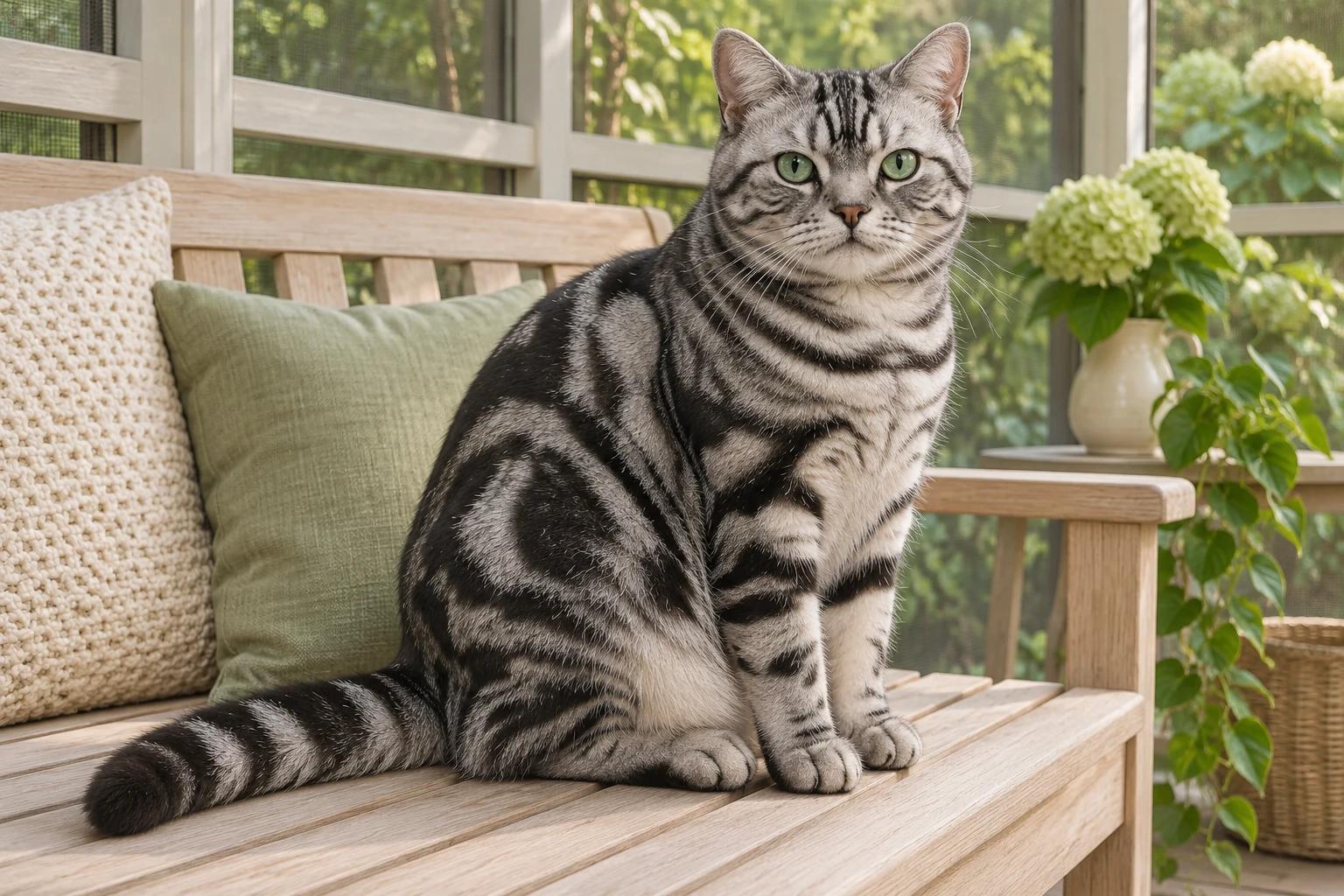
American Shorthair vs British Shorthair involves two established breeds, not simply a choice between a tabby cat and a blue one. Start with the current American Shorthair profile and British Shorthair profile, then compare the actual individuals. Their adult weight ranges overlap, but their outlines and the coat-care routines described on those pages provide useful distinctions.
Compare adult weights like for like
The current American Shorthair page gives females at 8–12 pounds and males at 11–15 pounds. The British Shorthair page gives females at 8–11 pounds and males at 10–16 pounds. Both are described as medium to large. The overlap is substantial, so neither range supports a claim that every British cat is heavier than every American.
An eleven-pound female sits inside both ranges, as does a twelve-pound male. Comparing one breed's smallest female with the other's largest male would exaggerate a difference rather than clarify it. Keep the sex qualifiers attached to the figures and use actual measurements when selecting equipment for a specific cat.
The British profile starts with weekly brushing or combing. For American Shorthair care, TICA says combing once a week is sufficient for ordinary care. CFA recommends brushing daily to control shedding; its breed guide describes spring undercoat shedding followed by a lighter fall shed. Compare each cat's coat condition and discuss the individual routine rather than treating every shorthaired coat alike.
American Shorthair vs British Shorthair: the American outline
The American Shorthair has a muscular, medium-to-large body and a thick coat with a firm texture, as described by CFA. The head is slightly longer than wide, with a strong jaw. The eyes have a gently oval upper curve and a more rounded lower curve. That combination is more informative than calling every feature simply round.
Neither tabby markings nor a familiar shorthaired appearance establishes breed identity on its own.
The British outline is more than its blue coat
The British Shorthair combines a broad chest, muscular legs and a powerful torso in the CFA description. A rounded head, large round eyes and prominent whisker pads contribute to the characteristic expression. Medium-sized ears are set apart on the head. Consider these features together rather than choosing the breed from coat color alone.
Although blue is strongly associated with the British Shorthair, CFA describes several other colors and patterns. A tabby British Shorthair is not an American Shorthair merely because its markings resemble a familiar photograph of that breed. Color and construction answer different questions.
For someone comparing two cats in person, the useful distinction is the complete outline. Look at the chest and torso as well as the face, then consider the coat separately. A dense coat can soften contours in a photograph. It should not be mistaken for a direct measurement of body weight or used to decide whether an individual needs to gain weight.
Short hair still comes with coat maintenance
VCA's British Shorthair guidance describes a thick, plush coat and recommends at least weekly combing, with particular attention during seasonal shedding. The short length does not mean there is no loose hair to remove. Texture and density matter alongside the length visible in a photograph.
This is useful when comparing everyday care rather than appearance alone. Ask to see how the individual coat is maintained and which tools the cat already accepts. A comb that reaches the intended layer and can be used comfortably is more relevant than assuming any brush labeled for short hair will feel the same.
Seasonal changes also mean a routine may need attention at different times of year. The aim is to care for the coat that is actually present, not to preserve an unchanging schedule regardless of what happens. Shorthaired ownership is not the same thing as grooming-free ownership.
A companion does not have to enjoy being carried
The GCCF British account describes interest in household routines and a preference for having the feet on the ground rather than being carried. Its discussion of companionship includes being near a person while they work. That offers a useful alternative to evaluating affection only through lap sitting or lifting.
In a British Shorthair vs American Shorthair decision, distinguish wanting company from accepting every form of handling. A cat can be closely involved in the room without wanting to be picked up. Observe how the individual chooses proximity instead of testing how long it will tolerate being held.
An indoor companion still needs stimulation. A quieter description does not mean a cat will spend the entire day in one place. Learn what this individual enjoys.
For the difference between American Shorthair and British Shorthair in everyday life, combine these physical and care details with the particular cat's history. The cat quiz can help organize your preferences. The adopted American Shorthair play guide covers the separate question of restarting games with an adopted adult.
FAQ
Is one breed always the larger choice?
Neither American Shorthairs nor British Shorthairs are always larger. Their current sex-qualified adult ranges overlap considerably. Compare females with females and males with males, then look at the actual individual rather than treating a range endpoint as a prediction.
Does the current American Shorthair profile call for occasional brushing only?
The current American Shorthair reference distinguishes sufficient routine care from shedding-control advice: TICA says combing once a week is sufficient for ordinary care. CFA recommends brushing daily to control shedding; its breed guide describes spring undercoat shedding followed by a lighter fall shed. Include the individual routine in your choice rather than assuming all shorthaired coats share a routine.
Can either breed name establish compatibility with my other pets?
Neither American Shorthair nor British Shorthair breed identity guarantees pet compatibility. Both profiles treat compatibility as individual. Previous experience and careful introductions matter more than a breed reputation, and neither name guarantees an immediate relationship with a resident animal.
Sources behind this article
- CFA American Shorthair ↗
- CFA British Shorthair ↗
- VCA British Shorthair ↗
- GCCF British ↗
- TICA American Shorthair ↗
Article source checked: November 16, 2026. Source checked 2026-11-16Article source checked: November 18, 2026. Source checked 2026-11-18
Keep reading

Abyssinian vs Somali: Coat, Size and Everyday Company
Read article →