American Leopard Hound Size: Height, Weight, and Planning
Compare typical male and female American Leopard Hound size, learn how to measure, and plan space and equipment.
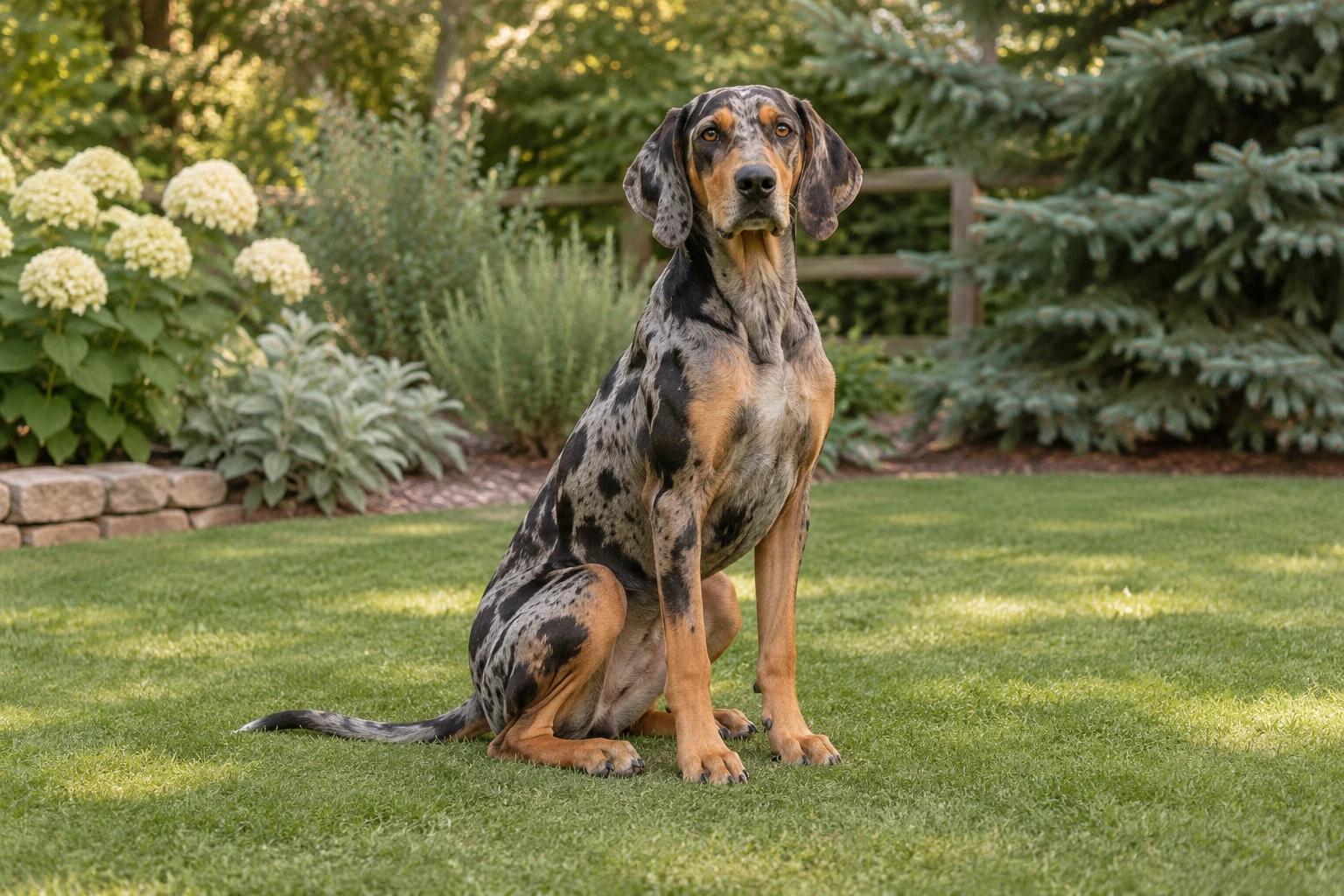
American Leopard Hound size is best understood as a range rather than a single representative dog. The breed has enough variation that a photograph or a generic “large dog” label can leave you with the wrong impression. Height, weight, body proportions, and the measurements of an individual all answer different practical questions.
Our American Leopard Hound profile provides the site's typical adult ranges. Use those figures for initial planning, then measure the dog before buying fitted equipment or arranging a permanent travel setup.
American Leopard Hound size at a glance
Typical males stand 22–27 inches and weigh 45–75 pounds. Typical females stand 21–25 inches and weigh 35–65 pounds. Taken together, the site's overall range is 21–27 inches and 35–75 pounds.
Those figures agree with the ranges in the UKC breed standard. They describe adults, not a prediction that a particular puppy will finish at one end of the scale. The overlap between males and females also matters: sex alone does not tell you which of two individual dogs will be larger.
When comparing American Leopard Hound height and weight, keep both measurements visible. A dog can stand relatively tall without occupying the same space or weighing the same amount as a more heavily built dog of similar height.
How big do American Leopard Hounds get in everyday spaces?
“How big do American Leopard Hounds get?” usually means more than asking for a number. You may be picturing the dog in a car, beside a desk, or walking through a narrow kitchen. Convert the numerical range into those actual settings before making decisions.
Mark out the available floor area where you expect a bed to go. Check whether a dog can approach it without blocking a doorway or a frequently used route. An arrangement that works while the dog is curled up may be awkward when it stretches out or stands.
Look at access as well as the destination. A generous resting area behind a cramped passage can still be inconvenient. Think through everyday movement with furniture, bags, and people in their normal places rather than imagining an empty room.
Measure height at the shoulder
Breed height refers to the withers, the area at the top of the shoulders, rather than the top of the head. That distinction is important when looking at a dog standing beside a person. Raised ears or an upright head can make the dog appear taller than the recorded measurement.
For practical measuring, choose level footing and allow the dog to stand naturally. If you need a precise measurement for an event or another formal purpose, ask the relevant organization how it should be taken. A casual estimate and an official measurement are not the same thing.
American Leopard Hound appearance: look beyond the markings
American Leopard Hound appearance is not defined by a spotted coat alone. The breed includes different colors and patterns. AKC's breed overview describes a medium-to-large dog; UKC describes a close-fitting coat and a body slightly longer than tall.
Those proportions help explain why height alone is not enough for equipment shopping. A harness needs the relevant chest and neck measurements, and a resting space must accommodate body length. A product photograph of another dog with similar coloring tells you little about fit.
Keep coat pattern separate from body size when comparing dogs. A striking marking can dominate your impression of a photograph, while perspective conceals the dog's actual proportions. Ask for current measurements instead of trying to infer them from the image.
Compare photographs fairly
If you are using photographs to understand scale, look for a natural standing position and a consistent viewpoint. A close camera can exaggerate the nearest body part. A seated dog and a standing dog are difficult to compare reliably even when the images have the same dimensions.
Photographs are useful for recognizing the individual and discussing observations. They are not a substitute for a tape measure when the decision involves a fitted item or a restricted space. Treat visual impressions as a starting point, then verify what matters.
Use size information differently for each purchase
For a harness, follow the manufacturer's measuring instructions and check the actual adjustment range. Do not choose only by the word “large.” Different products can use the same label for different dimensions, and weight-based suggestions may be only a preliminary guide.
For a bed, consider how the dog rests as well as its standing measurements. Does it stretch along its side, curl tightly, or change positions frequently? Choose the available resting area around that behavior rather than selecting the smallest product that technically matches a chart.
For a travel arrangement, measure the usable space with the relevant seats and other equipment in place. Check the manufacturer's instructions for the restraint or carrier you intend to use. A dog's body weight does not establish that a particular setup fits your vehicle or is suitable for that dog.
Puppy planning without a false forecast
A puppy's current weight is useful for current care and equipment, but it is not an exact adult-size promise. Ask about the parents and other mature relatives while keeping the site's adult range in mind. Avoid building an entire purchasing plan around one predicted final number.
Adjustable equipment can make practical sense, but only when it fits correctly now. Buying an oversized item for future growth does not solve today's fit question. Check the current adjustment and replace or change the item when it no longer meets its instructions.
For growth, body condition, or feeding questions, talk with your veterinarian. This article's size ranges are not a feeding chart or a target that an individual should be pushed toward. The useful ownership decision is how to accommodate the dog, not how to make it match a preferred point in the range.
Size is one part of the match
A dog can fit physically into a home while its activity or voice is a less comfortable match. The site's profile describes substantial engagement needs and frequent vocal expression. Include those traits when considering daily life rather than treating square footage as the deciding factor.
The dog match quiz helps organize that broader comparison. For a separate discussion of what appearance does and does not establish, read our article about working-ability claims. Neither a size label nor an impressive photograph replaces learning about the individual dog.
FAQ
How much does an American Leopard Hound weigh?
Typical adult males weigh 45–75 pounds, while females weigh 35–65 pounds. The combined range is 35–75 pounds. These are planning ranges, not a target weight for every individual; discuss body-condition questions with your veterinarian.
How tall is an American Leopard Hound?
Typical males stand 22–27 inches at the shoulder, and females stand 21–25 inches. Height is measured at the withers rather than the top of the head. Use current individual measurements when arranging fitted equipment or travel space.
Are male American Leopard Hounds always bigger than females?
No. The male and female size ranges overlap, so an individual female can be larger than an individual male. Sex gives context but does not replace actual height, weight, and body measurements when making practical decisions.
Does every American Leopard Hound have leopard spots?
No. The breed includes different colors and patterns, so spotted markings are not required to recognize every individual. Coat appearance also does not tell you the dog's measurements. Ask for size information rather than estimating it from color or photographs.
Sources behind this article
Article source checked: November 14, 2026. Source checked 2026-11-14
Keep reading

Airedale Terrier Temperament: What Everyday Life Can Feel Like
Read article →