American Foxhound vs English Foxhound: Everyday Differences
Compare American and English Foxhounds by size, build, activity, voice, training, and the individual experience that matters at home.
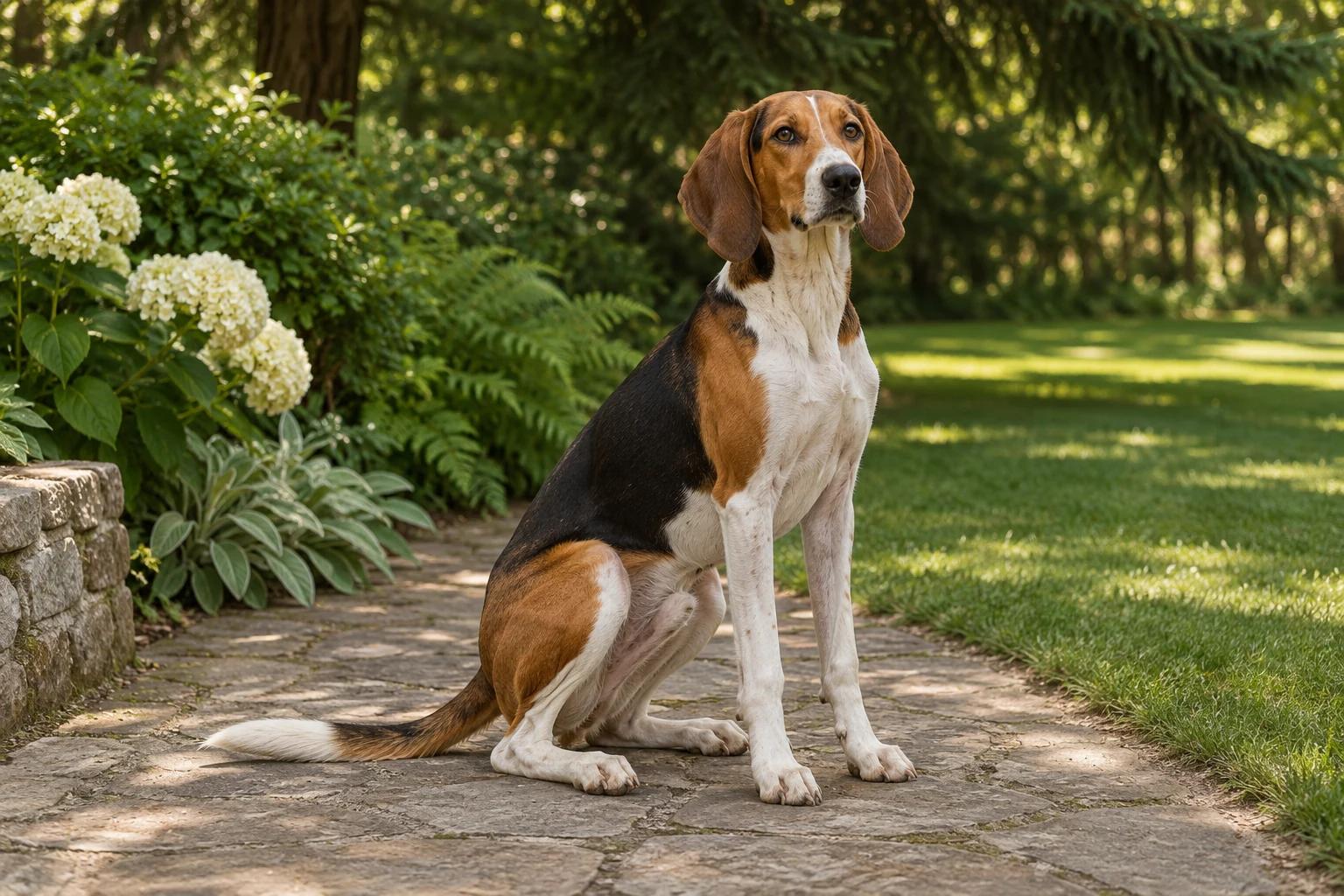
American Foxhound vs English Foxhound is a comparison between closely related-looking hounds with many shared practical needs. Both are active dogs, both can be vocal, and neither should be chosen simply because a short coat makes ownership appear straightforward. The individual dog's background matters as much as the name on the listing.
Begin with the American Foxhound profile and the English Foxhound profile. Comparing their stored dimensions and daily-care notes gives you a useful framework. Then ask how the particular dogs you are considering have actually lived.
American Foxhound vs English Foxhound: outline and size
My Breed Atlas lists male American Foxhounds at 22–25 inches and 65–70 pounds, with females at 21–24 inches and 60–65 pounds. Its English Foxhound profile lists 24 inches and 60–75 pounds. Those figures overlap substantially, so this is not a simple small-dog versus large-dog choice.
VCA's American Foxhound overview describes a lighter-boned outline than the English relative. The AKC English Foxhound overview emphasizes a substantial hound built for endurance. That broad distinction is more useful than assuming every American is taller or every English dog weighs more.
If you are comparing adults, use their actual measurements. Equipment fit depends on body dimensions as well as weight. Two dogs with overlapping weights may still need different harness adjustments or travel arrangements.
Look at usable space, not just a weight limit
A resting place should let the dog stretch out without blocking a passage. A travel setup needs enough usable room after your normal luggage and passengers are accounted for. Check these arrangements with measurements instead of deciding that anything labeled for a medium or large dog must fit.
For puppies, distinguish current measurements from forecasts. Ask what the adult estimate is based on, but leave room for uncertainty. A detailed-looking prediction is still not a measured adult.
Shared activity needs matter more than a winner
Both site profiles describe high activity. Choosing an American or English Foxhound is not a way to avoid a substantial daily commitment to outings and engagement. The useful comparison is how the individual's experience fits the activities you can provide.
Describe your usual routes to the caregiver. Are they busy, quiet, narrow, or open? Will outings involve another dog or a single handler? Ask what experience the dog has with similar arrangements and which parts would be new.
A dog accustomed to one setting may need gradual introductions to another. That does not establish a breed-wide difference in adaptability. It tells you where to direct preparation and support.
Do not compare athletic reputations as guarantees
A history of endurance is not a prescription for a particular run or distance. If you want an exercise partner, talk with your veterinarian about the individual and ask the caregiver about its current activity. Build your decision around suitability rather than an image of what a foxhound ought to do.
Neither breed needs to demonstrate a working role to be a companion. What matters is a workable outlet for the dog's interests and an appropriate routine, not reproducing a historical scene.
English Foxhound vs American Foxhound voice and company
In an English Foxhound vs American Foxhound comparison, voice belongs in the shared column. Both site profiles describe frequent vocal tendencies. A choice between them is not a reliable strategy for obtaining a silent dog.
VCA's English Foxhound overview notes excitement-related barking and baying alongside a pack background. Ask about the individual dog's sound and the situations that prompt it, rather than treating any recording as a complete picture of daily life.
Company also needs context. A dog may be familiar with other hounds but have limited experience of a particular household arrangement. Ask how meals, resting areas, and time apart are currently managed. Pack history is not proof that every future pairing will work.
If you want one dog, discuss that honestly. If you already have animals, describe the situation precisely and ask about appropriate introductions. Do not rely on a broad social label to fill in unknown experience.
Teaching: compare what the dog knows
The difference between American and English Foxhound candidates may lie more in prior learning than in breed descriptions. One adult may be comfortable walking on a lead near everyday traffic; another may be unfamiliar with that exact setting. Ask for a clear account of what has been practiced.
Useful skills include moving with a handler, responding in manageable distractions, and settling in the places the dog will actually use. These skills need teaching in either breed. A cheerful greeting does not establish them, and a distracted first meeting does not prove they cannot develop.
Look for instruction that explains how to make learning clear and rewarding. Independent interests do not make a dog incapable of learning. Ask a trainer to help assess your actual goals and the individual dog rather than treating a stereotype as the end of the discussion.
Coat care is simpler than the whole ownership decision
Both site profiles describe short coats and regular shedding. Their care routines still need attention, but the coat should not distract from the larger questions of activity, voice, and handling. A quick grooming routine does not turn an active hound into a low-commitment companion.
Ask what grooming and handling the dog accepts comfortably. Find out whether routine care is familiar or will need to be introduced. Keep the existing tools and instructions organized during a transition to a new home so the routine does not change unnecessarily all at once.
Make the choice from individual evidence
For an American or English Foxhound decision, put confirmed facts beside open questions. Measured adult size, known routines, and observed handling are useful evidence. Predictions about how a dog will behave in an unfamiliar home deserve more modest wording.
The dog match quiz can help you organize preferences before meetings. Our American Foxhound history article covers the historical topic separately, without turning ancestry into a promise about your prospective companion.
The better choice is the dog whose needs you can realistically meet. That may depend on a particular adult's experience, the support available to you, and the environment you can offer more than on the distinction between the two breed names.
FAQ
Is an American Foxhound bigger than an English Foxhound?
Not necessarily. Their typical dimensions overlap, and the English Foxhound is generally described as more substantial in build. Compare the actual adults when size matters. A breed name alone does not determine which individual will be taller or heavier.
What is the main difference between the two foxhounds?
The American Foxhound is generally lighter in outline, while the English Foxhound is more substantial. Both share active hound interests and can be vocal. For a household decision, individual experience, measured size, and daily routine are especially important.
Which foxhound is quieter?
Neither should be selected as a reliably quiet alternative. Both site profiles describe frequent vocal tendencies. Ask about the individual dog's triggers and usual routine, then consider whether your living arrangement can accommodate that pattern.
Which foxhound is easier for a new owner?
There is no universal answer. Both need activity, teaching, and practical management of hound interests. A particular adult's known experience and the help available to you may matter more than the breed name. Discuss the actual dog and household with a suitable trainer.
Sources behind this article
Article source checked: November 14, 2026. Source checked 2026-11-14
Keep reading

Affenpinscher vs Brussels Griffon: Everyday Differences
Read article →