American Foxhound Exercise Needs: Build an Interesting Day
Plan American Foxhound exercise needs around movement, scent exploration, suitable running, and a routine that works beyond the weekend.
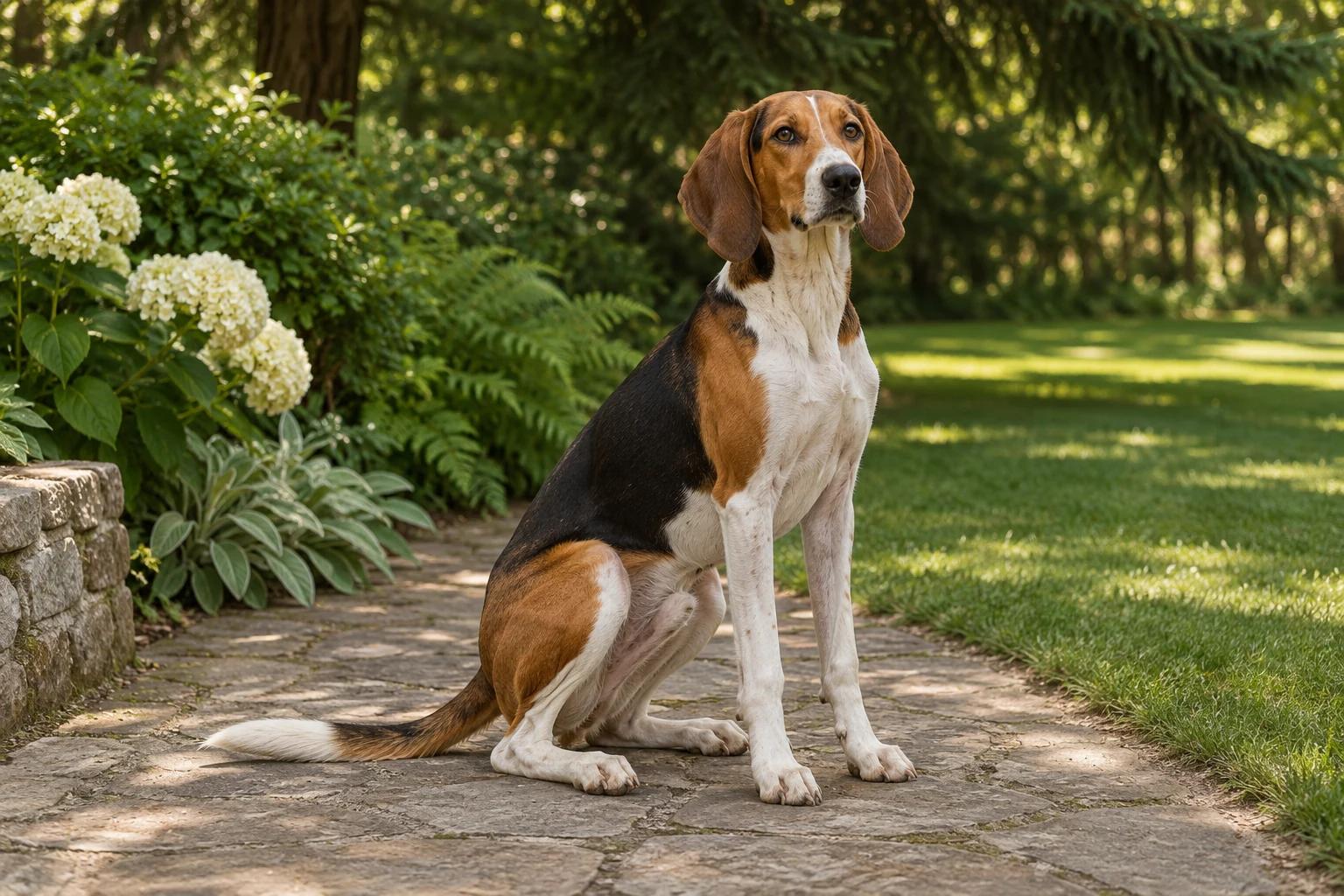
American Foxhound exercise needs involve more than finding the longest route on a map. An active hound needs opportunities to move, investigate, and use learned skills, with a routine that works on ordinary weekdays as well as adventurous weekends. The important question is what you can provide consistently.
The American Foxhound profile describes a high-activity dog with an interest in learning and a frequent voice. Use that profile as a starting point, then plan around the individual's age, experience, and condition. For questions about suitable activity for your dog, talk with your veterinarian.
American Foxhound exercise needs: movement plus investigation
VCA's American Foxhound overview emphasizes an active hound with strong scent interests. That combination suggests a useful distinction: traveling through a place and having time to investigate it are not the same experience.
A steady walk can have room for both. Choose sections where you can move comfortably together and sections where pausing will not obstruct other people. This is easier on a broad, manageable route than on a narrow path where every stop becomes a negotiation.
Think about the outing from ground level. A familiar route can still contain new smells and activity. You do not need to drive somewhere different every day to make a walk interesting, but you do need enough time to avoid treating every pause as a delay.
Give each outing a purpose
Separate a quick toilet trip from a fuller activity outing in your planning. They may begin at the same door, but they are not interchangeable. If every trip outside is rushed, a large total number of trips can still leave little room for engagement.
You might use one outing for a familiar walking route and another for a quieter exploration area. A short session practicing a useful skill can add another kind of involvement. The balance should be practical rather than a complicated schedule nobody can maintain.
How much exercise does an American Foxhound need?
“How much exercise does an American Foxhound need?” is a reasonable question, but a single minute count cannot describe the right day for every dog. The breed's active profile means a few brief trips outside should not be your whole plan. The suitable amount and intensity depend on the individual.
Ask the current caregiver what the dog already does, including the pace, surfaces, and breaks involved. “Walks for an hour” can mean very different things if one route is gentle and familiar while another involves hills and sustained movement.
If you are bringing home a dog, begin with a clear account of its existing routine rather than inventing an ambitious target. Discuss proposed changes with your veterinarian when age, fitness, or health questions are involved. Planning should not become an endurance test.
Track the parts you can actually change
A brief activity record can distinguish route, duration, pace, and opportunities to investigate. You do not need an elaborate tracking system. A few notes can reveal whether a demanding outing was difficult because of its length, its setting, or the number of interruptions.
Include practical observations about your own experience. Could you handle the equipment comfortably? Was the route too crowded? Did you have enough time to return without rushing? A sustainable plan has to work for the person providing it as well as the dog.
American Foxhound running: prepare the arrangement first
American Foxhound running may appeal to people who already enjoy jogging, but the breed name is not clearance for a particular distance or pace. Talk with your veterinarian before introducing a running program and ask how to approach it for the individual dog.
Separate the fitness question from the handling question. Even when an activity is suitable, you still need a manageable route and a dog that can move with you without repeated abrupt changes of direction. Practice the relevant skills at a walking pace before assuming they will transfer smoothly to faster movement.
Plan where you can stop or change the outing. A route that commits you to a long return may be less useful than one with straightforward shorter options. Check the practical conditions before leaving rather than treating the original plan as something you must finish.
Running should not be the only form of engagement. Keep opportunities for ordinary exploration and learning in the week so the routine does not depend entirely on your ability to complete a particular workout.
Controlled exploration keeps options open
An interesting scent can lead a hound away from your intended route. Choose suitable physical arrangements for exploration instead of relying on enthusiasm or an unfinished recall skill.
The AKC recall guide supports practicing in manageable environments with secure boundaries or a long line. Returning when called is worth teaching, but it is not a guarantee in every setting.
Before using an enclosed area, check gates and boundaries yourself. Before using unfamiliar equipment, ask someone qualified to demonstrate it. The label “dog field” or “long line” does not answer whether a particular setup is manageable for you and your dog.
If other people use the same space, learn how entry and exit work. An otherwise good location can become awkward if you must handle an excited dog while another person opens a shared gate.
Make the American Foxhound activity level work in real weather
The American Foxhound activity level calls for a plan that can adapt when an outing changes. Identify alternatives before a usual route becomes unavailable. Those alternatives might involve a different walking location, an appropriate indoor learning activity, or help from someone who knows the dog.
Do not assume a brief indoor game is an exact substitute for every outdoor activity. It can be one useful part of an adjusted day without pretending nothing else is needed. Keep the distinction between an occasional change and a permanently inadequate routine.
A familiar search for an appropriate toy can add engagement without elaborate equipment. Start simply, supervise, and choose objects and spaces suitable for the individual. If you want more structured scent work, observe a beginner class and ask how its sessions are organized.
For the breed's separate historical story, see Washington's French hounds. The dog match quiz can help you compare your preferred daily activity with different breeds before choosing a companion.
FAQ
Are American Foxhounds high-energy dogs?
American Foxhounds have a high-activity profile and need more than a routine made entirely of brief toilet trips. Plan movement, exploration, and learning around the individual dog. Age, experience, condition, and the available environment all affect the appropriate routine.
Can an American Foxhound be a running partner?
Running may be an option for an individual American Foxhound, but suitability should be discussed with your veterinarian. Prepare handling skills and a manageable route as well as the activity plan. Breed history alone does not establish an appropriate pace or distance.
Is a garden enough exercise for an American Foxhound?
Access to a garden does not describe what the dog actually does there. A practical routine should include shared activity and engagement, not only available space. Consider walks, controlled exploration, and learning alongside any suitable enclosed outdoor area.
Should I let my American Foxhound off lead to exercise?
Do not rely on an unfinished recall skill in an open area. Use appropriate controlled arrangements and follow the rules of the location. You can provide worthwhile exploration while practicing skills without making unrestricted off-lead activity the goal of every outing.
Sources behind this article
Article source checked: November 14, 2026. Source checked 2026-11-14
Keep reading

Afghan Hound Exercise Needs: Build a Workable Active Day
Read article →