American English Coonhound vs Bluetick Coonhound
Compare American English Coonhounds and Bluetick Coonhounds by adult size, voice, activity, care, and the individual routines behind the breed names.
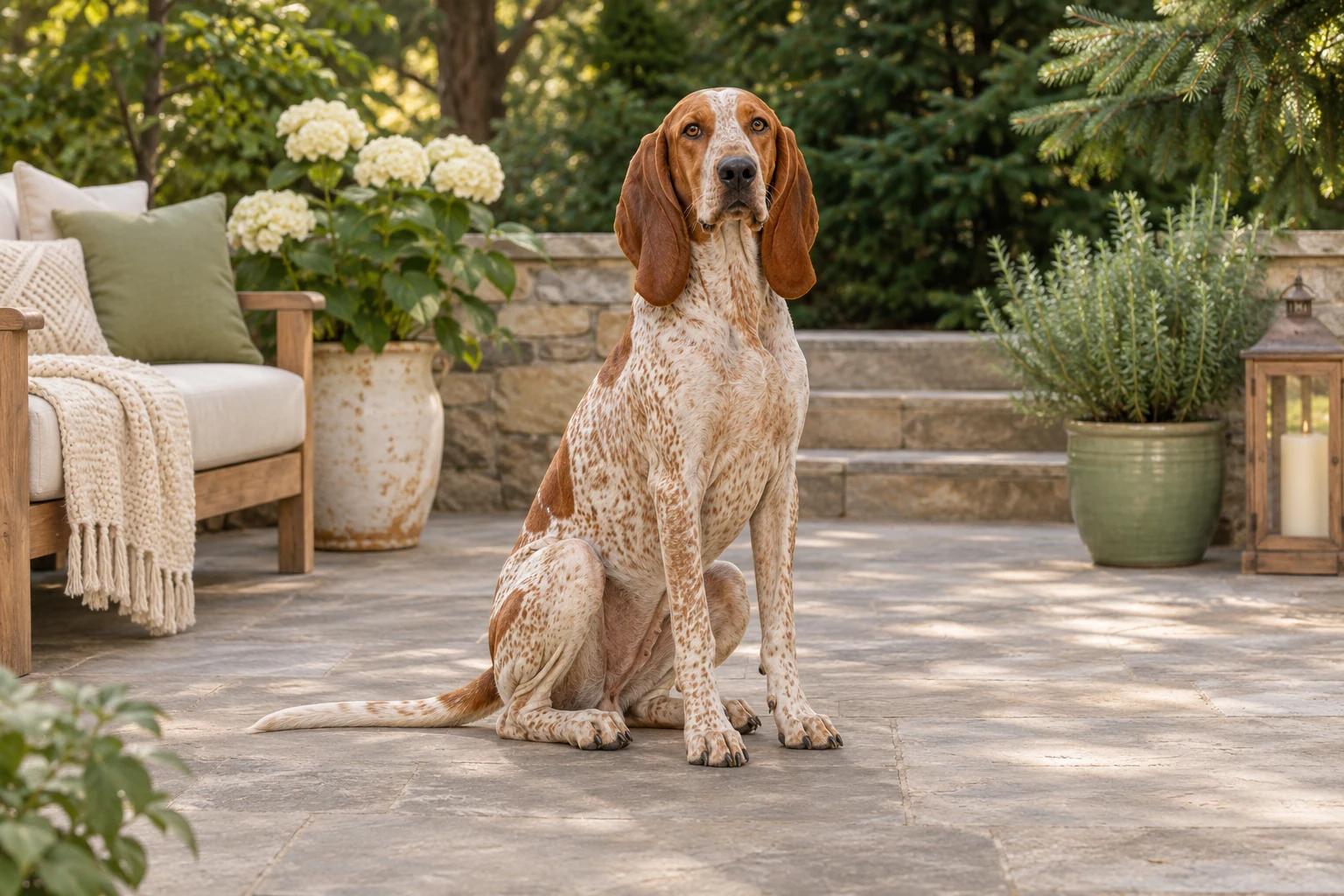
Explore the
American English Coonhound
Background, care, and everyday considerations.
View breed profile →American English Coonhound vs Bluetick Coonhound is not simply a choice between two coat patterns. These are distinct breeds with overlapping hound interests, active routines, and voices worth considering before you bring one home. Their size ranges also overlap, so the individual dogs may be closer in size than a quick comparison suggests.
Read the American English Coonhound profile beside the Bluetick Coonhound profile. Then look at the practical differences you can confirm: measured size, known routine, response to everyday settings, and the care arrangements each dog would need.
American English Coonhound vs Bluetick Coonhound: size first
My Breed Atlas lists American English Coonhounds at 45–65 pounds, with males 24–26 inches at the shoulder and females 23–25 inches. Bluetick males are listed at 55–80 pounds and 22–27 inches; females at 45–65 pounds and 21–25 inches.
That means the Bluetick range extends to a heavier male, but it does not mean every Bluetick is bigger than every English Coonhound. The female weight ranges overlap closely. Compare adults of known size if space or handling is an important part of your decision.
The English Coonhound standard and Bluetick standard provide the relevant height descriptions; the Bluetick standard also gives the listed sex-specific weights. These figures are useful planning references rather than a prediction for a particular puppy.
Translate the numbers into your setup
Check the space available for resting and travel, including room to move around equipment. If you already own a carrier or bed, compare its usable dimensions with the individual dog instead of assuming it fits both breeds because their weight ranges overlap.
For a growing puppy, ask which information is measured now and which is an estimate. Keep those categories separate. A forecast can help you prepare, but it should not become a precise adult figure repeated as fact.
Bluetick vs English Coonhound activity
For Bluetick vs English Coonhound activity, the shared requirement is more important than a numerical ranking. Both site profiles describe active dogs that need regular opportunities for movement and engagement. Neither is a shortcut to a largely sedentary routine.
The AKC Bluetick overview emphasizes determined interest in quarry. The English standard likewise describes hunting enthusiasm. For a household, the practical lesson is to provide controlled ways to explore rather than assuming a pleasant walk will always hold the dog's full attention.
Think about the places available near you. Are there routes with room to pause? Can you avoid crowded pinch points while teaching skills? Is there an appropriate enclosed area you can use? These resources may matter more than choosing the breed you imagine needs slightly less activity.
Ask about each dog's actual outings. “Enjoys walks” is a beginning, not a complete answer. Find out which settings have been manageable, what equipment is used, and what the caregiver is still practicing.
Voice is a shared consideration, not an afterthought
Both breeds have relatively frequent vocal tendencies in the site's profiles. Choosing one over the other is not a dependable way to obtain a silent hound. Listen to the individual and ask what typically prompts vocalizing.
The Bluetick standard describes a working voice used on a trail. That is useful context, but it does not tell you exactly how a particular dog sounds in a home. Ask about ordinary events such as waiting for an outing, noticing activity beyond a window, or spending time apart from another dog.
If noise is a major constraint, make that part of the decision before becoming attached to a photograph. Think about shared walls, nearby neighbors, and the location of resting areas. There is a difference between liking a hound's voice during a visit and having a workable arrangement for it every day.
Ask for context with a recording
A recording can help you understand the sound, but it should come with an explanation. Was it a usual event or an unusual moment? How long did it last? What happened before and afterward? Those details prevent a short clip from becoming an unsupported prediction of daily life.
Coat and cleaning: compare the routine you would inherit
The site describes lighter loose hair for the American English Coonhound and ordinary shedding for the Bluetick. Both need a regular care routine. Do not turn that distinction into a promise about how much cleaning one particular dog will create.
Ask what tools and schedule the current caregiver uses, and what the dog is comfortable with. Practical experience with handling and brushing is more useful than choosing solely from a broad grooming label. Neither coat pattern tells you whether a dog enjoys being handled.
Choose household arrangements that are easy to maintain: a washable resting cover, a place for walking equipment, and a way to manage outdoor debris on return. Those choices support either breed and do not depend on predicting exactly how much hair will appear.
Difference between American English Coonhound and Bluetick Coonhound in daily life
The most important difference between American English Coonhound and Bluetick Coonhound candidates may be their individual experience. One adult may already know your preferred walking environment; another may be encountering that setting for the first time. That difference can matter more than a general breed comparison.
Use the same questions for both. How does the dog spend a quiet afternoon? What happens when an outing is delayed? What experience is known with other animals, visitors, and travel? Ask for descriptions, not assurances that a breed name guarantees compatibility.
Do not rank intelligence or willingness from a single interaction. Meeting a dog in an unfamiliar setting may not show how it learns at home. Look for a caregiver who can explain what has been taught and where the dog still needs support.
Make the choice about the whole routine
In a Bluetick Coonhound vs American English Coonhound decision, write down the practical commitments that are shared before concentrating on differences. Activity, learning, voice, controlled exploration, and ongoing care belong on both sides of the page.
Then add the facts unique to each candidate: measured dimensions, observed preferences, known history, and the introductions your home would require. This produces a useful comparison without pretending there is one universally easier breed.
Our article about English Coonhound naming explains why appearance and terminology can be confusing; it is a separate question from household fit. The dog match quiz can help organize your preferences before you meet dogs and assess the details for yourself.
FAQ
Are American English Coonhounds and Bluetick Coonhounds the same breed?
No. American English Coonhounds and Bluetick Coonhounds are distinct breeds. They share hound interests and can have overlapping appearances, but a coat pattern alone does not establish identity. Use available records and the dog's known background rather than identifying the breed from a photograph.
Which Coonhound is larger?
Bluetick males can fall into a heavier typical range, at 55–80 pounds compared with 45–65 pounds for American English Coonhounds overall. The ranges overlap, especially for females. Compare actual adults when size is a deciding factor.
Is a Bluetick quieter than an American English Coonhound?
Do not rely on either breed as the quieter choice. Both have relatively frequent vocal tendencies in the site's profiles. Ask about the individual dog's triggers, routine, and sound, and consider whether your home can accommodate a vocal companion.
Which breed needs less training?
Neither breed should be chosen on the assumption that training will be minimal. Both need useful everyday skills and controlled opportunities to explore. An individual dog's previous experience and your intended routine are more informative than a broad claim that one breed is easier.
Sources behind this article
Article source checked: November 14, 2026. Source checked 2026-11-14
Keep reading

Affenpinscher vs Brussels Griffon: Everyday Differences
Read article →