American English Coonhound Temperament: Life With a Hound
Explore American English Coonhound temperament, voice, activity, companionship, and the practical questions to ask before bringing one home.
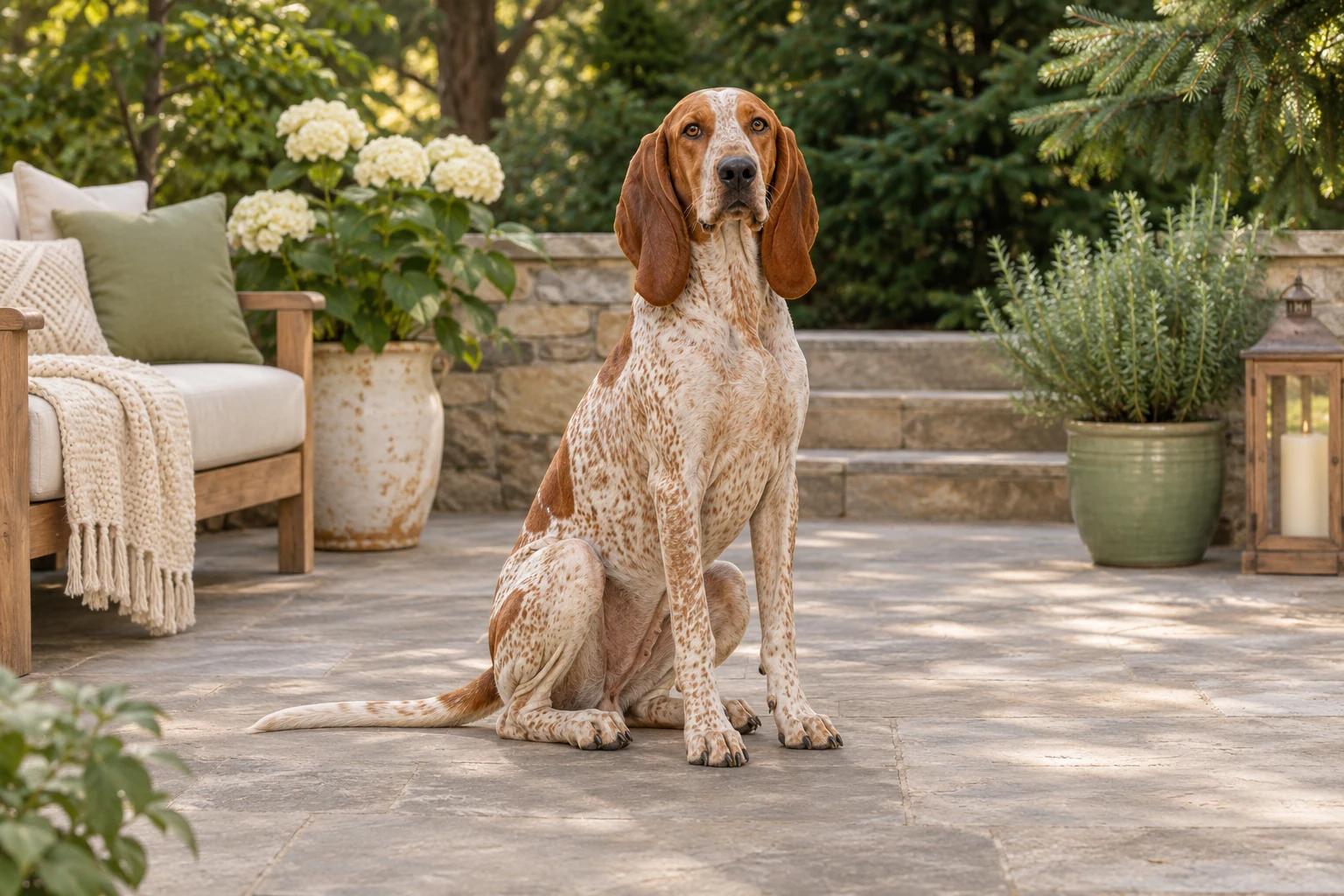
Explore the
American English Coonhound
Background, care, and everyday considerations.
View breed profile →American English Coonhound temperament can make more sense when you picture an ordinary walk rather than a portrait. Here is a dog whose attention may be drawn to the ground, whose voice can become part of the outing, and whose day needs more than a brief trip outside. That combination is central to deciding whether this breed suits you.
The American English Coonhound profile describes high activity and a relatively frequent voice. These are tendencies, not promises about an individual. Use them to ask better questions about the dog you are considering, especially if your experience is with a quieter or less active companion.
American English Coonhound temperament begins with hound interests
The AKC breed overview introduces a hunting hound with a prominent working voice. The breed standard describes an alert, confident dog with hunting enthusiasm and the build for sustained work. Those short descriptions help explain the breed's interests without telling you everything about its home life.
A person may see a walk as a route to complete; a hound may find the route interesting for reasons the person cannot see. Make room for that difference in your expectations. A dog investigating a patch of ground is not necessarily refusing to participate in the outing you planned.
Consider whether you enjoy observing those interests. If stopping to explore feels like the rewarding part of walking a dog, the experience may appeal to you. If every outing needs to be a hurried straight line, examine that mismatch before focusing on appearance.
Attention is not the same as affection
A dog can enjoy your company while remaining absorbed in the environment. Do not use constant eye contact or physical closeness as the only measure of a relationship. Look at the ways the individual chooses to spend time near you and respond to familiar routines.
Ask a caregiver what shared time actually looks like. Does the dog rest in the same room, seek touch, bring a toy, or prefer a nearby bed? Specific descriptions are more helpful than deciding that every member of the breed is either clingy or aloof.
American English Coonhound personality at home
The American English Coonhound personality should be assessed across different parts of the day. Meeting a dog immediately after an outing may show you a resting companion, but not how the dog behaves when activity is overdue or something interesting appears outside.
Ask to hear about both active and quiet periods. What happens before a walk? Where does the dog choose to rest afterward? How does the household manage deliveries, visiting friends, or time when people are occupied? There is no need to manufacture a stressful test; ordinary history provides useful context.
For a puppy, you will have less individual history to work with. Ask about the adult dogs and the experiences already introduced, while recognizing that you are planning a developing routine rather than inheriting a finished one.
A resting area can help organize shared space. Choose somewhere the dog can stretch out without being repeatedly stepped around. A comfortable spot near daily activity may be more useful than an isolated location selected only because it is out of sight.
Voice belongs in the decision
Frequent vocal behavior is part of the site's American English Coonhound traits. Do not choose this breed on the assumption that training will turn it into a reliably silent dog. Instead, consider whether your living arrangement can accommodate a vocal companion and how you will manage predictable triggers.
Listen to the individual dog where possible. A short video may demonstrate the sound, but ask what was happening when it was recorded. Excitement before an outing, watching something beyond a fence, and vocalizing while alone are different situations that deserve different questions.
A practical household review might include where the dog rests relative to windows, how much activity passes the garden boundary, and whether shared walls make ordinary noise difficult. This is about finding a workable setting, not labeling vocal behavior as a character flaw.
Keep observations specific
Instead of writing “noisy,” note the event: “called when the other dog left the room” or “vocal at the garden gate.” Details make it easier to discuss a plan with a trainer. They also prevent one memorable episode from becoming an unsupported description of the dog's entire personality.
If a behavior changes suddenly or suggests discomfort, talk with your veterinarian. A breed's reputation should not be used to dismiss a new problem as inevitable.
Activity and learning need real places
A suitable routine needs somewhere to happen. Identify manageable walking routes, opportunities for controlled exploration, and an appropriate area for practicing skills. A distant weekend destination does not replace the resources you need on ordinary days.
Look at transitions between activities. Can you return from an outing, put equipment away, and give the dog a place to rest without another burst of excitement? Can the person helping with care use the same routes and arrangements? These details often decide whether the routine feels sustainable.
Include learning and exploration alongside movement. A repetitive route may serve a practical purpose, but variety can come from where you pause, what you practice, or which manageable environment you choose. It does not have to mean adding ever longer outings.
Understanding American English Coonhound behavior around others
American English Coonhound behavior around people and animals must be assessed individually. A breed description cannot establish that a particular pairing will work. Ask about known experience, the setting of previous interactions, and what introductions would be needed in your household.
Avoid confusing a group photograph with evidence about every relationship. Dogs standing together for a moment may tell you little about sharing resting space, food, or a busy home. Useful questions concern the actual arrangements and how they have been managed.
Our article about the breed's naming history explores a separate subject. For choosing a companion, use the dog match quiz to organize your preferences, then compare them with the individual dog's needs. The most useful match is a routine you can provide, not a label you hope will explain everything.
FAQ
What is the American English Coonhound temperament like?
The American English Coonhound is an active hound with strong interest in its environment and a relatively frequent voice. Individual dogs differ in their preferences and experience. Consider the dog's actual routine, response to people, and activity needs rather than relying on a single personality label.
Are American English Coonhounds quiet indoors?
Do not assume an American English Coonhound will be consistently quiet indoors. The breed has a relatively vocal profile, although the situations that prompt sound vary. Ask about the individual dog's behavior around windows, visitors, departures, and other everyday events.
Does a Coonhound need constant physical contact?
An American English Coonhound may enjoy company without seeking constant touch. Observe whether the individual likes resting nearby, interacting through play, or approaching for attention. Shared space and predictable activities can matter even when a dog is not continually beside you.
What should I ask before bringing an American English Coonhound home?
Ask about activity, vocal triggers, time alone, handling, and known experience with other animals and people. Request concrete examples from ordinary days. Those details help you plan introductions and care more effectively than broad assurances about the breed.
Sources behind this article
Article source checked: November 14, 2026. Source checked 2026-11-14
Keep reading

Airedale Terrier Temperament: What Everyday Life Can Feel Like
Read article →