American Bulldog vs American Staffordshire Terrier
Compare American Bulldogs and American Staffordshire Terriers by adult size, activity, coat care, training, and practical household needs.
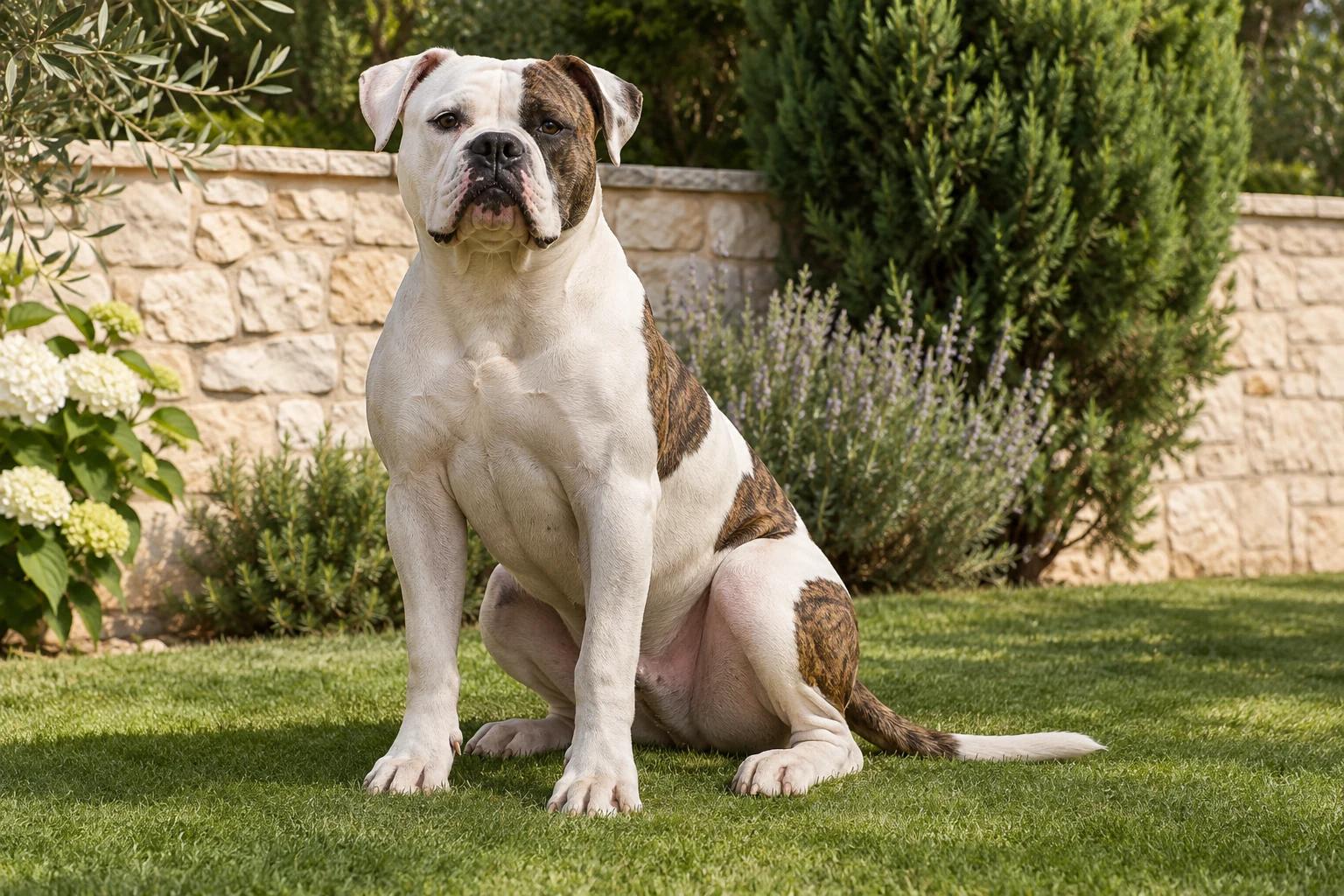
American Bulldog vs American Staffordshire Terrier is a comparison between two distinct breeds, not two names for the same dog. Both can present a muscular outline and short coat, but their typical adult sizes differ enough to matter when you plan transport, equipment, and everyday handling.
Start with the American Bulldog profile and the American Staffordshire Terrier profile. Then compare the individual dogs available to you. Breed tendencies can help frame the decision, but a photograph or familiar label cannot tell you how a particular dog behaves at home.
American Bulldog vs American Staffordshire Terrier: the size difference
My Breed Atlas lists male American Bulldogs at 75–100 pounds and females at 60–80 pounds. Male American Staffordshire Terriers are listed at 55–70 pounds and females at 40–55 pounds. The American Bulldog is typically the larger option, although the ranges should not be treated as exact predictions.
Height follows the same broad pattern. American Bulldogs are listed at 22–25 inches for males and 20–23 inches for females; AmStaffs at 18–19 inches for males and 17–18 inches for females. These are shoulder heights, not measurements to the top of the head.
The American Bulldog standard hosted by AKC supports those Bulldog height ranges and describes an athletic build with weight proportional to size. In your home, translate that difference into practical space rather than choosing by the largest number.
Compare the same things on both sides
If you are comparing two adults, collect their actual measurements. Do not compare one dog's current weight with the other breed's maximum. Likewise, comparing a puppy photograph with an adult photograph creates an impression rather than useful evidence.
Mark out the sleeping and travel areas you would provide. Ask whether the larger setup fits without blocking doors or removing space you genuinely need. The smaller breed still needs appropriate equipment and handling; “smaller” does not mean negligible.
A difference between American Bulldog and AmStaff beyond looks
The AKC American Bulldog overview describes a history as a farm utility dog. Its American Staffordshire Terrier overview identifies the AmStaff as a confident, intelligent companion. These brief descriptions provide context, not a complete behavioral forecast.
For an owner, the useful next step is to ask what the individual has learned. Can the dog walk comfortably through a doorway, wait while equipment is attached, and disengage from an interesting distraction? Those observations are more informative than deciding that one breed's background makes training unnecessary.
Ask to see ordinary routines, not only a polished demonstration. A short, calm outing or a description from a caregiver who knows the dog can help you understand what support will be needed. Keep the questions comparable so enthusiasm for one appearance does not change your standards halfway through.
Activity: compare the work, not the stereotype
The site's American Bulldog guidance describes an active routine with ongoing training. Its AmStaff profile also calls for consistent activity and mental engagement. Neither should be chosen on the assumption that a short coat and a compact outline mean a largely inactive day.
Look at the activities you actually enjoy. If you like walks, short training sessions, and time together at home, ask about the candidate dog's experience with that pattern. If your main plan is a fenced garden, think beyond access to space: who will be involved, and what will the dog do there?
For either breed, choose activities around the individual rather than comparing toughness or endurance. A demanding outing is not a test that a dog must pass to prove breed identity. Talk with your veterinarian about activity questions involving age, condition, or health.
Test the routine on an ordinary day
Map the route from the sleeping area to the outside entrance. Think about putting on equipment, passing other people, and returning with wet paws. The practical difference may be less about the length of a walk and more about how smoothly you can manage these repeated moments.
If you need a walker or sitter, ask about their experience and arrangements before relying on them. Give them the dog's actual information, not just a breed name and an assumption that they will have suitable equipment.
Coat care and company
Both site profiles describe short, smooth coats with relatively light shedding tendencies. Short hair still reaches furniture and clothing, so consider washable surfaces and a consistent brushing routine rather than expecting an absence of loose hair.
Do not make coat appearance the deciding factor if the bigger issue is how much company you can provide. The site's notes describe close companionship for American Bulldogs and a strong interest in family interaction for AmStaffs. Find out how the individual currently spends time with people and manages ordinary separations.
Ask for examples: where does the dog rest when someone works at home, what happens when visitors arrive, and how is a quiet evening organized? These questions reveal the routine you would be taking on without turning a breed tendency into a promise.
American Bulldog or AmStaff: making the choice practical
For an American Bulldog or AmStaff decision, make a short list of non-negotiable requirements before meeting dogs. Include the space and equipment you can provide, the care arrangements available, and the amount of ongoing teaching you are prepared to do.
Then separate confirmed information from open questions. An adult's measured weight is confirmed; a puppy's projected weight is not. A caregiver's description of a specific routine is useful evidence; a broad label such as “easy” needs an explanation.
Do not select either breed through a ranking of which is better with children, other animals, or strangers. Ask about the particular dog's history and the introductions your household would require. Where there are unknowns, discuss them with an appropriate professional rather than filling them in with a breed stereotype.
The dog match quiz can help organize your preferences before you compare candidates. For a separate breed-specific care topic, see our American Bulldog skin assessment article. It does not replace an individual veterinary assessment or decide between these breeds for you.
FAQ
Is an American Bulldog the same as an American Staffordshire Terrier?
No. American Bulldogs and American Staffordshire Terriers are distinct breeds. They can share a muscular appearance and short coat, but the American Bulldog is typically taller and heavier. Confirm a dog's identity and background from available records rather than appearance alone.
Which is bigger, an American Bulldog or an AmStaff?
American Bulldogs are typically bigger. My Breed Atlas lists males at 75–100 pounds and females at 60–80 pounds, compared with 55–70 pounds for male AmStaffs and 40–55 pounds for females. Use an individual adult dog's measurements when choosing equipment.
Does American Staffordshire Terrier vs American Bulldog training differ?
American Staffordshire Terrier vs American Bulldog training should begin with the individual dog's experience and practical household skills. Both need consistent teaching. The Bulldog's typically greater size makes cooperative handling especially important, but neither breed arrives with reliable manners simply because of its name.
Which breed should I choose for my home?
Choose by matching the individual dog's needs with your space, handling ability, daily routine, and care arrangements. Compare actual size, observed behavior, and known history. Breed tendencies are useful starting points, not guarantees about how either dog will fit a particular household.
Sources behind this article
Article source checked: November 14, 2026. Source checked 2026-11-14
Keep reading

Affenpinscher vs Brussels Griffon: Everyday Differences
Read article →